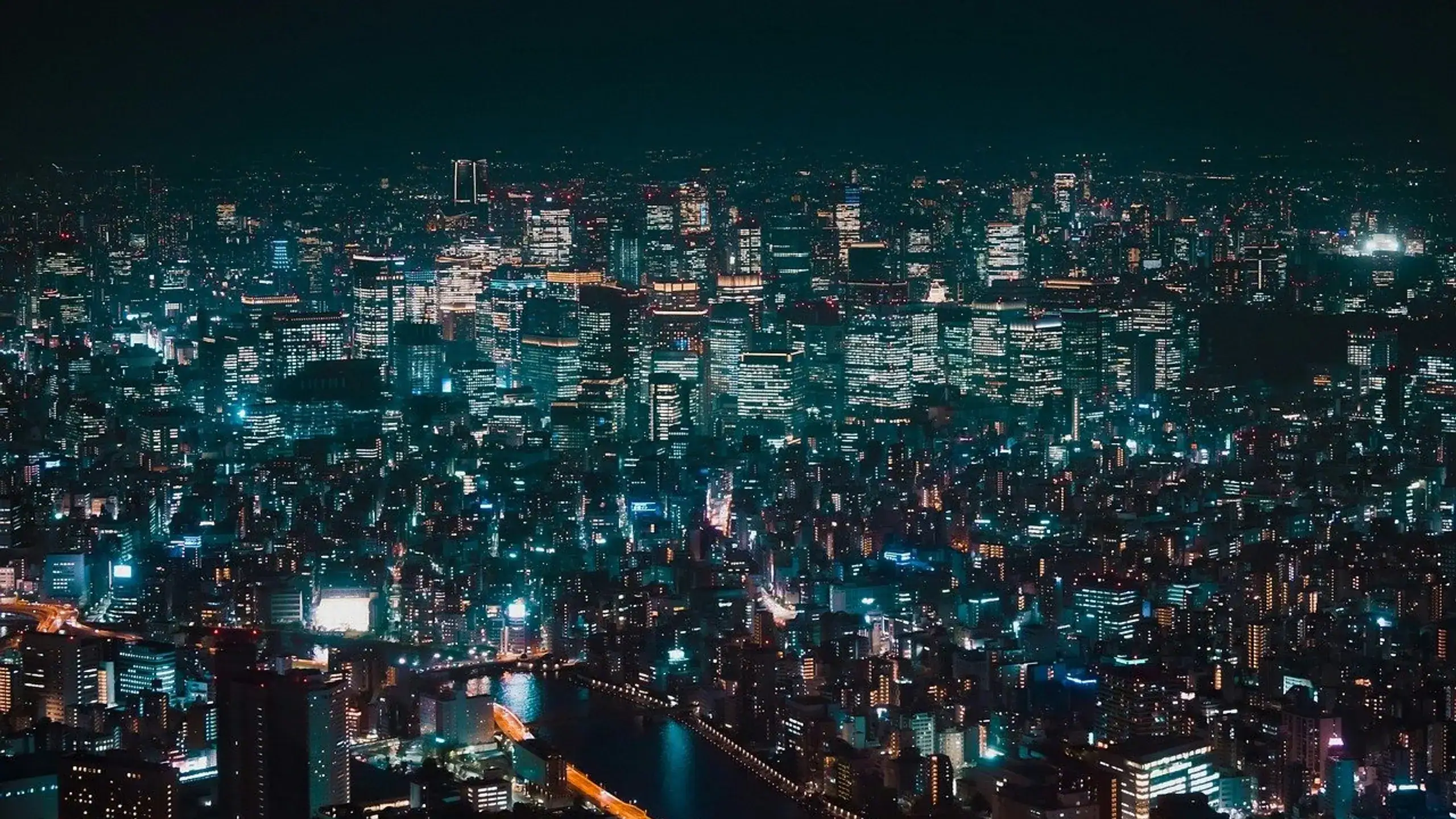
Most first-time visitors arrive with the wrong mental model. Tokyo is not Manhattan-with-better-trains; it isn't a city you can crack with a 4-day itinerary. The 23 wards run together into something more like a constellation — each neighbourhood is a separate city in feel, and the gap between Shimokitazawa (vintage shops, indie cafés, low buildings) and Roppongi (towers, finance bros, flagship hotels) is bigger than the gap between Brooklyn and Boston. The pleasant surprise is that this works in your favour: you don't need to 'do' Tokyo. You need to pick three or four wards and live in them for three days each. The food alone justifies it — Tokyo has more Michelin stars than any other city on the planet, but that statistic understates the case, because the best meal you'll have will almost certainly be at a 7-seat counter that doesn't accept foreign reservations and serves one dish you've never heard of. Bring a translator app and a willingness to point.
Tokyo's scale is intimidating but its transport network means the neighbourhood you choose matters less than in most cities. Shinjuku is the easiest for first-timers — central, enormous, and with the best transport connections. Shibuya suits people who want to be in the thick of modern Tokyo. Asakusa is the historic neighbourhood, excellent for culture and with more affordable hotels. Harajuku and Omotesando are the fashion and architecture quarters. Ginza is expensive and business-focused.
TravelBuzzy Tips
Get a Suica or IC card at the airport — it works on virtually every train, bus, and many vending machines
Google Maps gives accurate transit directions in English — download offline maps before you go
Shinjuku has two very different sides: the east exit (entertainment, Kabukicho) and west exit (skyscrapers, quieter hotels)
Cherry blossom season (late March – early April) is the most famous time to visit Tokyo — and for good reason. The parks transform completely. Book 6+ months ahead. Autumn foliage (October–November) is equally beautiful, less overcrowded, and often overlooked by Western tourists. July–August is hot, humid, and packed with domestic tourists. Winter (December–February) has crisp air, no crowds, and some of the year's lowest hotel prices.
TravelBuzzy Tips
Cherry blossom timing shifts by a week year to year — follow Japan Meteorological Corporation forecasts
Golden Week (late April to early May) is Japan's busiest holiday week — avoid or book very early
November is arguably the best all-round month: mild weather, autumn leaves, manageable crowds
Tokyo's train network is extensive and intimidating on a map but extremely easy in practice. The JR Yamanote Line loops around the main districts. The Tokyo Metro covers everything in between. An IC card (Suica or Pasmo) handles all of it with a tap. Taxis exist but are expensive — only use them after midnight when trains stop. Cycling is increasingly viable in some neighbourhoods. A 7-day unlimited subway pass is good value for heavy users.
Tokyo has more restaurants per capita than any other city. The benchmark is consistently high — even a convenience store onigiri from 7-Eleven beats many restaurants elsewhere. For a structured approach: sushi breakfast at Tsukiji Outer Market, ramen lunch in a standing noodle bar, tempura dinner in Asakusa, izakaya drinks in Shinjuku. One Michelin-starred meal is achievable at $50–80 per person at lunch. Budget travellers eat extraordinarily well on $15–20 per day.
TravelBuzzy Tips
Lunch at Michelin-starred restaurants is often 60–70% cheaper than the same restaurant at dinner
Depachika (department store basement food halls) are the best single food destination in any neighbourhood
Most ramen shops and sushi counters only accept cash — carry yen at all times
Tours & Experiences
Book your days in Tokyo
Skip-the-line tickets, guided tours, and day trips in Tokyo — free cancellation on most, confirmed instantly.
Price Calendar
Best Month to Book
Flight prices & hotel demand for Tokyo — click any month for details
October is a genuine sweet spot — good weather, lighter crowds, and below-peak prices. Book 6–10 weeks ahead to lock in rates before they rise.
Click any month above or use arrows
Events & Festivals
8 annual events — pick a month
2 events in March
Get Price Alerts for Tokyo
We'll notify you when flight or hotel prices drop for your chosen month.
7 nights
271421
Hotel$476
Food$350
Activities$245
Transport$105
Flights$615
Estimated total
$1,791
≈ $256 per day · 7 nights · Mid-range
Based on real hotel prices in our guide
Flights: $480–$750 est.
Estimates only — prices vary by season and availability.
Compare travel styles (7 nights + flights)
Tokyo offers great value at budget and mid tiers. Luxury escalates quickly.
7n
☀️Oct in Tokyo: Great weather — sunny & warm
Items adapt to weather & trip length
Tap the speaker icon to hear the pronunciation. Tap a phrase row for insider tips.
👋
Hello / Good day
こんにちは
/kon-NEE-chee-wah/
tip
🙏
Thank you
ありがとうございます
/ah-ree-GAH-toh goh-ZAI-mahs/
tip
😔
Sorry / Excuse me
すみません
/soo-mee-mah-SEN/
tip
🍜
This one please
これをください
/koh-reh oh koo-dah-SAI/
tip
💬
How much?
いくらですか?
/ee-KOO-rah des-kah/
🗺️
Where is…?
…はどこですか?
/…wah DOH-koh des-kah/
🚃
Train station
駅
/EH-kee/
🍱
Delicious!
おいしい!
/oh-ee-SHEE/
tip
🚽
Where's the toilet?
トイレはどこですか?
/TOH-ee-reh wah DOH-koh des-kah/
🥂
Cheers!
乾杯!
/KAN-pye/
tip
🌍
Cultural note
Don't tip — it can be considered rude. Also, eat and walk at the same time only in theme parks or festivals; elsewhere it's considered bad manners.
A few words in the local language go a long way — locals genuinely appreciate the effort.
Select your passport
Visa free
Max stay
90 days
🇬🇧
UK passport holders can visit for up to 90 days visa-free for tourism/business.
🛂
Passport validity
Must be valid for the duration of your stay — Japan does not require the 6-month rule, but airlines may differ.
Health & vaccinations
COVID-19 vaccinationNot required
All COVID-19 border measures removed as of May 2023.
Japanese encephalitisRecommended
Recommended for rural travel or stays longer than 30 days.
Hepatitis A & BRecommended
RabiesNot required
Extremely low risk — Japan is considered rabies-free.
Entry tips
📋
Complete the Visit Japan Web registration before arrival to speed up immigration and customs.
💊
Some over-the-counter medications are banned in Japan (e.g. certain cold medicines containing pseudoephedrine). Check before you pack.
🚫
Japan has strict drug laws — even cannabis (legal in your home country) is illegal and carries serious penalties.
🏦
Carry cash — Japan is still largely cash-based. 7-Eleven ATMs accept international cards reliably.
Japan occasionally adjusts visa and entry rules. Check the Japan Tourism Agency and your country's embassy for current requirements.
Airport → Tokyo
🚄
Narita Express (N'EX)
⏱ 60 min~$20
💡 Fastest from Narita — goes directly to Shinjuku, Shibuya, and Tokyo Station. Book online.
🚌
Limousine Bus
⏱ 75–120 min~$22
💡 Comfortable, no changes. Goes directly to major hotels. Good if you have heavy luggage.
🚝
Haneda Monorail
⏱ 25 min~$3
💡 From Haneda it's a very short trip to Hamamatsucho — then straight onto the JR lines.
🚕
Taxi
⏱ 60–90 min$100–170
💡 Expensive but useful late at night when trains stop.
The Tokyo train network is huge but very logical. Download a offline metro map before you arrive. Avoid rush hour (7:30–9am and 5:30–8pm) — carriages are genuinely packed.
Last trains run around midnight. If you miss the last train, a taxi home can cost $35–100. Check your last train time in Google Maps before a night out.
Tokyo is one of the safest major cities in the world. Crime rates are extremely low and tourists rarely experience any problems beyond getting lost.
Tap water: ✓ Safe to drink
Tokyo tap water is excellent quality — clean, safe, and good-tasting. You can drink freely from the tap and refill bottles anywhere.
Petty theftLow risk
Japan has very low theft rates. That said, don't leave belongings unattended in busy areas.
EarthquakesModerate
Japan is seismically active. Familiarise yourself with the earthquake alert sound on your phone and the 'Drop, Cover, Hold' protocol.
Extreme summer heatTake care
July–August in Tokyo is brutal: 35–38°C with very high humidity. Stay hydrated and use air-conditioned spaces regularly.
TyphoonsModerate
Typhoon season runs June–October. Monitor NHK World or the Japan Meteorological Agency app for updates.
Crowding / overheatingModerate
Trains in rush hour are extremely crowded. Be mindful of personal space and follow queuing rules strictly.
Violent crimeLow risk
Extremely rare. Tokyo is consistently ranked among the world's safest cities.
Tokyo has more Michelin-starred restaurants than any other city on earth — yet its best meals are often found in tiny 8-seat ramen bars, standing sushi counters, and basement izakayas. Every neighbourhood has its own food identity.
🍜
Ramen Must try
Tokyo-style ramen is soy (shoyu) based with curly noodles and rich broth. Try Fuunji (tsukemen) or Ichiran for a solitary ramen experience.
🍣
Sushi / Omakase Must try
For the real experience, go to a sushi counter (not a conveyor belt) and say 'omakase' — let the chef decide. Budget $80–300 but it's life-changing.
🦐
Tempura Must try
Seafood and vegetables in a light, crispy batter. Brilliant at a specialist tempura restaurant like Kondo in Ginza.
🥩
Tonkatsu
Thick-cut pork cutlet breaded and deep-fried, served with cabbage and tonkatsu sauce. One of Japan's great comfort foods.
🥟
Gyoza Must try
Pan-fried pork and cabbage dumplings — crispy bottom, juicy inside. Eat with soy and rice vinegar. Best at a dedicated gyoza shop.
🍡
Yakitori Must try
Chicken skewers grilled over charcoal. Every part is used — breast, thigh, liver, skin. Eaten at izakayas with cold beer.
🎋
Kaiseki
A multi-course Japanese feast of seasonal ingredients, beautifully presented. The apex of Japanese dining — allow 2–3 hours and $100–300 per person.
🍵
Matcha Wagashi Veggie
Traditional Japanese sweets paired with matcha tea. Try Toraya in Aoyama — confectionery as an art form.
Japan has strict rules about bringing food into restaurants from outside. Never eat walking down the street (except at festival stalls) — it's considered bad manners. In restaurants, the food comes to you — don't rush.
The famous hotel from Lost in Translation, still delivering one of the most atmospheric Tokyo experiences available. Floors 39–52, sky-high pool, extraordinary service.
Reliable and well-priced business hotel in the historic Asakusa district. Clean, compact rooms, excellent transit connections, and next to the Sensoji temple complex.
The most characterful budget stay in Tokyo — ninja-themed capsule beds, social common areas, and a great Asakusa location at a price that lets you spend your money on food.
*Prices shown are indicative and may vary. TravelBuzzy earns a commission on bookings made through these links, at no extra cost to you. Full disclosure