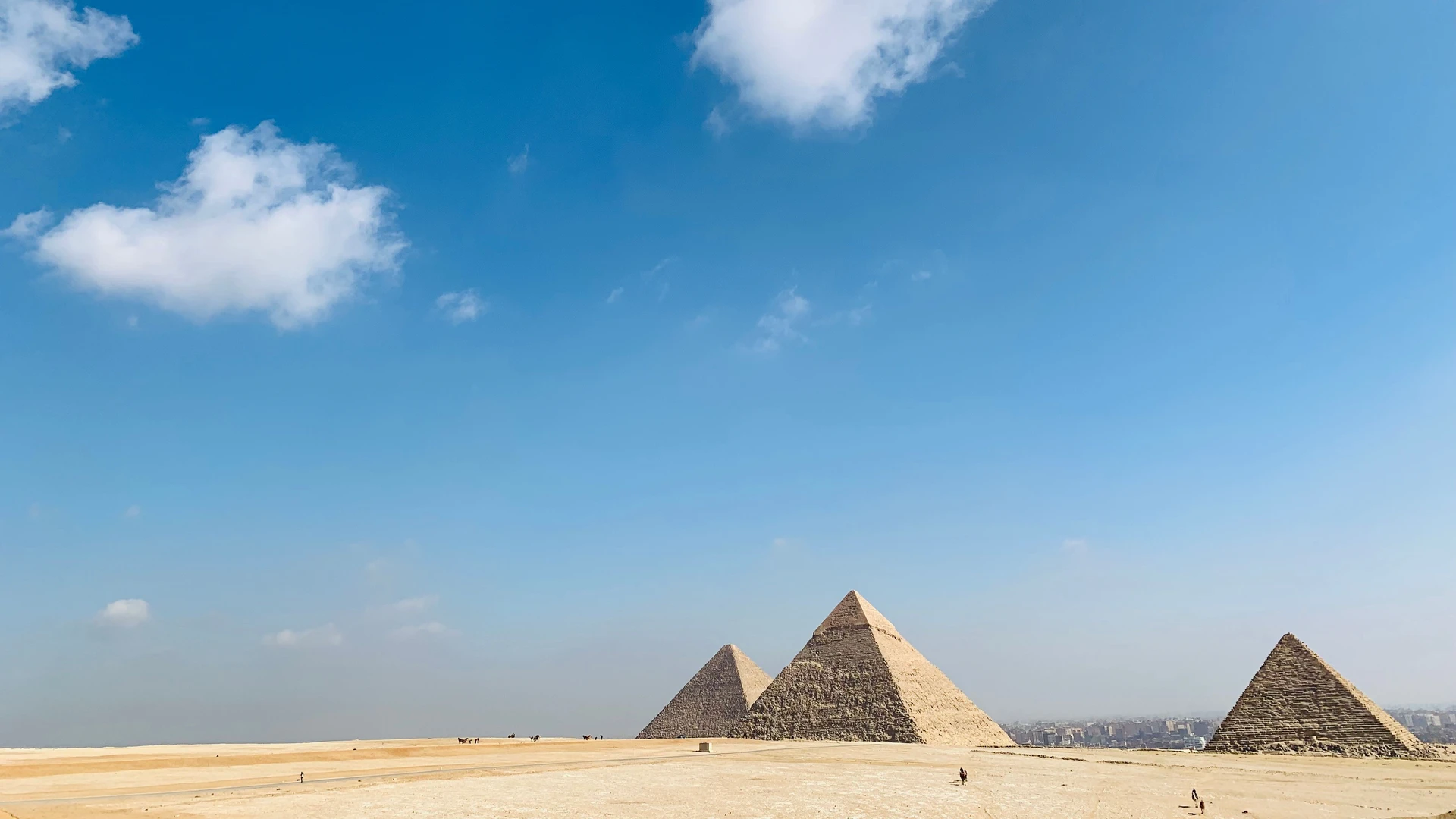
The strangest thing about the Pyramids of Giza is how close they are to the actual city — you can be stuck in Cairo traffic, look right, and there they are, 4,500 years old, wedged against the edge of suburban Giza like an afterthought of urban planning. That collision of ancient and immediate is Cairo's whole character. This is a genuinely difficult city to visit well: 22 million people, chaotic traffic, persistent tourist-hassle around every major site, and an Egyptian Museum so overstuffed with unlabelled treasure that first-timers routinely miss Tutankhamun's mask in a side room. It is also completely worth the difficulty. The trick is front-loading logistics: book a licensed Giza guide in advance to skip the camel-tout gauntlet, do the Egyptian Museum with a guide or audio tour rather than wandering blind, and accept that a driver, not a rental car, is the only sane way to move around. Cairo rewards preparation and punishes winging it.
Central Cairo splits into a few useful zones: Downtown (Tahrir Square, the Egyptian Museum, faded belle-époque architecture), Zamalek (an island district with the calmer restaurant and expat scene), Giza (the Pyramids and Sphinx, plus increasing hotel development around them), and Islamic Cairo (mosques, madrasas, and the Khan el-Khalili bazaar). Most visitors base themselves in Zamalek or a Nile-front hotel and day-trip to Giza and Islamic Cairo rather than trying to be walking-distance to everything.
TravelBuzzy Tips
Zamalek is the calmest base for first-timers — leafy, walkable, and a short taxi to everything else
A hotel with direct Pyramid views (Giza Plateau side) is worth the premium for at least one night
Khan el-Khalili is best visited in late afternoon when the light and the crowds are both better
Book a licensed Egyptologist guide for the Giza Plateau — it dramatically cuts down on the aggressive camel-ride and 'special access' touts, and you'll actually understand what you're looking at. Arrive at opening (8am) to beat both heat and crowds. The Grand Egyptian Museum near Giza has now largely superseded the old Tahrir Square museum for major artefacts including the full Tutankhamun collection, though the original Egyptian Museum still holds significant pieces — check current opening status before planning your day. Petty theft and scams (fake 'this site is closed' redirects, overcharging) are the real risks, not violent crime.
TravelBuzzy Tips
Hire a guide through your hotel or a reputable operator, not a tout at the site entrance
Confirm in advance whether you want the Grand Egyptian Museum, the old Tahrir Square museum, or both — they hold different collections
Agree taxi fares before getting in, or use Uber/Careem, which operate normally throughout Cairo
Cairo's desert climate means brutally hot summers (June–August routinely above 35–40°C) with little relief, making outdoor sightseeing at the Pyramids genuinely unpleasant. October through April is the sensible window — daytime temperatures of 20–28°C, cooler evenings, and manageable conditions for a full day outdoors. December–January is peak season with the biggest crowds and highest hotel rates; November and March are excellent shoulder-season alternatives.
TravelBuzzy Tips
Avoid June–August unless heat genuinely doesn't bother you — midday Giza visits become an endurance exercise
November and March offer the best balance of comfortable weather and lower prices
Fridays are the Muslim holy day — some sites have adjusted hours, so check before planning around it
Cairo traffic is genuinely chaotic and often gridlocked, so budget far more transfer time than distances suggest. A private driver (arranged through your hotel) is the standard, sane choice for tourists — inexpensive by Western standards and removes the stress of navigating unmarked lanes and constant horn-based communication. The Cairo Metro is clean, cheap, and surprisingly useful for specific point-to-point trips (it has a women-only carriage). Walking is fine within Zamalek or Downtown but not as a way to cover the wider city.
Egyptian street food is some of the best value in the world — koshari (a carb-heavy mix of rice, lentils, macaroni and fried onions) is the national dish and costs almost nothing at local spots like Abou Tarek. Ful medames (fava beans) and taameya (Egyptian-style falafel, made with fava beans rather than chickpeas) are the standard breakfast. Zamalek and Nile-front hotels have a strong contemporary Egyptian and international restaurant scene for a more polished evening out.
TravelBuzzy Tips
Abou Tarek in Downtown is the famous koshari destination and lives up to the reputation
Stick to bottled water and be cautious with raw salads from street stalls — cooked street food is generally safe and excellent
A felucca (traditional sailboat) dinner cruise on the Nile is touristy but a genuinely pleasant way to end a long sightseeing day
Tours & Experiences
Book your days in Cairo
Skip-the-line tickets, guided tours, and day trips in Cairo — free cancellation on most, confirmed instantly.
Get Price Alerts for Cairo
We'll notify you when flight or hotel prices drop for your chosen month.
A former royal hunting lodge at the base of the Giza Plateau — many rooms look directly onto the Pyramids, a view no other hotel in the world can offer.
*Prices shown are indicative and may vary. TravelBuzzy earns a commission on bookings made through these links, at no extra cost to you. Full disclosure