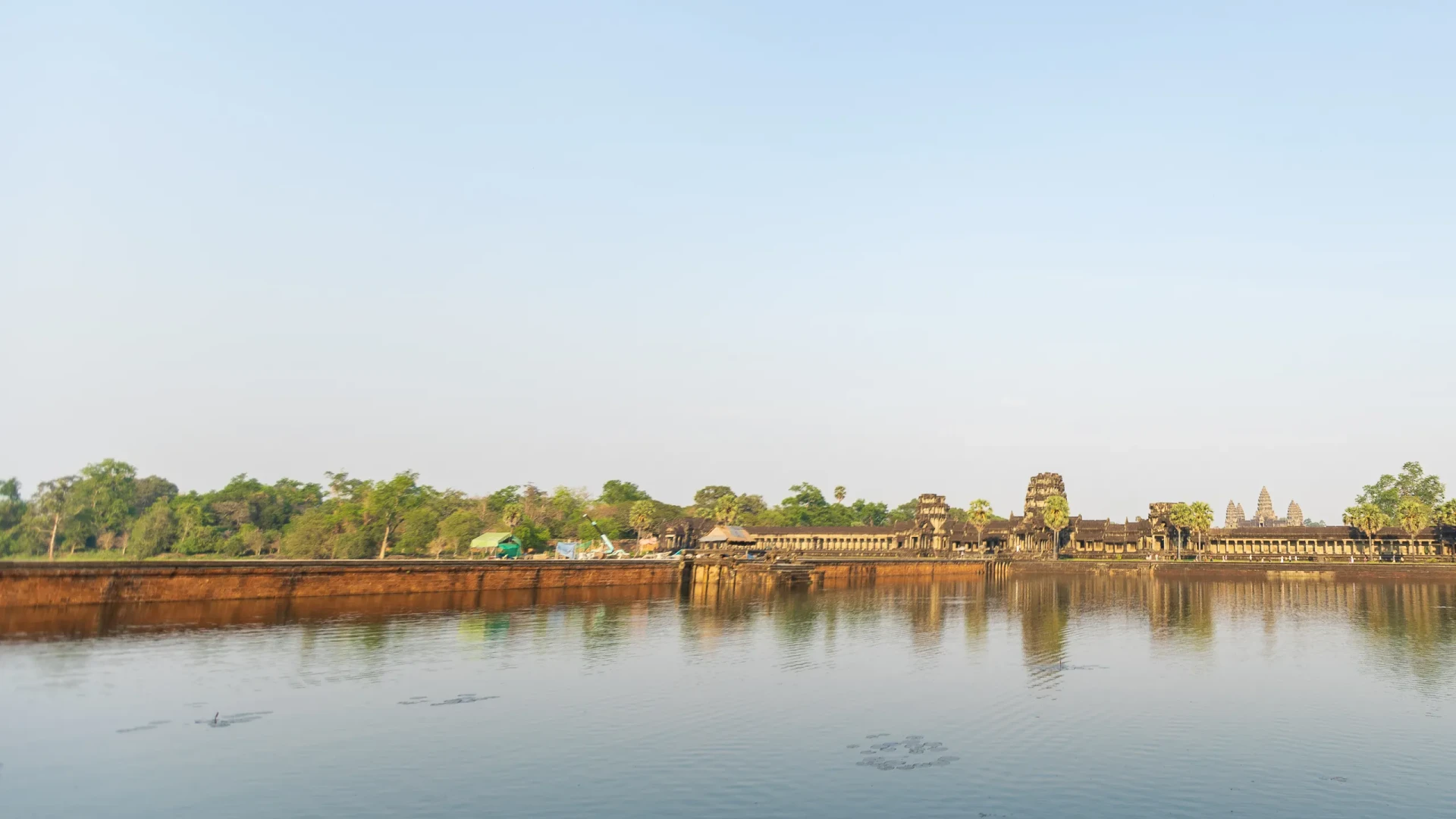
Siem Reap exists because of one thing: it's the closest town to Angkor, the largest religious complex ever built and the capital of an empire that once ran most of mainland Southeast Asia. That's easy to forget once you're there, because the town itself has become a genuinely good tourism product in its own right — Pub Street's chaos, a legitimately excellent restaurant scene built partly by NGO culinary schools, and hotel standards well above what the average daily budget would suggest. The temples earn every bit of the hype, but the mistake most visitors make is trying to see them all in one rushed day. Angkor is roughly the size of Paris intramuros. A one-day ticket practically guarantees temple fatigue and a missed sunrise; three days, done right, is the difference between checking a box and actually understanding what the Khmer Empire built.
Siem Reap town is compact and walkable — Pub Street and the Old Market form the tourist core, with the Wat Bo and French Quarter areas offering quieter, leafier alternatives a short tuk-tuk ride away. The temples of Angkor sit 15 minutes to 90 minutes outside town depending on which complex, and require their own separate planning entirely. Most visitors should treat this as two distinct trips within one destination: a relaxed town stay bookended by early starts for the temples.
TravelBuzzy Tips
Stay in the French Quarter or near Wat Bo for a quieter base — Pub Street is fun for one night, exhausting for a whole trip
Tipping is expected and appreciated throughout Cambodia's tourism economy — carry small USD bills
River Road and the area around the Old Market have the best concentration of genuinely good restaurants
November through February is dry season and the clear best window — 22–32°C, low humidity, and manageable heat for full days of temple exploring. March through May is hot season, with temperatures regularly exceeding 35–38°C by midday — brutal for a full Angkor circuit. The wet season (June–October) brings dramatic afternoon storms but also green, dramatically photogenic temple grounds and the lowest prices and crowds of the year.
TravelBuzzy Tips
December and January are peak season — Angkor Wat sunrise viewing spots get genuinely crowded, arrive 45+ minutes early
September–October (late wet season) is an underrated window: fewer tourists, lush greenery, and rates well below dry-season peak
Whatever the season, start temple visits by 5:30am — heat and crowds both build fast after 9am
Tuk-tuks are the default way to see the temples — a full-day driver costs $15-25 and is the standard, sensible option for the Angkor circuit. Within town, remork (tuk-tuk) rides cost $2-3 for most short hops; agree the price beforehand. Bicycles are a popular and pleasant way to explore the closer temples (Angkor Wat, Angkor Thom, Ta Prohm) independently, though the heat makes this a morning-only activity for most people. Grab operates in Siem Reap for point-to-point rides within town.
Khmer food is distinct from its neighbours — amok (a steamed coconut curry, often fish), lok lak (stir-fried beef), and prahok-based dishes are the ones to seek out specifically. Siem Reap's dining scene punches well above what the town's size suggests, partly thanks to social-enterprise restaurants that double as vocational training for at-risk youth — the food is genuinely excellent, not just charitable. Old Market's food stalls are the cheapest, most authentic option; Pub Street restaurants are fine but priced for tourists.
TravelBuzzy Tips
Cuisine Wat Damnak and Marum are two of the best social-enterprise restaurants — reserve ahead, they're small and popular
Amok at a proper Khmer restaurant (not a Pub Street tourist menu) is one of the best dishes in Southeast Asia — don't skip it
USD and Riel are both accepted everywhere; change is often given in Riel for amounts under a dollar
The single biggest planning mistake is under-allocating time. A one-day pass covers Angkor Wat, Angkor Thom (Bayon), and Ta Prohm at a rushed pace; a three-day pass (valid over 10 days) allows the 'Grand Circuit' further temples most one-day visitors never see, plus a buffer for heat and rest. Sunrise at Angkor Wat is genuinely spectacular but oversubscribed — the reflecting pool gets three-deep with tripods by 5am. Ta Prohm (the jungle-reclaimed 'Tomb Raider' temple) and Bayon's carved faces are the two other must-sees.
TravelBuzzy Tips
Buy your Angkor Pass ($37/1-day, $62/3-day, $72/7-day) the evening before at the official ticket office to save a pre-dawn queue
Skip sunrise at Angkor Wat once and instead catch sunrise at Sras Srang or Pre Rup — nearly as beautiful, a fraction of the crowd
Banteay Srei (the 'pink temple', 25km further out) is worth the extra drive for its exceptionally fine carving and thin crowds
Tours & Experiences
Book your days in Siem Reap
Skip-the-line tickets, guided tours, and day trips in Siem Reap — free cancellation on most, confirmed instantly.
Get Price Alerts for Siem Reap
We'll notify you when flight or hotel prices drop for your chosen month.
Siem Reap's original grand hotel, open since 1932. Colonial architecture, manicured gardens, and a genuine sense of history a few minutes from the Old Market.
A sleek, art-filled property blending French-colonial and Khmer design, right on the edge of town. Consistently rated among the best service in Cambodia.
A stylish, French-Cambodian owned boutique hotel with mid-century Khmer design and some of the warmest service in Siem Reap, a short walk from the river.
*Prices shown are indicative and may vary. TravelBuzzy earns a commission on bookings made through these links, at no extra cost to you. Full disclosure