Everyone arrives expecting lions within the hour and leaves surprised by how much of the magic is logistics. The park covers 14,750 square kilometres — bigger than Northern Ireland — and the wildlife does not rearrange itself around a two-night stopover between Zanzibar flights. The single biggest mistake we see is booking one lodge for three nights and assuming the migration will be nearby; the herds move on their own calendar, not the brochure's. Ndutu in February means newborn wildebeest calves and the densest predator concentration on the continent. Northern Serengeti in August means Mara River crossings so chaotic they barely look real through a lens. Get the month and the region mismatched and you'll spend a fortune staring at empty grass. This is the one safari destination where the itinerary matters more than the hotel — book the routing first, the lodge second.
The Serengeti is one ecosystem stretched across several distinct zones — southern plains (Ndutu/Ngorongoro border), central Seronera, the Western Corridor, and the northern Mara region near Kenya. Each has a different rhythm depending on the season, and lodges are generally fixed in one zone, so where you sleep dictates what you'll see. Most first-timers do best with a mobile or multi-camp itinerary that follows the herds rather than a single fixed lodge, especially outside the short dry-season peak.
TravelBuzzy Tips
Fly-in safaris (small aircraft between airstrips) save a day of driving versus doing everything by road from Arusha
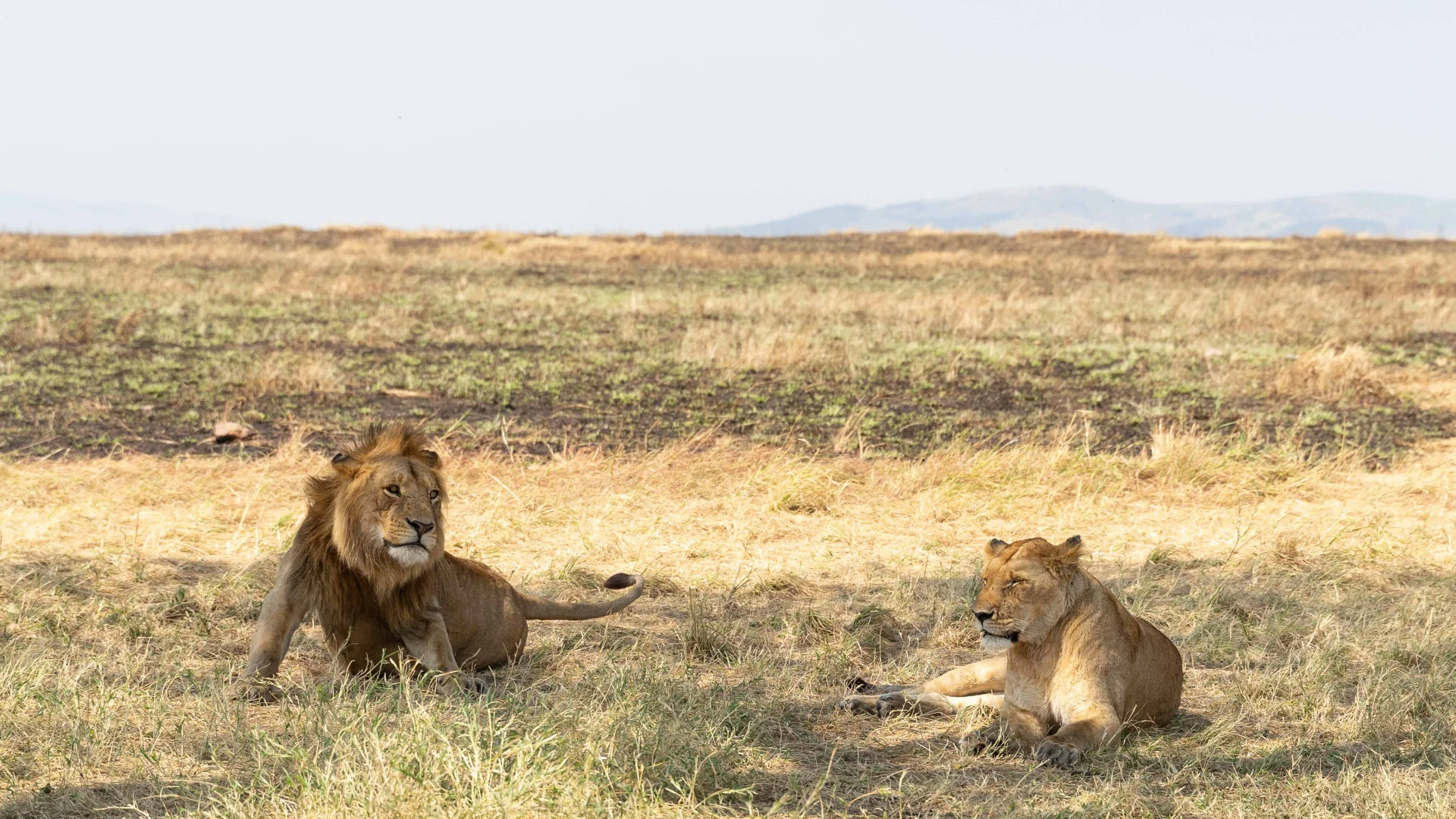
Seronera has the most permanent resident wildlife — a safe default if your dates don't align with migration season
Combine 2–3 nights each in two zones rather than one long stay in a single camp
Roughly 1.5 million wildebeest and 250,000 zebra move in a broad clockwise loop through the ecosystem every year, and the calendar is well documented even if exact dates shift with the rains. Calving happens on the short-grass plains around Ndutu, January–March. The herds push north through the Western Corridor and cross the crocodile-filled Grumeti River around May–June, then reach the Mara River in the north for the famous crossings from July through September, spilling into Kenya's Masai Mara. October–November brings the return south.
TravelBuzzy Tips
August is the highest-probability month for a Mara River crossing, but nothing is ever guaranteed — build in 3+ nights near the river
Ndutu in February is underrated: fewer vehicles than the Mara crossings and the best predator action of the year
November and April–May (long rains) are the quietest, cheapest months, with resident wildlife still visible
Tanzania's dry season (June–October) is the classic safari window — minimal rain, thinner bush, and wildlife concentrated around remaining water sources. It's also the most expensive and heavily booked period, particularly August. The short rains (November–December) are brief afternoon showers that rarely disrupt game drives and come with lower rates. The long rains (March–May) are the true low season — some camps close, roads get muddy, but Ndutu's calving season falls right in the middle of it and the birdlife and landscape are extraordinary.
TravelBuzzy Tips
Book luxury camps 9–12 months ahead for July–September — the good ones sell out
Shoulder months (late May, November) combine decent weather with 20–30% lower rates
Pack layers — early morning game drives in an open vehicle are genuinely cold even in the dry season
The operator matters more here than almost anywhere else you'll travel — a good guide radios other vehicles, reads animal behaviour, and knows which side of the river the herds are massing on; a mediocre one drives to the same three spots as everyone else. Ask prospective operators directly which camps they use during migration season and whether guides are shared or dedicated to your vehicle. Tented camps (canvas, but with proper beds, en-suite bathrooms and full board) are the norm at every price point — 'camping' does not mean roughing it once you're above budget tier.
TravelBuzzy Tips
Ask how many years the guide has worked specifically in the Serengeti, not just East Africa broadly
Private conservancies bordering the park (like Grumeti) allow off-road driving and night drives — the national park itself does not
Confirm whether park fees, flights between airstrips, and drinks are included before comparing quoted prices
There is no self-drive culture here — virtually everyone travels with a safari vehicle and driver-guide, either as part of a lodge package or a private tour. Distances are large and roads are unpaved, dusty corrugated tracks, so overland transfers between zones can take 4–6 hours; light aircraft between the ecosystem's airstrips cut that to 20–40 minutes and are worth the extra cost on multi-camp itineraries. Most trips start and end in Arusha, itself a 45–60 minute flight or 5–6 hour drive from the park.
Nearly all Serengeti accommodation is full-board, and the standard has risen sharply over the past decade — three-course bush dinners, decent South African and Chilean wine lists, and packed breakfasts for early game drives are now normal even at mid-range camps. Don't expect much local Tanzanian cuisine inside the park itself; it's mostly international safari-lodge fare, competently done. The better food experiences — ugali, nyama choma, pilau — are found in Arusha or on a Zanzibar extension afterward.
TravelBuzzy Tips
Ask for a bush breakfast or sundowner stop at least once — most camps will arrange it without extra charge
Bottled and filtered water is provided everywhere; don't drink tap water
If you have dietary restrictions, flag them with the operator at booking — remote camps can't improvise last-minute
Tours & Experiences
Book your days in Serengeti National Park
Skip-the-line tickets, guided tours, and day trips in Serengeti National Park — free cancellation on most, confirmed instantly.
Get Price Alerts for Serengeti National Park
We'll notify you when flight or hotel prices drop for your chosen month.
7n
⛅Oct in Serengeti National Park: Mixed — pack a light layer
A dramatic lodge in the Seronera Valley with its own waterhole, drawing elephant and buffalo past the infinity pool without anyone needing to board a vehicle.
A round, kopje-style lodge built into the central Seronera landscape, with reliable year-round game viewing and full-board rates that undercut most competitors.
A simple, well-run tented camp in Karatu, the gateway town to the Serengeti and Ngorongoro Crater — the standard base for budget-conscious safari-goers.
*Prices shown are indicative and may vary. TravelBuzzy earns a commission on bookings made through these links, at no extra cost to you. Full disclosure