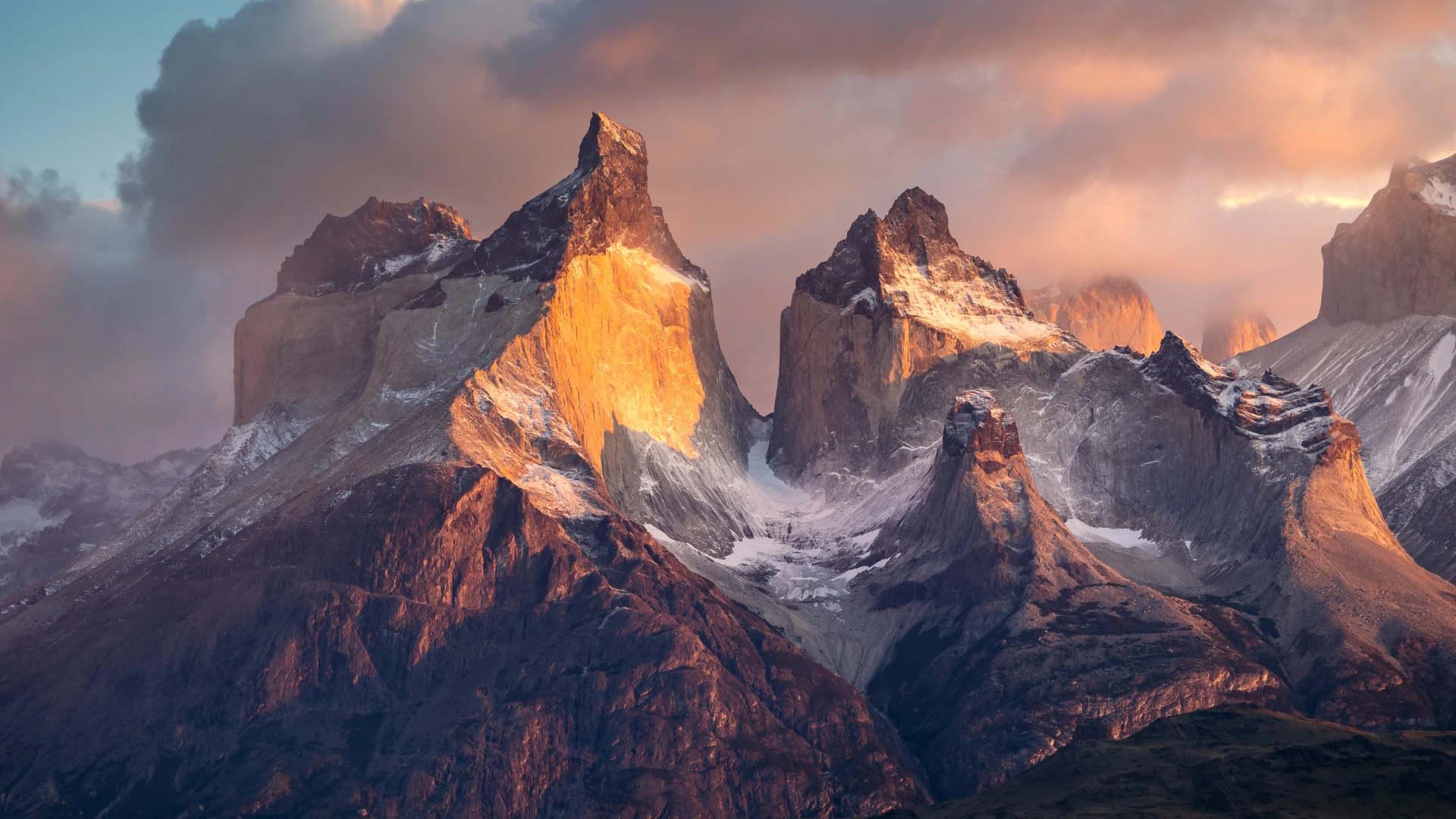
Patagonia isn't a single destination so much as a 1,000km stretch of Andean wilderness split across two countries, and most of the confusion first-time visitors have is logistical rather than scenic — which side to fly into, which park matches their fitness level, and how much time the distances between them actually eat. El Chaltén, Argentina's self-declared national trekking capital, sits inside Los Glaciares National Park with the Fitz Roy and Cerro Torre spires visible from the town's edge — you can walk to a trailhead from your hostel. Torres del Paine, across the border near Puerto Natales, Chile, has the more famous granite towers and the better-developed refugio system for multi-day circuits. Both deliver genuinely spectacular hiking without technical climbing skills; neither is a place to arrive without researching which specific trek matches your timeframe first.
El Chaltén (Argentina) is the easier, cheaper base — trailheads start in town, day hikes to Laguna de los Tres (Fitz Roy's iconic viewpoint) and Laguna Torre need no permits or reservations, and the town itself is a scrappy collection of hostels, breweries, and gear shops with zero pretension. Torres del Paine (Chile) has the more iconic single image — the three granite towers reflected in a turquoise lake — but requires reserving campsites or refugios months ahead for the multi-day W or O circuits, and day access is more tightly controlled with paid park entry. First-timers with limited time should pick El Chaltén for flexibility; those committed to a multi-day circuit and willing to book early should choose Torres del Paine.
TravelBuzzy Tips
El Chaltén requires zero permits for its best day hikes — just show up and walk from town
Torres del Paine's W Trek refugios must be booked 4-6 months ahead for the November-March season — this is not optional
Doing both parks in one trip means budgeting 2-3 travel days just for the border crossing and connections — don't underestimate the distances
November to March is the Southern Hemisphere summer and the only realistic window for most visitors — trails are snow-free, refugios and campsites are open, and daylight stretches past 10pm in December. Patagonia's wind is a defining feature of this season, especially December-January, when sustained 60-80km/h gusts are routine on exposed ridgelines. Shoulder months (November, March) have noticeably fewer crowds and lower refugio prices, with slightly higher odds of unpredictable weather. Outside this window, most park infrastructure simply closes — this isn't a year-round destination like the rest of South America.
TravelBuzzy Tips
March is the best-kept-secret month — good weather odds, thinning crowds, and the start of autumn colour in the lenga forests
Wind is strongest December-January — trekking poles and a genuinely windproof (not just water-resistant) shell are not optional
Book refugios and any El Calafate/El Chaltén accommodation well ahead for December-February — capacity is genuinely limited
Both parks are remote by design. For El Chaltén: fly into El Calafate (itself reached via a 3-3.5 hr flight from Buenos Aires), then take a 3-hour bus or transfer to El Chaltén. For Torres del Paine: fly into Punta Arenas (Chile) or cross overland from El Calafate, then bus or transfer 2-3 hours to Puerto Natales, the gateway town, followed by another hour to the park entrance. There is no train and minimal car rental infrastructure worth using — buses and organised transfers are how nearly everyone moves between towns, and they should be booked ahead in peak season.
TravelBuzzy Tips
El Calafate to El Chaltén buses run several times daily in summer but still sell out around midday departures — book a day ahead
Crossing between El Chaltén and Puerto Natales (Argentina to Chile) takes a full day including the border crossing — don't schedule it as an afternoon side trip
Renting a car is possible but adds complexity at borders (permit paperwork) for limited benefit given the excellent bus network
Patagonian lamb, slow-roasted whole over an open fire (asado al palo), is the regional dish worth seeking out in both El Chaltén and Puerto Natales — it's a genuine specialty, not a tourist gimmick. El Chaltén has punched above its weight on food for a town of 1,600 people, with a genuinely good craft beer scene (La Vinería, Cervecería Lago del Desierto) fuelled by exhausted hikers. Torres del Paine's refugios serve solid, filling set menus included in the (expensive) bed rate — not memorable, but sufficient after a long trekking day. Both areas rely heavily on imported produce given the remote location, so meals lean towards meat, potatoes, and bread rather than fresh vegetables.
TravelBuzzy Tips
La Vinería in El Chaltén does the best asado in town and gets busy — arrive by 8pm or book
Refugio meals in Torres del Paine are included in your accommodation rate and non-negotiable in quality — temper expectations
Stock up on trail snacks in El Calafate or Puerto Natales before heading into either park — options thin out fast once you're trekking
El Chaltén's day hikes (Laguna de los Tres, 20km round trip; Laguna Torre, 18km round trip) are doable by any reasonably fit hiker with no camping gear required, staying in town each night. Torres del Paine's multi-day options — the W Trek (4-5 days, the classic) and the full O Circuit (7-9 days, more remote and dramatically less crowded) — require carrying gear between refugios or paying for the pricier full-service refugio-to-refugio model with meals and bedding included. For most first-time visitors with under a week total, a base in El Chaltén covering both signature day hikes is the higher-value choice over a rushed, underprepared attempt at the W.
TravelBuzzy Tips
The Laguna de los Tres hike is best started by 6-7am — the Fitz Roy summit is most often cloud-free early and clouds over by midday
The W Trek's refugio-inclusive packages remove the need to carry a tent and food, at a real cost premium — decide your budget before booking
The O Circuit requires a mandatory guide for one now-restricted section — check current park rules before planning an independent attempt
Tours & Experiences
Book your days in Patagonia
Skip-the-line tickets, guided tours, and day trips in Patagonia — free cancellation on most, confirmed instantly.
Get Price Alerts for Patagonia
We'll notify you when flight or hotel prices drop for your chosen month.
A 17-room Relais & Châteaux lodge on a 10,000-acre estancia near El Calafate — all-inclusive dining, guided excursions, and unbroken Patagonian steppe views.
*Prices shown are indicative and may vary. TravelBuzzy earns a commission on bookings made through these links, at no extra cost to you. Full disclosure