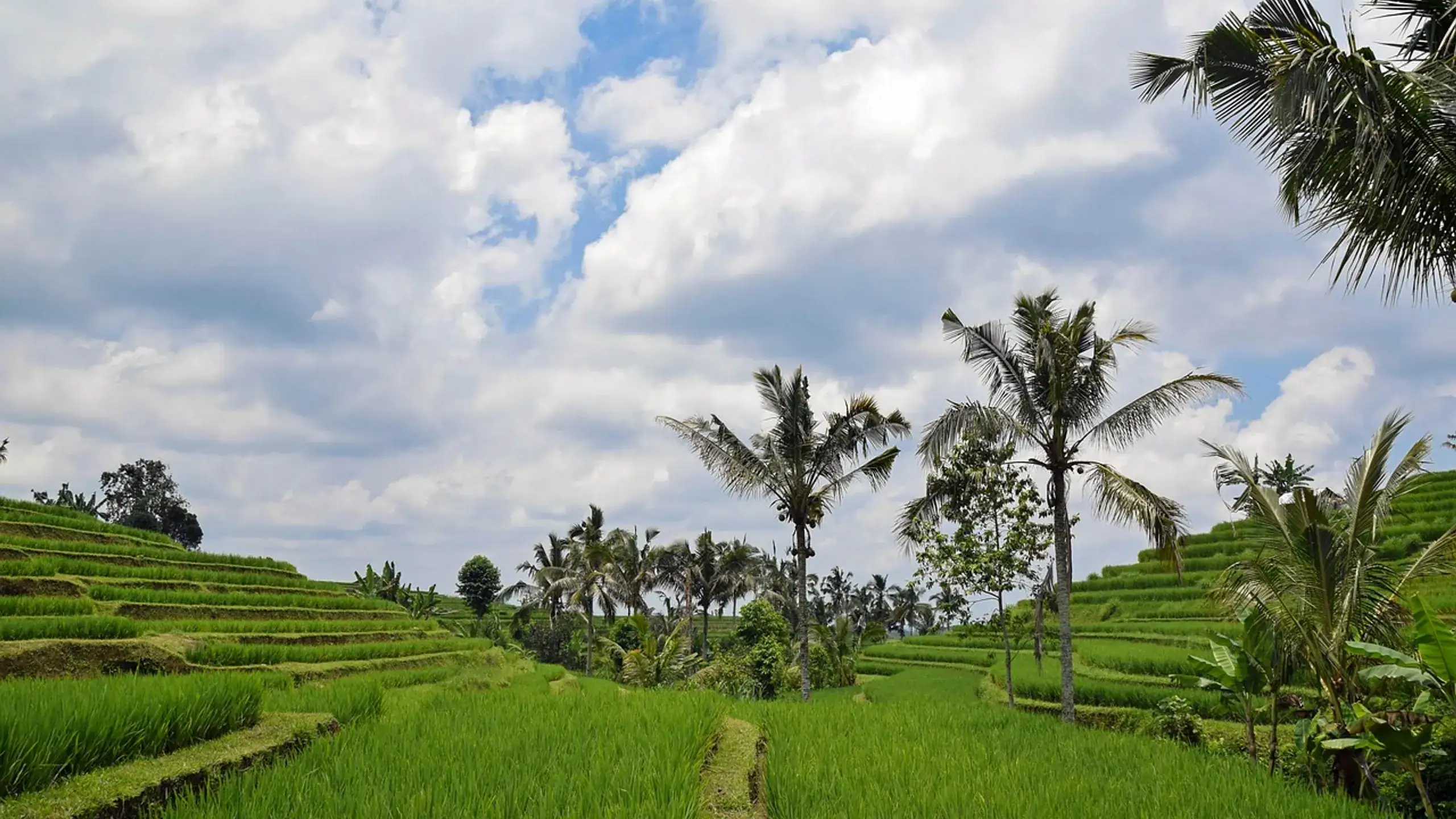
There are now four versions of Bali, and they're surprisingly easy to confuse. The Bali of the 1990s — the spiritual one, of yoga retreats and Eat Pray Love clichés — still exists, mostly above 600 metres in Ubud. The Bali of the 2010s — surf bungalows, $4 nasi goreng, banana pancakes — survives in pockets of Canggu and Uluwatu. The Bali of the 2020s is something else: a high-end design destination where a beachfront villa with a private chef costs less than a mid-range hotel in Lisbon, and where Australian and European long-stayers have built an infrastructure of speciality coffee, surf forecasts, and coworking the actual island never asked for. The fourth Bali — the Hindu-Balinese one, with its 20,000 temples and three-times-daily offerings — is the only one that hasn't changed in 700 years, and it's the one most visitors miss entirely. Knowing which Bali you came for is the single most useful planning decision you'll make.
Bali is best understood as several destinations in one. Ubud is the cultural heart — rice paddies, yoga retreats, and incredible food. Seminyak and Canggu attract the beach club and digital-nomad crowd. Nusa Dua is where the big resort complexes sit, perfect for families or anyone who wants an all-inclusive feel. Uluwatu is for serious surfers and clifftop sunset seekers. Choosing where to base yourself first shapes the whole trip.
TravelBuzzy Tips
Stay at least 2 nights in Ubud even if you're a beach person — it's culturally unmissable
Canggu has better coffee and restaurant variety than Seminyak for longer stays
Avoid Kuta unless you're on a strict budget — Legian is a quieter, cheaper alternative nearby
Bali has a dry season (April–October) and a wet season (November–March). The dry season is when you want to be there — lower humidity, reliable beach weather, and manageable crowds outside of July–August peak. April–June and September are the sweet spots: dry, warm, and quieter than school-holiday months. The wet season isn't a write-off — showers are usually afternoon-only, and prices drop significantly.
TravelBuzzy Tips
July and August are the most expensive and crowded months — book 3–4 months ahead
Nyepi (Balinese New Year, March) closes the island entirely — plan around it or embrace it
Shoulder season (April–May) is the best value, with full dry-season weather
Bali has no public transport worth relying on. Most travellers hire a driver for day trips ($30–50 for a full day, negotiated directly), use Grab or Gojek for short rides in towns, or rent a scooter (about $7/day) for maximum flexibility. The roads between Ubud and the south can be gridlocked around Kuta — budget extra time. Renting a car with a driver for airport transfers and inter-region days is the smoothest approach.
The food scene in Ubud and Canggu rivals capital cities. Indonesian staples like nasi goreng, mie goreng, and babi guling are best tried at local warungs (family restaurants) for $2–4. The midrange scene has exploded — Locavore in Ubud is one of Southeast Asia's best restaurants. Beach clubs like Potato Head and Ku De Ta have made Seminyak a credible food destination. Budget travellers will eat very well on $10–15 per day.
TravelBuzzy Tips
Babi guling (suckling pig) at Ibu Oka in Ubud is a rite of passage
Most warungs don't accept cards — keep small IDR notes for local meals
The smoothie bowl trend started here — Canggu's café scene is genuinely world-class
Tours & Experiences
Book your days in Bali
Skip-the-line tickets, guided tours, and day trips in Bali — free cancellation on most, confirmed instantly.
Price Calendar
Best Month to Book
Flight prices & hotel demand for Bali — click any month for details
Sweet spots
Jan · Feb · Mar · Apr · May
Cheapest flights: Jan, Feb, Mar, Apr, May, Jun, Sep, Oct, Nov, Dec
No vaccine required but use insect repellent — dengue is present in Bali.
RabiesRecommended
Recommended if you'll be in rural areas or interact with animals (monkeys, dogs).
Entry tips
💳
Have proof of onward travel ready — immigration officers sometimes ask.
🧾
Fill in the Indonesian e-customs declaration form online before arrival to speed up entry.
🚫
Indonesia has strict drug laws — penalties including the death penalty. Declare all medications.
👗
Dress modestly when entering temples — sarong and sash are often provided free.
Visa rules change frequently. Always verify with the Indonesian embassy or consulate for your nationality before travelling.
Airport → Bali
📱
Grab / Gojek (ride-hail)
⏱ 30–60 min~$5–10 USD
💡 Best value — order inside the terminal, drivers meet you at Arrivals.
🚕
Metered taxi (Bluebird)
⏱ 30–60 min~$10–15 USD
💡 Only use the official Bluebird taxis inside the terminal — avoid touts.
🏨
Pre-booked hotel shuttle
⏱ 30–90 minOften free
💡 Most resorts offer complimentary airport transfers — check when booking.
🚗
Private car hire
⏱ 30–60 min~$20–30 USD/day
💡 Flexible if you want a driver for the whole trip. Negotiate the day before.
Traffic in South Bali (Kuta, Seminyak, Canggu) can be severe in the afternoon. Plan sightseeing before 10am or after 5pm.
Scooter accidents are the #1 cause of tourist injuries in Bali. Only ride if you're confident — many travel insurers won't cover you without a valid motorbike licence.
Bali is generally very safe for tourists. Petty theft and scams are the main concerns — violent crime against visitors is rare.
Tap water: ✗ Not safe to drink
Do not drink tap water. Stick to sealed bottled water — even in nicer restaurants. Avoid ice in drinks unless at a reputable establishment.
Petty theft / bag snatchingModerate
Keep bags in front of you on busy streets and be wary of motorbike bag snatches in Kuta and Seminyak.
Scooter accidentsTake care
The #1 cause of tourist injury. Roads are busy and poorly lit at night. Only ride if experienced.
Scams & overchargingModerate
Taxi overcharging, fake tours, and gem/art scams are common. Use Grab or agree prices upfront.
Stomach illnessModerate
Bali belly is very common. Stick to cooked food from busy warungs and avoid raw salads at cheaper spots.
Jellyfish & rip currentsModerate
Some beaches have strong currents. Swim only at patrolled beaches (Kuta, Seminyak) and check flags.
RabiesModerate
Stray dogs and monkeys carry rabies risk. Avoid touching animals — especially at monkey forests.
Violent crimeLow risk
Rare against tourists. Exercise normal vigilance, especially at night.
Balinese food is aromatic, rich with spice, and built around rice, fresh vegetables, and grilled meats. The island's Hindu culture means pork appears far more than elsewhere in Indonesia — a key difference from mainland dishes.
🐷
Babi Guling Must try
Slow-roasted suckling pig stuffed with spices, turmeric and lemongrass. The island's most iconic dish — best eaten at Ibu Oka in Ubud.
🍳
Nasi Goreng Must try
Indonesian fried rice with egg, kecap manis (sweet soy), and your choice of protein. Available everywhere, any time of day.
🍢
Satay (Sate) Must try
Skewered grilled meat — chicken, pork, or fish — served with peanut sauce. Best from a street warung.
🥗
Gado-Gado Veggie
Steamed vegetables, boiled egg, and tofu in a rich peanut sauce. One of the best vegetarian dishes on the island.
🌿
Lawar Must try
Minced meat (usually pork) mixed with grated coconut, vegetables and spices. Deeply Balinese — try the white lawar.
🍱
Nasi Campur Must try
A plate of rice with small portions of several side dishes — the everyday meal of Bali. Brilliant variety for around $2.
🦆
Bebek Betutu
Whole duck slow-cooked for hours in a paste of spices wrapped in banana leaf. Rich, smoky and intensely flavoured.
🍌
Pisang Goreng Veggie
Deep-fried banana fritters — crispy outside, sweet and soft inside. Perfect street snack.
The best meals in Bali cost under $3 and are found in tiny warungs down side streets. Eating where tourists don't go is always safer for your stomach too — high turnover means fresher ingredients.
The coolest hotel in Seminyak, attached to the iconic beach club. Raw concrete, upcycled materials, and direct beach access in Seminyak's best location.
*Prices shown are indicative and may vary. TravelBuzzy earns a commission on bookings made through these links, at no extra cost to you. Full disclosure