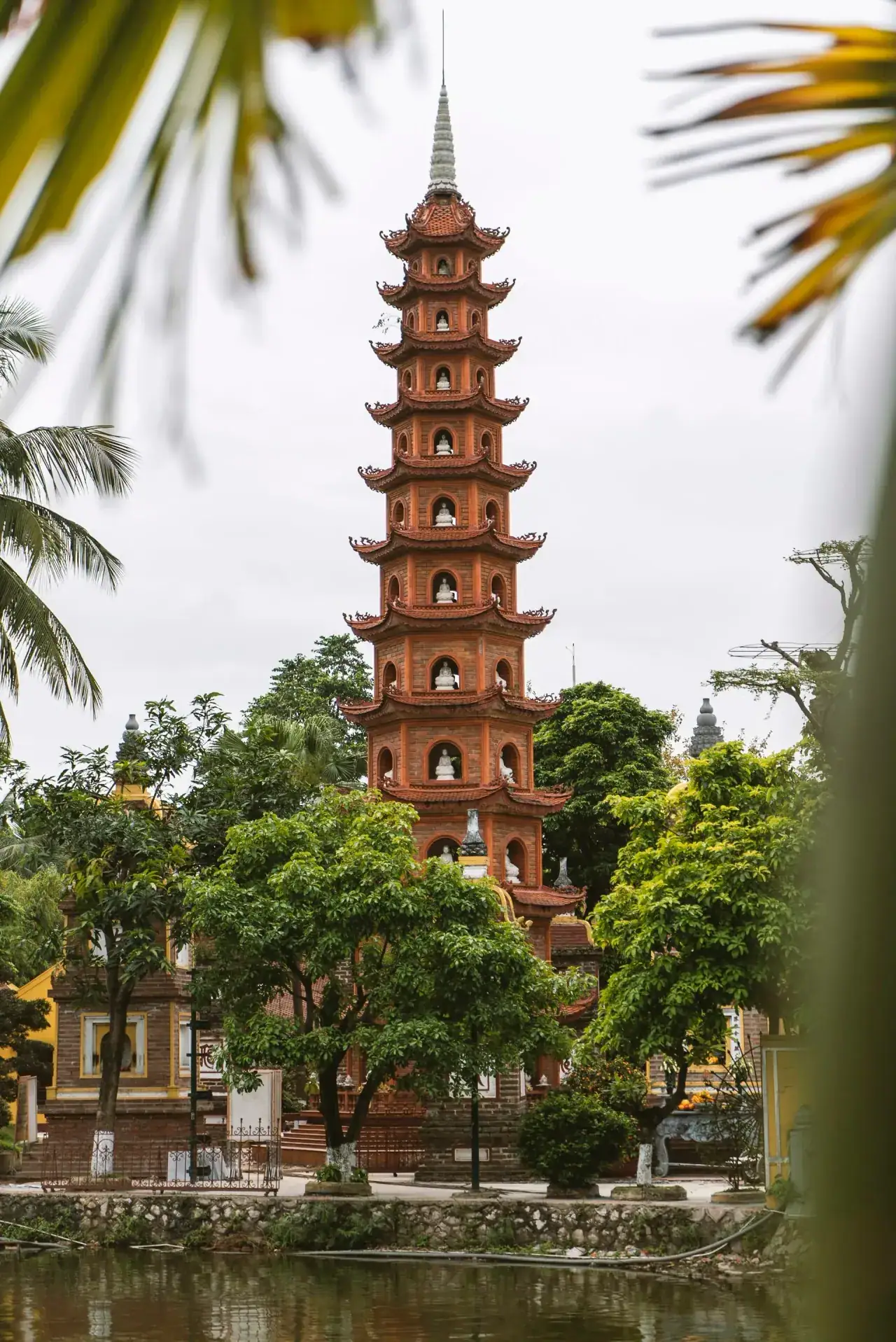
Hanoi runs on two-wheeled chaos and 1,000-year-old logic in equal measure. The Old Quarter — the medieval part of the city, 36 streets each named after the guild that traded there (Silk Street, Silver Street, Cotton Street, Tin Street) — still functions on that pattern, more or less. The hardware shops cluster, the silk shops cluster, the bowl-of-noodles places cluster. Add in 7 million motorbikes (the city has more two-wheelers than people), and the famous response of Western visitors on day one: 'how do I cross the road?' The technique, learned in three days: walk slowly, predictably, never stop. The motorbikes calculate your trajectory and flow around you. Two things make this city worth four nights, not two. The street food culture is the densest and best in Vietnam — pho for breakfast at 6am from a $1 stall, bún chả for lunch at 11:30am (Obama and Bourdain's place is a tourist trap; Bún Chả Hương Liên near it is the real one), egg coffee in the afternoon. And Ha Long Bay, three hours east, with its 1,600 limestone karst islands, is genuinely worth the overnight cruise — but pick the smaller boats (8–16 cabins) over the floating-hotel fleet, and book the Bai Tu Long route to avoid the crowds.
Hanoi's 36 Streets Old Quarter — each street historically named for the guild it hosted (Silk Street, Paper Street, Tin Street) — is one of Southeast Asia's most atmospheric urban environments. It is genuinely hectic by day; the motorbike density requires a different mode of pedestrian movement. Hoan Kiem Lake at the Old Quarter's edge is the city's spiritual and social centre — the Turtle Tower in its middle, the Ngoc Son Temple on an island connected by the red Huc Bridge. The lake's perimeter at dawn (6am, Vietnamese exercise culture in full swing) and dusk is the finest free experience in Hanoi.
TravelBuzzy Tips
Walk the Old Quarter at 6am — the light is extraordinary, the traffic manageable, and the breakfast stalls just opening
The weekend night market (Friday–Sunday evening, Hang Dao Street) is the Old Quarter at its most festive
The Huc Bridge at sunrise takes 3 minutes to cross and is one of the most photogenic spots in Vietnam
October–April is the prime window. October–December: warm and mostly dry (24–28°C), considered the best months. January–February: cool (15–18°C) and dry, excellent for sightseeing though Tết (Vietnamese New Year, late January/February) closes much of the city for a week. March–April: warming up, occasional light rain, and spring blossom. May–September: hot (35–38°C) and the rainy season — heavy but unpredictable downpours. Tết is the most important Vietnamese festival — the week before is the most festive, the week of is very quiet.
TravelBuzzy Tips
October is the best month overall — dry, not too hot, after summer tourist peak
Tết timing shifts yearly — the week before is the most atmospheric time to visit Hanoi
Avoid August — the hottest, most humid, and wettest month
Ha Long Bay (UNESCO World Heritage since 1994) is Vietnam's most visited natural site — 3,000 limestone islands rising from an emerald bay, some hiding cave systems. The quality of cruises varies enormously: a 2-day/1-night cruise (the minimum worth doing) ranges from $80 (budget party boat) to $450 (boutique junk with kayaking, cooking class, and cave exploration). Cat Ba Island (in the middle of the bay) offers an alternative base for day boat trips at a fraction of cruise prices. Lan Ha Bay (adjacent, less visited) is increasingly the insider choice for fewer crowds.
TravelBuzzy Tips
Book a mid-range cruise ($180–300 for 2 days) — the budget boats are overcrowded and the cheap food is poor
Lan Ha Bay is quieter and equally beautiful to Ha Long — and 30% cheaper
Kayaking through the floating fishing villages at dawn is the single best experience on any Ha Long cruise
Hanoi's food culture is distinct from Ho Chi Minh City's — northern Vietnamese cuisine is less sweet, more restrained, and refined. Pho bò (beef noodle soup) originated in Hanoi; the best is at Pho Bat Dan and Pho Thin on Dinh Tien Hoang Street, where it has been served the same way for 60+ years. Bún chả (the dish Obama ate with Anthony Bourdain) is the iconic Hanoian lunch — grilled pork with vermicelli and dipping sauce. Banh mi is the French colonial legacy done perfectly. Budget: $5–8 per meal at street level, $15–25 at a reputable restaurant.
TravelBuzzy Tips
Pho Thin (Dinh Tien Hoang St) serves the most famous pho in Hanoi — arrive before 7am or queue
The Obama/Bourdain bún chả spot (Bún Chả Hương Liên) has been preserved as a shrine — genuinely good food too
Egg coffee (cà phê trứng) at Cafe Giang on Nguyen Huu Huan is Hanoi's most distinctive drink
Tours & Experiences
Book your days in Hanoi
Skip-the-line tickets, guided tours, and day trips in Hanoi — free cancellation on most, confirmed instantly.
Price Calendar
Best Month to Book
Flight prices & hotel demand for Hanoi — click any month for details
Built in 1901 — the most historically significant hotel in Southeast Asia. Graham Greene wrote part of The Quiet American here. Underground WWII bunker tours included.
65-storey tower with a rooftop observation deck and pool. Panoramic views of the entire city and West Lake — excellent value for the standard of luxury.
Excellent boutique hotel in the Old Quarter — consistently one of Hanoi's best value mid-range stays. Spa, rooftop bar, and genuinely attentive service.
*Prices shown are indicative and may vary. TravelBuzzy earns a commission on bookings made through these links, at no extra cost to you. Full disclosure