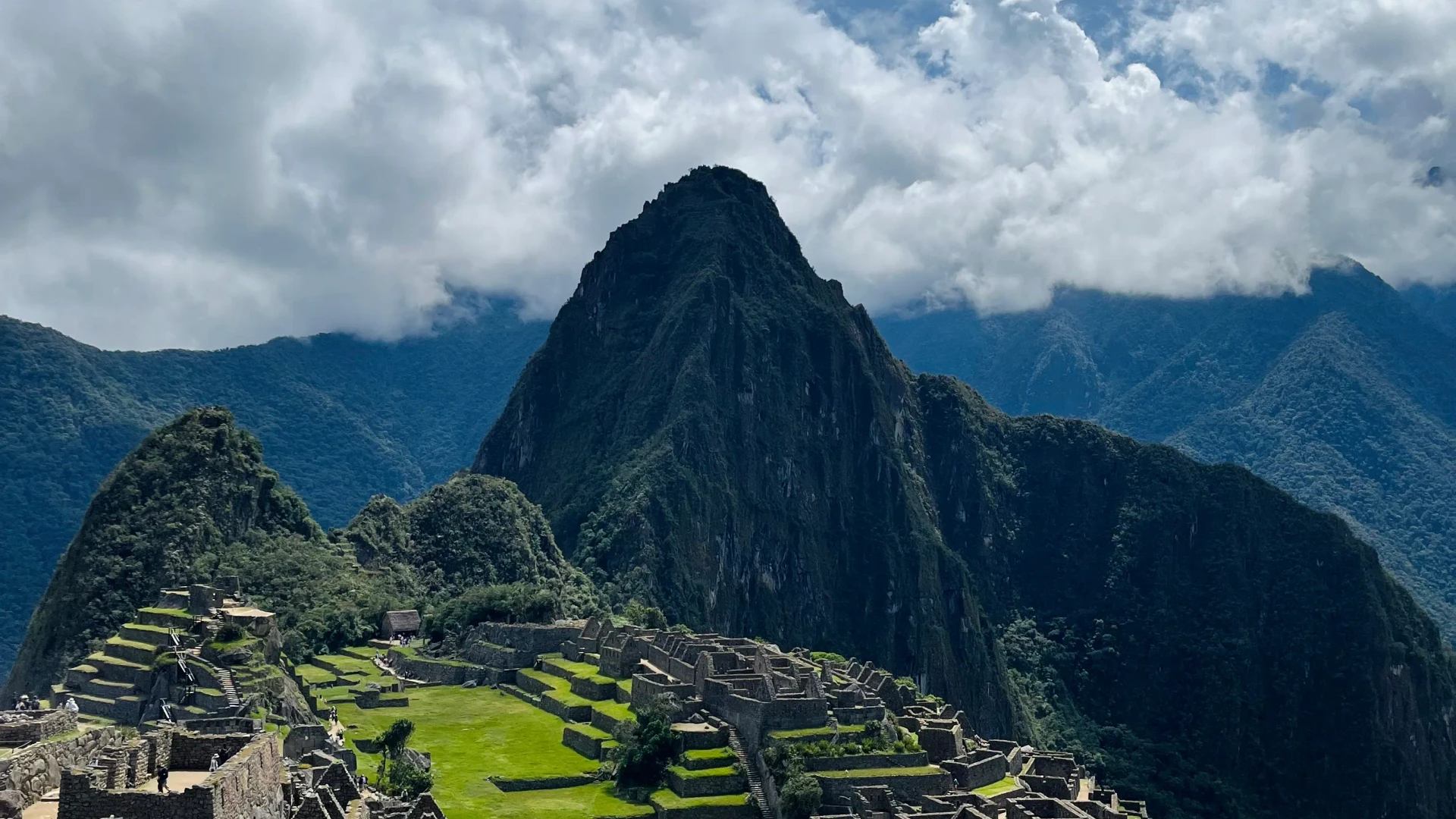
Machu Picchu photographs well from every angle, which is precisely the problem — the image is so pre-loaded into your head before you arrive that the real challenge isn't finding beauty, it's finding a version of the experience the crowds haven't already flattened. There are, in practice, three ways to see it: the four-day Inca Trail slog that ends at the Sun Gate for the classic reveal, the cheaper train-and-bus combo through Aguas Calientes that gets you the same ruins with none of the trekking, and the increasingly popular Salkantay or Lares treks that arrive by a back door most tour buses never use. None of them are wrong. What is wrong is showing up without a permit booked months ahead, assuming Cusco's 3,400m altitude won't touch you, or treating the site as a two-hour photo stop when the surrounding Sacred Valley — Ollantaytambo, Pisac, Moray — rewards three or four extra days on its own.
Cusco is the historic base — a 3,400m former Inca capital of colonial churches built on Inca foundations, with excellent hotels and the best restaurant scene in the Peruvian Andes. Most visitors spend 2-3 nights here before or after Machu Picchu to acclimatise. The Sacred Valley (Urubamba, Ollantaytambo, Pisac) sits 600m lower and is a smarter first stop for altitude — its market towns, terraced ruins, and salt pans at Maras are worth two days alone. Aguas Calientes (also called Machu Picchu Pueblo) is the scrappy tourist town at the base of the citadel itself — nobody's favourite, but the only base if you want to be at the gates before the day-trippers arrive from Cusco.
TravelBuzzy Tips
Sleep in the Sacred Valley before Cusco, not after — arriving at altitude gradually cuts the odds of altitude sickness dramatically
Aguas Calientes has zero road access — every hotel, restaurant, and tourist arrives by train, which keeps prices high
Ollantaytambo's ruins are a genuinely underrated warm-up for Machu Picchu and see a fraction of the crowds
Machu Picchu operates on a strict daily visitor cap, and the classic 4-day Inca Trail sells out 4-6 months ahead in peak season (June-August) — permits are tied to your passport number and can only be bought through licensed operators, never independently. If you miss the Inca Trail window, the Salkantay Trek (5 days, no permit needed, higher and colder) or the straightforward train-plus-entry-ticket route from Cusco or Ollantaytambo both get you to the same ruins. Entry tickets themselves are also capped and time-slotted — book the specific circuit (there are several, each with different viewpoints) at least a few weeks ahead even if you're not trekking.
TravelBuzzy Tips
Book the Inca Trail through a licensed agency 5-6 months ahead for June-August dates — it genuinely sells out
Circuit 2 gives the classic elevated postcard view; Circuit 3 adds the Sun Gate hike — pick before you buy, not on arrival
Huayna Picchu and Machu Picchu Mountain climbs need separate tickets bought weeks in advance, capped at a few hundred people a day
May to September is the dry season and the reliable window — clear skies, cold nights, and the best odds of an unclouded citadel. June to August is also peak crowds and peak Inca Trail demand, so April-May and September-October are the sweet spots: dry-adjacent weather with noticeably thinner crowds. The wet season (November-March) brings afternoon rain and a real risk of landslide-related rail closures, and the Inca Trail closes entirely every February for maintenance. Mornings are misty even in dry season — the postcard shot with blue sky usually needs patience, not luck.
TravelBuzzy Tips
February is the one month the Inca Trail closes completely for maintenance — plan around it
First entry (6am) gives you the best odds of catching the ruins before the cloud burns off and before the crowds
Shoulder months (April, May, September) balance decent weather against real savings on trains and hotels
There's no road to the ruins or to Aguas Calientes — everyone arrives by train (PeruRail or IncaRail) from Cusco (3.5 hrs), Ollantaytambo (1.5 hrs, the faster and cheaper option), or on foot via one of the trekking routes. From Aguas Calientes, a 25-minute shuttle bus (or a steep 1.5-hour uphill walk) covers the final stretch to the entrance gate. Buy train tickets as early as possible in high season — the two operators' better departure times sell out weeks ahead, leaving only inconvenient early-morning or late-afternoon slots.
TravelBuzzy Tips
Board the train from Ollantaytambo, not Cusco — half the time, half the price, same train
The first shuttle buses from Aguas Calientes start around 5:30am and the queue forms well before that in peak season
Walking up from Aguas Calientes (free, steep, 1.5 hours) is a legitimate option if you're already acclimatised
Cusco has quietly become one of South America's most interesting food cities — Peru's New Andean movement (native potatoes, alpaca, high-altitude grains like kañiwa) shows up on tasting menus at Cicciolina and MAP Café, while cheap, excellent set-lunch menus (menú del día) run $3-5 at markets like San Pedro. Chicha morada (purple corn drink) and cuy (guinea pig, an acquired taste worth trying once) are the two dishes worth being adventurous for. In Aguas Calientes, food is overpriced and mediocre by comparison — eat your good meals in Cusco or the Sacred Valley and treat the town as a functional stopover.
TravelBuzzy Tips
San Pedro Market's lunch stalls are Cusco's best-value meal — a full plate for $3-4
MAP Café (inside the Museo de Arte Precolombino) does a serious tasting menu without needing a Lima-level budget
Coca tea, sold everywhere, genuinely helps with altitude adjustment — it's not just a tourist ritual
Tours & Experiences
Book your days in Machu Picchu
Skip-the-line tickets, guided tours, and day trips in Machu Picchu — free cancellation on most, confirmed instantly.
Get Price Alerts for Machu Picchu
We'll notify you when flight or hotel prices drop for your chosen month.
*Prices shown are indicative and may vary. TravelBuzzy earns a commission on bookings made through these links, at no extra cost to you. Full disclosure