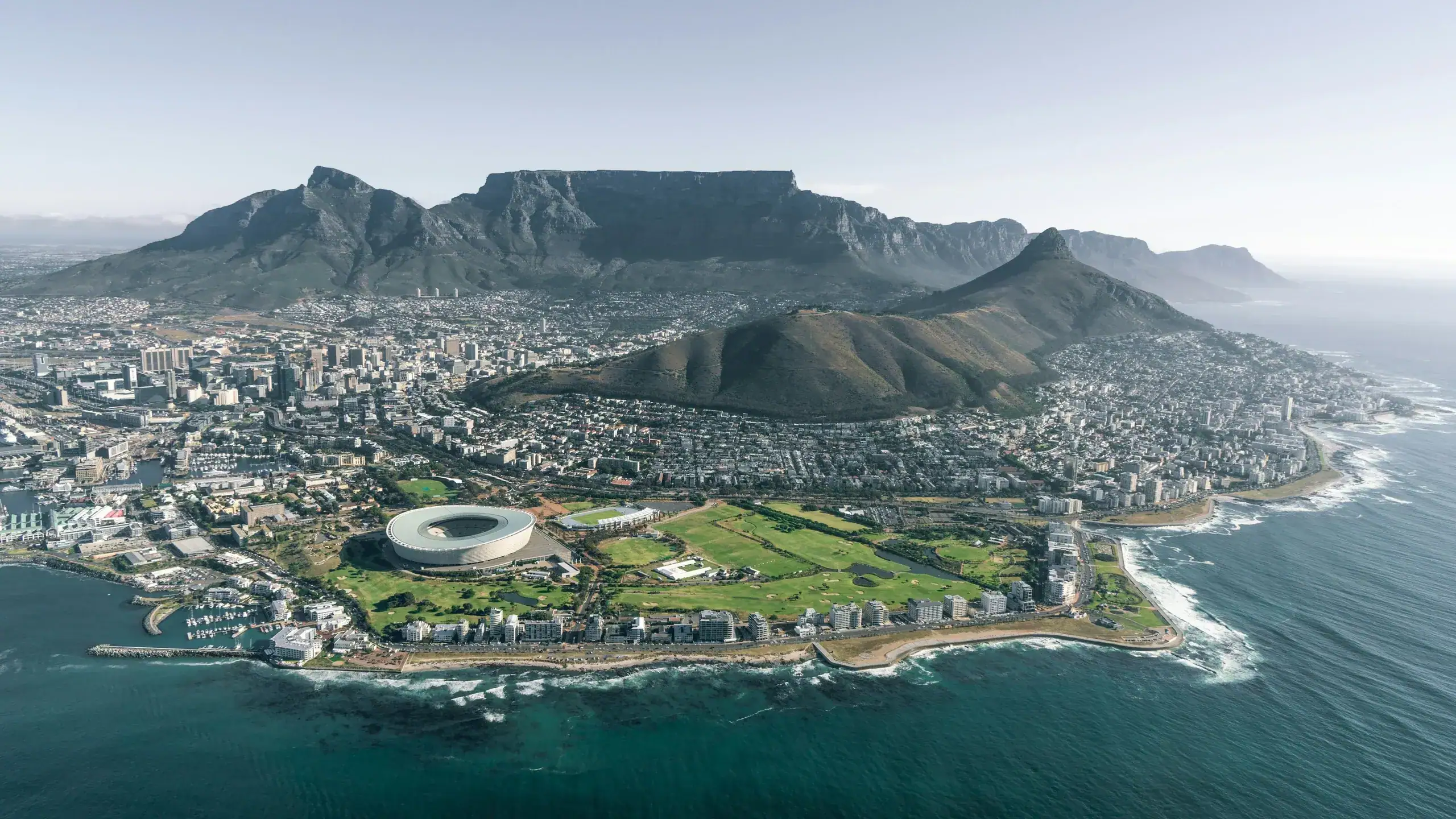
Cape Town is the only major city we know where the geography keeps interrupting whatever else you're doing. You'll be walking to a restaurant and the cloud will pull off the back of Table Mountain in real time; you'll be on a road south and a beach the colour of glass will appear on your right; you'll book a wine tasting in Stellenbosch and end up driving through a landscape that looks like Tuscany pretending to be California. It is, on pure scenery, the best-value major city in the world. The catch most visitors don't read about: Cape Town is also one of the world's most unequal cities, and that fact shapes practical decisions in ways nobody warns you about. Stay in Sea Point, De Waterkant, the City Bowl, or Camps Bay — these are walkable, well-policed, and where the food and bar scene actually lives. Don't drive at night unless you know exactly where you're going. Take Uber, not metered taxis. And the wind, between November and February, is genuinely something — pack a windbreaker even in summer.
The City Bowl (CBD) is the base for most sights — Table Mountain gondola, V&A Waterfront, and De Waterkant. Camps Bay is the glamour beach suburb — stunning setting against the Twelve Apostles mountains, excellent restaurants, slightly LA in feel. Constantia is the old-money suburb with the best wine estates. Sea Point is where young Cape Town actually lives — great seafood, coastal walking path, and affordable restaurants. Green Point and De Waterkant are the design and LGBTQ+ neighbourhoods. Bo-Kaap is the brightly painted Cape Malay neighbourhood, historically and culinarily fascinating.
TravelBuzzy Tips
Table Mountain cable car: buy tickets online, go on the clearest day, book the first cable car at 8am
Uber is the safest way to get around — do not hail taxis from the street
Cape Point and Boulders Beach are best combined in a single full-day coastal drive
Cape Town has a Mediterranean climate — warm, dry summers (November–March) and cool, wet winters (June–August). Summer is the prime time: 25–30°C, long days, all activities running, and the winelands at their most scenic. December and January are the most expensive and crowded months (South African school holidays). March–April is the sweet spot: still warm, quieter, and shoulder-season prices. Winter (June–August) is mild (12–18°C) but can be persistently rainy — good for whale watching (October–November) is actually spring.
TravelBuzzy Tips
March is the best month: grape harvest, golden light, quieter than Jan/Feb, still warm
Southern right whales are best seen October–November at Hermanus (2 hrs from Cape Town)
July–August is the cheapest month — cool and occasionally rainy but the city is fully open
Cape Town is not a walkable city beyond specific areas — distances between attractions are significant. Uber is safe, cheap, and reliable — use it exclusively rather than street taxis. Renting a car gives the most freedom for Winelands day trips, Cape Point, and the Garden Route if you extend your stay. The MyCiTi bus covers some routes but is not comprehensive. Never walk with valuables in the CBD after dark — situational awareness is important, particularly around Greenpoint and Long Street.
Stellenbosch, Franschhoek, and Paarl are 30–60 minutes from Cape Town and among the New World's finest wine regions. Stellenbosch has the greatest concentration of estates, best restaurants, and most visitor infrastructure. Franschhoek is smaller, more French-influenced, and home to The Test Kitchen (long ranked Africa's best restaurant). The Franschhoek Wine Tram does a hop-on circuit of the valley and is good for solo travellers without a car. Book wine estate lunches in advance for the better Stellenbosch farms.
TravelBuzzy Tips
Hire a driver for a Winelands day — DUI laws are strict and the wine is excellent
Franschhoek has better restaurants than Stellenbosch; Stellenbosch has more estates
Jordan Wine Estate's restaurant does one of the best vineyard lunches in Africa
Tours & Experiences
Book your days in Cape Town
Skip-the-line tickets, guided tours, and day trips in Cape Town — free cancellation on most, confirmed instantly.
Price Calendar
Best Month to Book
Flight prices & hotel demand for Cape Town — click any month for details
Six floors atop the converted Zeitz MOCAA museum — the most dramatic hotel in Africa. Blown-glass windows, pillow-menu, and Table Mountain views from the rooftop pool.
*Prices shown are indicative and may vary. TravelBuzzy earns a commission on bookings made through these links, at no extra cost to you. Full disclosure