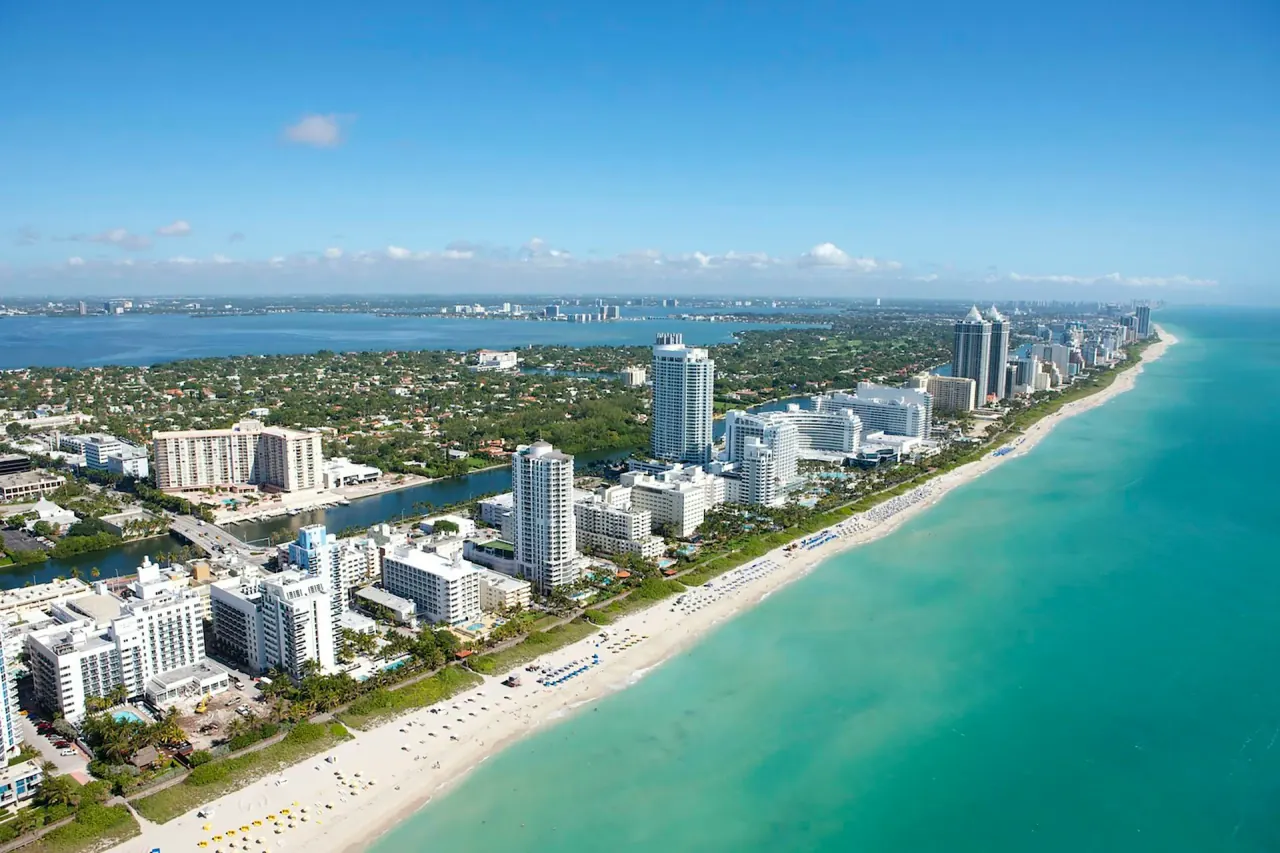
Miami is the most Latin American city in the United States, and the moment you understand that the rest of the trip falls into place. 70% of Miami-Dade residents are Hispanic; Spanish is functionally the lingua franca; the food is Cuban, Venezuelan, Colombian, Argentine, and Peruvian before it is American. South Beach is the city's marketing image — Art Deco hotels, neon, beach scene — but it's also where rents have risen by 40% in five years and where most Miami residents now go only for work. The interesting Miami has shifted. Wynwood (street art and craft beer), Little Havana (the Cuban exile neighbourhood, 8th Street and the dominoes parks), Coconut Grove (older money, leafier streets, sailing), and Miami Beach's Mid-Beach (less expensive, less crowded) are where the actual life happens. Two practical realities. Hurricane season runs June–November, with peak risk in September; outside those months, the weather is genuinely the United States' most reliable. And the food scene above $50 is among the country's best (Joia Beach, KYU, Cote, Bazaar); the best $5 sandwich is the Cuban at Versailles in Little Havana. Avoid Ocean Drive after 6pm — it's the worst version of Miami. Walk Lincoln Road instead.
South Beach (SoBe) is the famous strip — Ocean Drive's pastel Art Deco hotels, Lincoln Road's pedestrian mall, and the widest beach in Miami. Very touristy but genuinely beautiful and architecturally extraordinary. Wynwood has become Miami's most visited neighbourhood — 30 blocks of warehouse walls converted into outdoor murals by the world's top street artists, with excellent restaurants and galleries. Brickell is Miami's financial district — sleek, new, excellent rooftop bars. Little Havana (8th Street/Calle Ocho) is the Cuban neighbourhood — domino parks, ventanitas (walk-up coffee windows), and the best Cuban food in the city.
TravelBuzzy Tips
South Beach Art Deco at 7am (before the beach crowds) is a genuinely extraordinary architectural experience
Wynwood Walls (the curated mural park at NW 2nd Ave) is the centrepiece but the best murals extend 3–4 blocks north and south
Calle Ocho on a Saturday afternoon (dominos at Maximo Gomez Park, café cubano at a ventanita) is the most authentic Miami experience
November–April is peak season for good reason — 22–28°C, low humidity, and the best beach weather. December–February is the most popular and most expensive window. April and November are excellent shoulder months: still warm but cheaper. May–October is hot (32–35°C) and intensely humid, with hurricane season (June–November) adding real risk. The summer hotel prices drop 40–50% but the heat and humidity require commitment. Art Basel Miami Beach (early December) is the most significant art fair in the Americas and transforms the city for one week.
TravelBuzzy Tips
Art Basel Miami Beach (first week of December) is one of the most extraordinary cultural events in the USA — book 6+ months ahead
March is the sweet spot: warm, dry, post-spring break crowds, and hotel prices still reasonable
Hurricane season (June–November) is real — check NOAA forecasts and ensure your travel insurance covers cancellation
Miami is a car city — designed entirely around the automobile, with limited public transport between its main areas. Uber and Lyft are the practical solution for most trips. The Miami Metromover (free elevated train) covers the downtown and Brickell areas. The Miami Beach trolley (free) covers South Beach's main strip. Walking is viable within South Beach, Wynwood, and the Brickell waterfront. Driving and parking in South Beach is genuinely painful — stay in a hotel with self-parking or valet and use Uber for everything.
Miami's food identity is built on Cuban and Latin cuisine — the café cubano (an espresso so sweet it's almost a dessert) from a ventanita, the media noche sandwich at 2am after clubbing, and a proper Cuban plate lunch at Versailles Restaurant on Calle Ocho. The upscale scene has grown dramatically — José Andrés's Bazaar at the SLS Hotel, Zuma Miami, and Carbone Miami (the most glamorous restaurant in the city) are the power-dining choices. The Design District and Wynwood have the best independent restaurants. For beach cocktails, the Broken Shaker at the Freehand Hotel is the finest outdoor bar in Miami.
TravelBuzzy Tips
Café cubano (sweet Cuban espresso) from the window of Versailles at 8am is the essential first Miami experience
The Broken Shaker's outdoor cocktail garden at the Freehand Hotel is the best bar atmosphere in Miami
Joe's Stone Crab (mid-October to mid-May) is Miami's most famous restaurant — book weeks ahead or eat at the takeaway counter
Tours & Experiences
Book your days in Miami
Skip-the-line tickets, guided tours, and day trips in Miami — free cancellation on most, confirmed instantly.
Price Calendar
Best Month to Book
Flight prices & hotel demand for Miami — click any month for details
The most theatrical hotel in the USA — designed by Baz Luhrmann, with a taxidermied mammoth in gold leaf in the lobby, the finest pool on Miami Beach, and extraordinary service.
The hotel that defined the Miami Beach design revival in 1995. Philippe Starck interiors, the famous pool at the edge of the beach, and a place where the design still holds up 30 years later.
The most social hotel in Miami — the Broken Shaker cocktail bar and garden terrace are the best in the city, with hostel dormitories and private rooms at excellent value.
*Prices shown are indicative and may vary. TravelBuzzy earns a commission on bookings made through these links, at no extra cost to you. Full disclosure