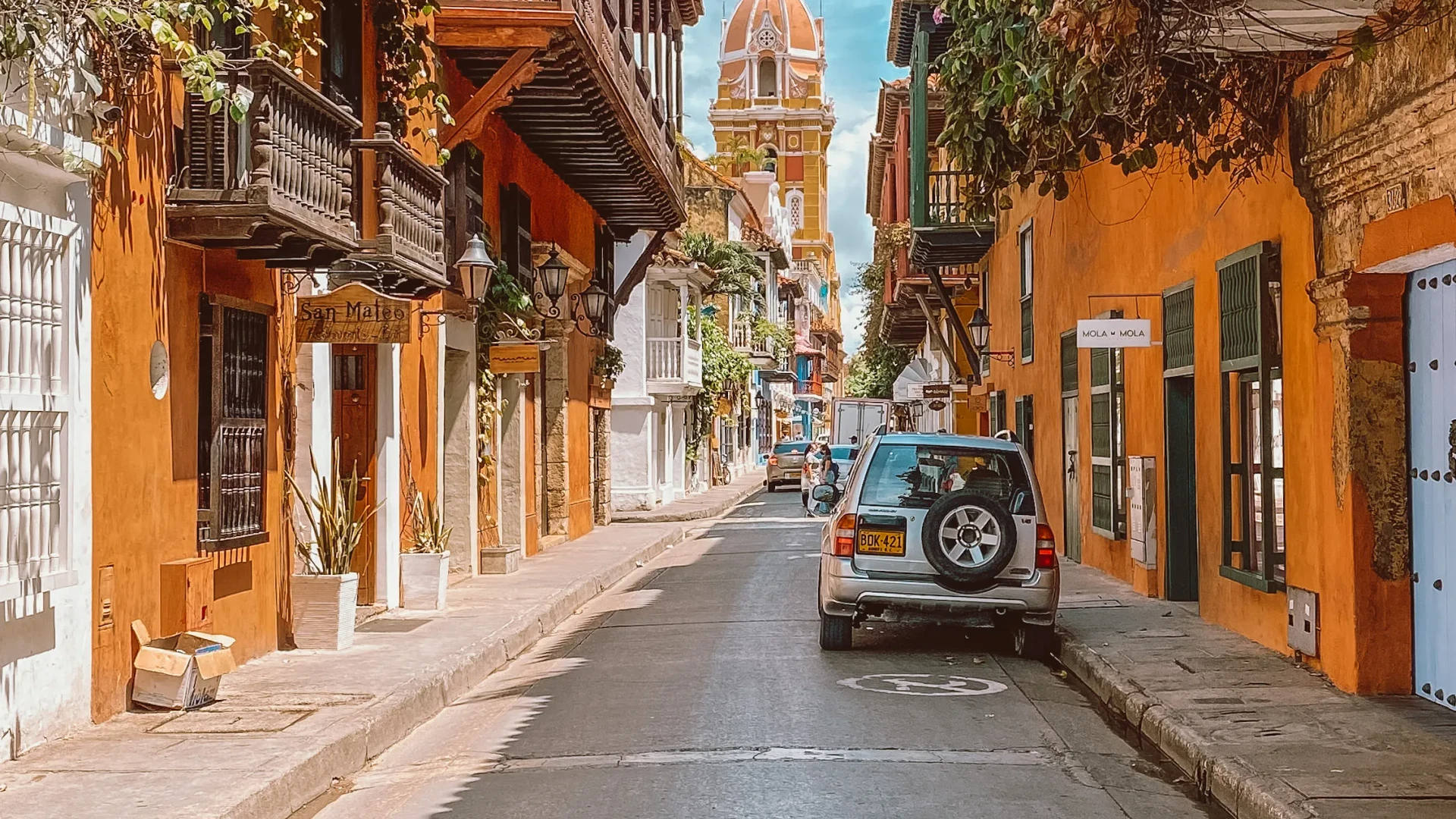
Cartagena's walled Old City is so photogenic — bougainvillea spilling over balconies, horse-drawn carriages, a 16th-century fort still guarding the harbour — that it's easy to forget the city was built as a heavily fortified slave port and treasure chokepoint, and that history sits directly underneath the Instagram version. The real trick to visiting well is splitting your time between two adjacent but very different neighbourhoods: the Old City (Ciudad Amurallada), all restored mansions and boutique hotels behind 16th-century walls, and Getsemaní next door, a formerly rough dockworkers' quarter turned street-art capital that's now more interesting, cheaper, and considerably more alive after dark. The Caribbean heat is relentless and non-negotiable year-round — plan around it rather than fighting it, and use the offshore islands as your relief valve.
The Ciudad Amurallada (walled Old City) is the postcard Cartagena — restored colonial mansions, the cathedral, Plaza de los Coches, and boutique hotels converted from centuries-old houses. It's also increasingly a museum-piece for cruise-ship day-trippers, quiet and expensive after 9pm. Getsemaní, immediately outside the walls, was the poor, informal neighbourhood historically kept separate from the walled city's elite — today it's the opposite of quiet: street art on every block, the liveliest restaurant and bar scene in the city, and noticeably better value on both hotels and food. Most experienced visitors now base themselves in Getsemaní and walk into the Old City for sightseeing rather than the reverse.
TravelBuzzy Tips
Stay in Getsemaní for better value and nightlife, walk 10 minutes into the Old City for sightseeing and dinner
Plaza de la Trinidad in Getsemaní at sunset, when locals gather for street food and impromptu music, is the best free evening in Cartagena
The Old City empties out and feels almost too quiet after cruise-ship crowds leave around 5pm — Getsemaní is where the actual evening happens
Cartagena is hot and humid year-round — there's no genuinely cool season, only a drier one. December to April is the dry season and the best window: less rain, slightly lower humidity, and the busiest tourist period. May and November are shoulder months with more frequent but usually short afternoon showers. The wettest months (September-October) coincide with the Caribbean hurricane season's peak, and while Cartagena itself is rarely hit directly, storms elsewhere in the region can disrupt flights and ferries to the islands.
TravelBuzzy Tips
December-January is also Colombian holiday season and the most expensive, most crowded window — book hotels early or shift to February-March
Afternoon showers in the shoulder months are usually a 30-45 minute downpour, not an all-day washout — plan indoor activities around 3-5pm
Humidity is constant even in the 'cool' months — pace outdoor sightseeing for early morning and evening
The Old City and Getsemaní are entirely walkable and best explored on foot — cars aren't practical inside the walls. For trips further out (Bocagrande's beaches, the airport, the bus terminal), taxis are cheap but should be booked through an app (Cabify) or hotel rather than hailed on the street, where overcharging tourists is routine. Rosario Islands and Playa Blanca require a boat, either a shared lancha from the Muelle Turístico or a private charter. Rafael Núñez International Airport is a 15-20 minute taxi from the Old City, making Cartagena one of the more convenient city-break destinations in South America.
TravelBuzzy Tips
Use Cabify rather than street taxis — fixed pricing avoids the routine tourist overcharge
Agree a taxi fare before getting in if Cabify isn't available — meters are rarely used
Shared lanchas to Rosario Islands leave early (7-8am) and get you more beach time than the later departures
Cartagena's food leans heavily on fresh Caribbean seafood, coconut rice, and patacones (fried green plantain), sold both at excellent formal restaurants in the Old City and from street carts around Getsemaní's plazas. La Cevichería (made famous by Anthony Bourdain) and Carmen are the well-known upscale picks; for better value, Getsemaní's smaller family-run spots around Calle del Guerrero serve the same core dishes for a third of the price. Arepa de huevo (a deep-fried corn cake with egg inside) from a street stall is the essential breakfast, and fresh fruit juices — lulo, maracuyá, corozo — are everywhere and consistently excellent.
TravelBuzzy Tips
La Cevichería gets a Bourdain-fame queue at dinner — go for lunch instead to skip the wait
Getsemaní's street food around Plaza de la Trinidad is as good as most sit-down restaurants at a fraction of the price
Stick to bottled or well-reviewed stalls for fresh juices and ice — standard travel-water precautions apply
Cartagena's own city beaches (Bocagrande) are mediocre and crowded — the real Caribbean payoff is a day trip to the Islas del Rosario, a coral archipelago 45 minutes offshore with turquoise water and decent snorkelling, or Playa Blanca on the Barú peninsula, which is closer and easier but far busier with day-trippers. Both can be done as a shared boat tour or, for a better day, by booking a beach club with day-pass access that includes a boat transfer and guarantees a lounger away from the vendors that patrol the public sections relentlessly.
TravelBuzzy Tips
A day-pass beach club (rather than the public sections of Playa Blanca) is worth the extra cost to avoid constant vendor interruptions
Rosario Islands' water is clearer than Playa Blanca's — worth the extra 20 minutes of boat time for snorkelling
Book the earliest boat departure — afternoon seas get choppier and later boats mean less actual beach time
Tours & Experiences
Book your days in Cartagena
Skip-the-line tickets, guided tours, and day trips in Cartagena — free cancellation on most, confirmed instantly.
Get Price Alerts for Cartagena
We'll notify you when flight or hotel prices drop for your chosen month.
A former 17th-century convent in the Old City, converted into Cartagena's most storied luxury hotel — cloistered courtyards and a pool built into the old chapel gardens.
Three restored 17th-century colonial houses joined around a courtyard aqueduct — Cartagena's most intimate luxury address, with a private beach on Barú.
*Prices shown are indicative and may vary. TravelBuzzy earns a commission on bookings made through these links, at no extra cost to you. Full disclosure