Eco Travel in 2026 — An Honest Guide to Sustainable Tourism (and What Is Just Greenwashing)
One transatlantic flight emits 1.6 tonnes of CO2 — roughly a third of your entire annual carbon budget. So let us stop pretending that buying an offset makes flying guilt-free, and talk about what actually reduces your impact as a traveller.
I write about travel for a living, and I want to be upfront about something: travel is inherently not eco-friendly. Every flight burns jet fuel. Every hotel room consumes water and electricity. Every tourist who shows up in a fragile ecosystem adds pressure to it. There is no version of international tourism that is genuinely carbon-neutral in 2026 — and anyone telling you otherwise is selling something (usually an offset certificate). But that does not mean the conversation ends there. The gap between a traveller who flies six short-haul flights across Europe in two weeks, stays in energy-guzzling resort chains, and rides a drugged elephant for an Instagram photo, and a traveller who takes the train, stays in a locally owned B Corp-certified guesthouse, and spends three weeks in one region instead of hopping between five — that gap is enormous. It is the difference between emitting 3 tonnes of CO2 on a trip and emitting 0.4 tonnes. This guide is about closing that gap. Not with vague platitudes about 'being mindful' or 'leaving no trace,' but with specific numbers, real certifications, and honest trade-offs. I will tell you what works, what is greenwashing, and where the line sits between reducing your impact and pretending you are saving the planet.
Planning this trip?
Find flights now
Compare prices across 700+ airlines and OTAs in one search — find the real lowest fare without the inflated middleman markup.
Search flightsNeed a place to stay?
Search hotels
The carbon math: what your trip actually costs the planet
Before we talk about solutions, we need to talk about numbers — because most travellers have no idea how lopsided their carbon footprint really is. A single return flight from New York to London emits approximately **1.6 tonnes of CO2 per economy passenger**. Business class roughly triples that (more floor space per person, fewer passengers per flight). A return flight from London to Bali emits about **2.4 tonnes**. For context, the average person's annual carbon budget — the amount each human on Earth can emit to keep warming below 1.5 degrees Celsius — is roughly **4 to 5 tonnes per year** for everything: housing, food, transport, clothing, all of it. So one transatlantic holiday flight consumes a third of your annual budget. A trip to Southeast Asia consumes half. Two long-haul trips a year and you have blown through your entire allowance before you have turned on the heating at home. Here is the breakdown by transport mode for a typical 1,000 km journey in Europe, based on 2025 data from the European Environment Agency: - **Flight:** 160-180 kg CO2 per passenger - **Car (petrol, single occupant):** 120-170 kg CO2 - **Car (petrol, 4 passengers):** 30-43 kg CO2 per person - **Long-distance bus:** 20-27 kg CO2 per passenger - **Train (electrified):** 6-14 kg CO2 per passenger The numbers are not subtle. Flying produces roughly **12 to 30 times** the emissions of a train for the same distance. A bus produces 3-4 times less than a car with one person in it. This is not an opinion — it is physics and fuel chemistry. The implication is uncomfortable but straightforward: the single most effective thing you can do as a traveller is fly less. Not offset more. Not buy carbon-neutral stickers. Fly less. Everything else in this guide matters, but nothing matters as much as that one decision.
Editor's tips
- Use the ICAO Carbon Emissions Calculator (icao.int/environmental-protection) to calculate exact emissions for any flight route
- Business and first class have 3-4x the carbon footprint of economy — the same plane, the same fuel, but fewer seats means more emissions per person
- A 4-hour train ride in Europe typically replaces a 1-hour flight when you add airport time — the time difference is smaller than it looks
Carbon offsets: why 'fly and offset' is mostly greenwashing
I used to buy carbon offsets for every flight. I felt responsible doing it. Then I read the data. In January 2023, *The Guardian* and *Die Zeit* published a joint investigation into Verra, the world's largest carbon credit certifier. The findings were damning: more than **90% of Verra's rainforest carbon credits** — the ones you buy when you tick the 'offset my flight' box on a booking site — did not represent real emissions reductions. The forests were not actually under threat, the baselines were inflated, and the credits were essentially being sold for conservation that would have happened anyway. Verra disputed the methodology, but the investigation aligned with earlier academic research. A 2023 study published in *Science* by Thales West and colleagues at VU Amsterdam found that the actual deforestation reduction from certified REDD+ projects was, on average, **only a fraction** of what the credits claimed. You thought you offset 1.6 tonnes of CO2. In reality, you may have offset 0.1 tonnes, or nothing. This does not mean every offset programme is fraudulent. Gold Standard and Plan Vivo certifications have more rigorous verification processes. Direct air capture projects (companies like Climeworks in Iceland) genuinely remove CO2 from the atmosphere, but they cost $600-1,000 per tonne — meaning your transatlantic flight offset would cost $960-1,600 instead of the $12-25 most airlines charge. The cheap offsets are cheap because they do not work. **What to do instead:** 1. **Accept that some flights are unavoidable** and stop pretending offsets erase them. 2. **Reduce the number of flights per year.** One long trip instead of three short ones. Overland travel within a continent. 3. **If you do offset, use Gold Standard or direct air capture.** Pay the real price, not the feel-good price. 4. **Budget the true carbon cost.** If you fly twice a year long-haul, you are over budget. Acknowledge it and compensate elsewhere — eat less meat, switch to green energy at home, take the train domestically. The travel industry loves offsets because they allow business as usual. But the atmosphere does not care about your receipt. It cares about the molecules.
Editor's tips
- Gold Standard (goldstandard.org) and Plan Vivo (planvivo.org) are the two most credible offset certifiers — look for their logos, not generic 'carbon neutral' claims
- Climeworks (climeworks.com) offers genuine direct air capture carbon removal at around $1,000/tonne — honest and expensive, unlike tree-planting offsets
Train over plane in Europe: the routes where rail wins
Europe's high-speed rail network has reached a point where, for journeys under 800 km, the train is often faster door-to-door than flying — and always lower-carbon. The maths work like this: a 1-hour flight requires arriving at the airport 90 minutes early, clearing security, boarding, taxiing, flying, taxiing again, disembarking, collecting luggage, and transferring to the city centre. Total door-to-door: 4-5 hours. A high-speed train on the same route takes 3-5 hours, departs from the city centre, arrives in the city centre, requires no security queue, allows unlimited luggage, and offers more legroom than any economy seat in the sky. Here are the routes where trains decisively beat flights in 2026, both on time and carbon: - **Paris to London** (Eurostar, 2h17, ~6 kg CO2 vs ~100 kg flying) - **Paris to Amsterdam** (Thalys/Eurostar, 3h15, ~7 kg CO2 vs ~95 kg) - **Paris to Barcelona** (TGV, 6h30, ~6 kg CO2 vs ~120 kg) - **Berlin to Prague** (EC train, 4h15, ~9 kg CO2 vs ~85 kg) - **Milan to Zurich** (EC, 3h25, ~5 kg CO2 vs ~70 kg) - **London to Edinburgh** (LNER, 4h20, ~12 kg CO2 vs ~115 kg) - **Stockholm to Copenhagen** (SJ, 5h10, ~4 kg CO2 vs ~90 kg) Night trains are making a comeback too. European Sleeper launched its Brussels-to-Berlin route in 2023, OBB Nightjet connects Vienna to Rome, Zurich, Hamburg, and Amsterdam, and the new Paris-to-Berlin night train launched in late 2024. You board at 8pm, sleep in a couchette or private compartment, and wake up in another country. It replaces both a flight and a night of accommodation. **The Eurail Pass** is worth considering for multi-country trips: the Global Pass (valid in 33 countries) costs from EUR 260 for 4 travel days within one month. For a two-week trip hitting France, Switzerland, Italy, and Austria, it typically saves 20-30% over buying individual tickets — and eliminates all the flights in between. The honest caveat: trains do not work for everything. London to Athens is 40+ hours by rail. Crossing from Europe to North Africa or the Middle East still requires flying or a ferry. And budget airlines sometimes cost EUR 25 for a route where the train costs EUR 150. The carbon argument is real, but the price argument often pushes back. Each traveller draws that line differently, and pretending the choice is always easy would be dishonest.
Eco-certified accommodation: what the labels actually mean (and which ones are real)
The accommodation industry has an eco-label problem. There are over **200 sustainability certifications** for hotels and hostels worldwide. Most are meaningless — self-awarded, un-audited badges that a property can stick on its booking profile by paying a fee and filling in a questionnaire. Here is how to separate the real ones from the marketing. **The three certifications that actually matter:** **1. B Corp Certification** — The gold standard. B Corp is a whole-business certification (not just environmental — it covers governance, workers, community, and environment). Certification requires an independent audit, a score of 80+ out of 200 on the B Impact Assessment, and recertification every three years. B Corp-certified hotels include Zoku (Amsterdam, Copenhagen, Vienna), Room2 (London — the world's first whole-life net-zero hotel), and several Inkaterra properties in Peru. If a hotel is B Corp-certified, its sustainability claims are real. **2. Green Key** — The most widely recognised eco-label in hospitality, backed by the Foundation for Environmental Education (the same organisation behind Blue Flag beaches). Green Key requires properties to meet strict criteria on energy management, water conservation, waste reduction, and guest education. Crucially, it requires an **on-site audit by an independent assessor** — not just a self-assessment. Over 3,300 properties in 65 countries hold Green Key certification. It is the label I look for first when booking. **3. LEED (Leadership in Energy and Environmental Design)** — An engineering-level building certification from the US Green Building Council. LEED-certified hotels have demonstrated measurable reductions in energy use, water consumption, and waste. The Bardessono Hotel in Napa Valley, the Park Hyatt Maldives, and the ITC hotels across India all hold LEED Platinum status. LEED is harder to fake because it certifies the building's physical systems, not just the management's intentions. **Labels to be sceptical of:** Booking.com's 'Travel Sustainable' badge is self-reported — properties answer a questionnaire without independent verification. TripAdvisor's GreenLeaders programme was discontinued in 2023. Any property that calls itself 'eco-friendly' or 'green' without citing a specific third-party certification is making an unverified marketing claim. **Beyond labels:** The simplest sustainability filter requires no certification at all. Stay in locally owned properties instead of international chains. The money recirculates in the local economy instead of flowing to corporate headquarters in another country. A family-run guesthouse in the Azores or a locally owned riad in Marrakech is almost always a better ecological and economic choice than a Hilton — even if neither has a certificate on the wall.
Editor's tips
- Search for Green Key properties at greenkey.global/green-key-sites — filter by country and property type
- B Corp certified hotels are listed at bcorporation.net — search under 'Accommodation and Food Services'
- When a hotel says 'eco-friendly' without naming a certification, ask them directly: 'Which third-party certification do you hold?' The answer tells you everything
Responsible wildlife tourism and the overtourism problem
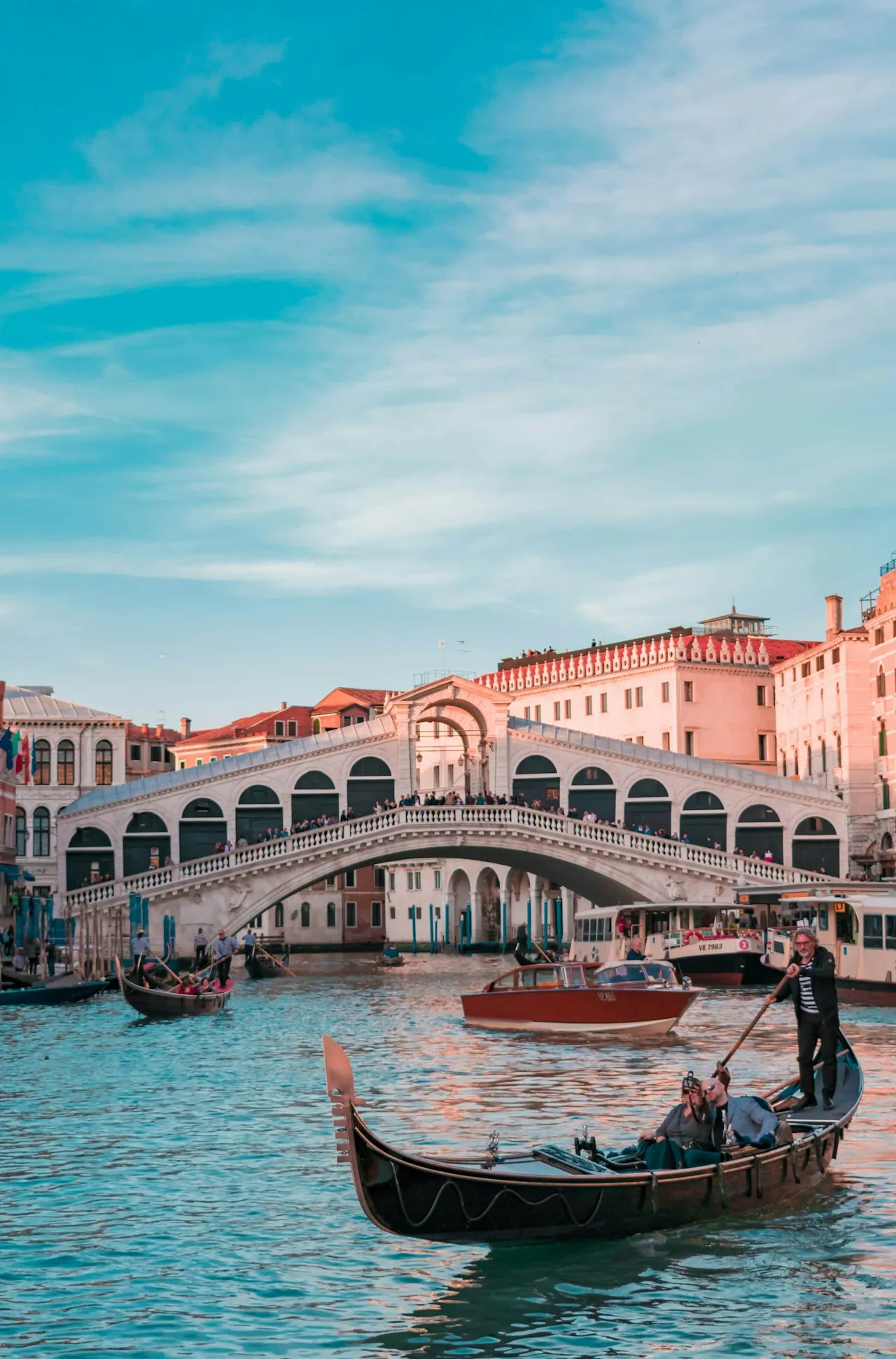
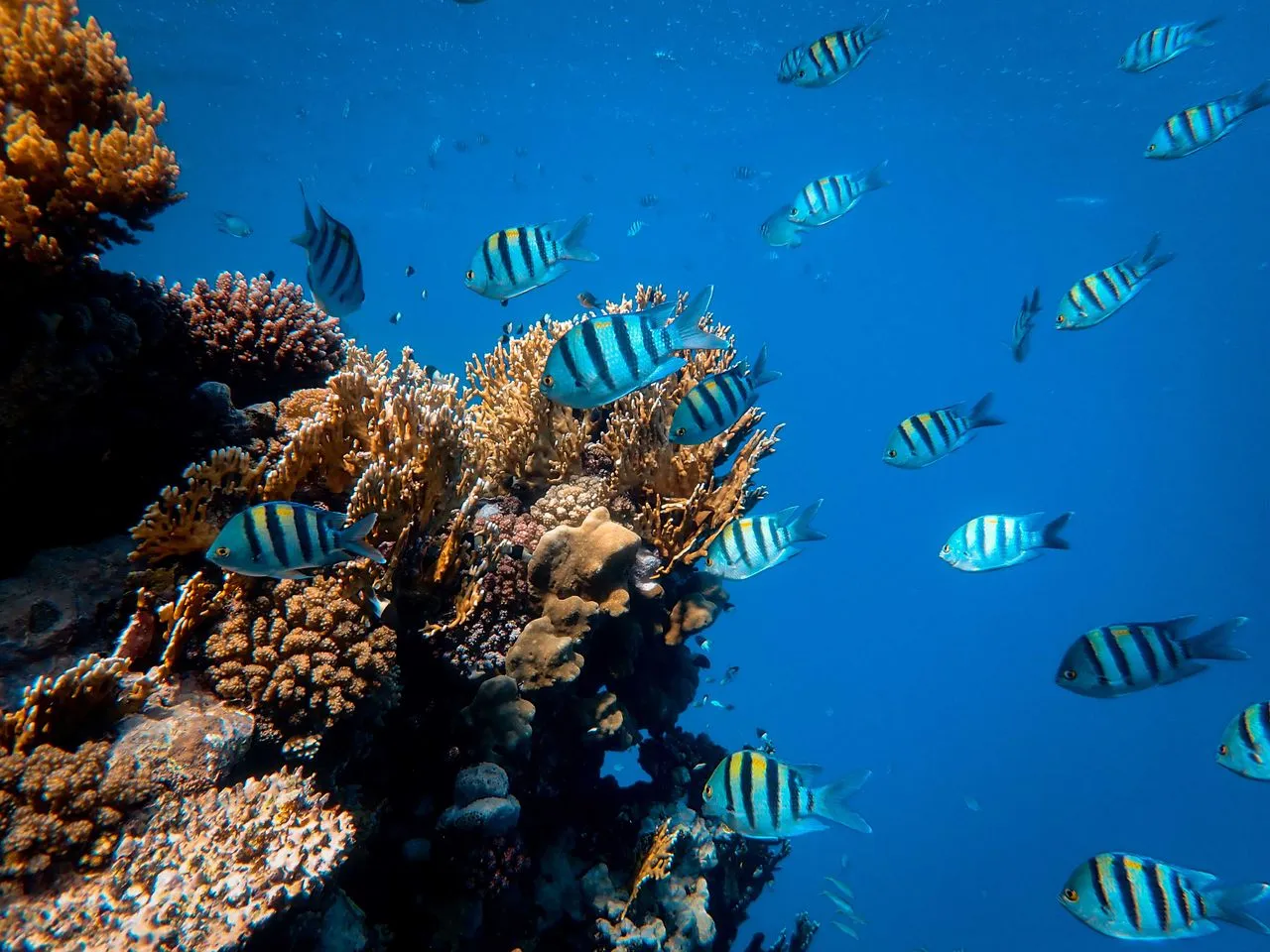
Two issues I want to address together because they share the same root: the gap between what tourists want and what is good for the places they visit. **Wildlife tourism done wrong looks like this:** riding elephants in Thailand (their spines are not designed to carry humans — mahout training involves breaking the animal's spirit through a process called phajaan), taking selfies with drugged tigers at Tiger Temple-style attractions (shut down by Thai authorities in 2016 but imitators persist), swimming with captive dolphins in concrete tanks, and walking with lions at South African farms that breed cubs for cub-petting tourism and later sell them into canned hunting. **Wildlife tourism done right looks like this:** Elephant Nature Park near Chiang Mai, Thailand — a genuine rescue sanctuary where elephants roam freely and visitors observe from a respectful distance, no riding, no chains. The Sepilok Orangutan Rehabilitation Centre in Sabah, Malaysian Borneo — a government-funded facility that rehabilitates orphaned orangutans for release into the wild. Whale watching in Husavik, Iceland with certified operators who maintain minimum approach distances and cut engines when whales are nearby. Gorilla trekking in Rwanda and Uganda with permits ($1,500 in Rwanda, $800 in Uganda) that fund anti-poaching patrols and community development. The test is simple: **if the animal is performing for you, posing with you, or being touched by you, the operation is exploitative.** Wild animals do not voluntarily sit still for selfies. That compliance was manufactured through confinement, sedation, or abuse. **On coral reefs:** If you snorkel or dive, use reef-safe sunscreen — specifically, sunscreen free of oxybenzone and octinoxate, which cause coral bleaching even at low concentrations. Hawaii and Palau have banned non-reef-safe sunscreens entirely. Look for labels that say 'reef-safe' and confirm the ingredient list. **Overtourism** is the other side of this coin. Hallstatt, Austria (population 750) receives over a million visitors per year. Dubrovnik's Old Town is designed for 8,000 people; on a single cruise-ship day, 12,000-15,000 tourists flood its streets. Venice introduced a EUR 5 day-tripper entry fee in 2024, expanded in 2025, because the city physically cannot sustain the volume. The good news: the alternatives are often better. - **Instead of Hallstatt:** Gmunden, 40 minutes north on the same lake district. A real Austrian lakeside town with a castle, a ceramics tradition, and a fraction of the crowds. - **Instead of Dubrovnik:** Kotor, Montenegro — the same dramatic walled city on a fjord-like bay, 2 hours south, at a third of the price and a tenth of the tourists. - **Instead of Barcelona's Gothic Quarter:** Valencia — Spain's third-largest city, with a medieval old town, the City of Arts and Sciences, outstanding paella (Barcelona's is usually mediocre), and beaches that are not shoulder-to-shoulder. - **Instead of Santorini:** Milos or Naxos — the same Cycladic white-and-blue architecture, better beaches, fewer cruise passengers, and restaurants where the staff remember your name. Visiting alternatives is not a sacrifice. It is usually an upgrade.
Slow travel: fewer flights, longer stays, deeper experience
The most sustainable trip is the one where you take fewer flights and spend longer in each place. This is not just an environmental argument — it is a better way to travel, full stop. The standard two-week European trip — London, Paris, Rome, Barcelona, four flights, three days in each city — is an exercise in airport transfers and jet lag. You see the Eiffel Tower, the Colosseum, and the Sagrada Familia, but you do not eat at the neighbourhood bistro that does not appear on Google Maps, you do not take the local bus to the coastal village 30 minutes outside the city, and you do not develop any relationship with the place beyond what fits in a photograph. Slow travel inverts this. Spend three weeks in one region of Italy instead of three days in Rome. Rent an apartment, shop at the local market, take the regional train to small towns, learn ten phrases in the local language. Your carbon footprint drops by 80% (one flight instead of four), your costs drop by 30-40% (apartment rental and local food instead of hotels and tourist restaurants), and the quality of your experience increases dramatically. I spent a month in Puglia last year — the heel of Italy's boot. One flight in, one flight out. I rented a small masseria (farmhouse) outside Ostuni for EUR 55 per night. I drove to a different beach or hill town every few days. I ate at trattorias where the menu was handwritten and changed daily. I learned enough Italian to have a basic conversation with the owner of the olive oil cooperative down the road. That trip produced roughly 0.35 tonnes of CO2. The four-city, four-flight version would have produced 1.2 tonnes. The sustainability maths of slow travel are simple: **one flight plus three weeks in one place will almost always emit less carbon than three flights plus one week in three places.** And it will almost always be a richer experience. If your work allows remote flexibility, slow travel becomes even more viable. Many countries now offer digital nomad visas (Portugal, Spain, Croatia, Indonesia, Colombia, Thailand) specifically designed for remote workers staying 1-6 months. The line between travelling and living somewhere temporarily is blurring — and that blurring is good for both the traveller and the destination.
Practical tips that actually matter (and the honest reality)
I will end with the specific actions that reduce your travel footprint — and then the honest caveat that most sustainable travel guides leave out. **What actually moves the needle:** 1. **Fly less, stay longer.** This is number one for a reason. Nothing else comes close in terms of carbon impact. 2. **Take trains over planes within Europe.** An 80-90% carbon reduction for the same journey. 3. **Stay in locally owned accommodation.** Economic impact stays in the community. Bonus: locally owned places are almost always more interesting than chains. 4. **Eat local food, not imported food.** The fish caught this morning at the harbour costs less and tastes better than the imported steak at the tourist restaurant. Eating locally also supports the local food economy and reduces transport emissions. 5. **Use a reusable water bottle.** This sounds trivial, but the bottled water industry produces 600 billion plastic bottles per year globally. A LifeStraw or SteriPen lets you drink tap water safely in countries where it is not potable. 6. **Use reef-safe sunscreen.** Specifically: free of oxybenzone, octinoxate, and octocrylene. Brands like Raw Elements, Stream2Sea, and Badger are independently verified reef-safe. 7. **Support local businesses directly.** Book guides through local cooperatives rather than international platforms. Buy souvenirs from artisans, not airport shops. Eat at family-run restaurants, not franchise outlets. 8. **Carry a reusable bag, cutlery set, and straw.** Single-use plastics are a catastrophe in Southeast Asia, South America, and the Pacific Islands. Refusing them is the minimum. 9. **Walk and use public transport.** In most cities, the best way to see a place is on foot. Taxis and rideshares for every journey add up — both in carbon and in cost. 10. **Choose direct flights when you must fly.** Takeoff and landing account for 25% of a flight's fuel burn. A stopover flight on the same route uses significantly more fuel. **The honest reality:** Here is the part most sustainability guides will not say: if you fly internationally, you are not an eco-traveller. You are a traveller who is trying to do less harm. That is a meaningful distinction, and it is worth pursuing — but it is not the same as being sustainable. True sustainability would mean staying within your 4-5 tonne annual carbon budget, and a single long-haul return flight consumes a third to a half of that. The honest position is this: international travel creates real value — economic, cultural, educational — that partly justifies its environmental cost. Tourism employs 1 in 10 people globally. It funds conservation in places like Rwanda and Costa Rica. It creates cross-cultural understanding that arguably makes the world marginally less terrible. But it also burns fuel, produces waste, and puts pressure on fragile ecosystems. The answer is not to stop travelling. The answer is to travel less frequently, stay longer, choose lower-carbon transport when possible, spend money where it benefits local communities, and stop pretending that a EUR 12 offset certificate makes your flight disappear from the atmosphere. Do the real work. Skip the performative gestures. And be honest about the trade-offs.
Frequently asked questions
Most carbon offsets for flights do not deliver what they promise. A 2023 investigation by The Guardian and Die Zeit found that over 90% of Verra-certified rainforest carbon credits did not represent real emissions reductions. Cheap offsets (the $5-25 kind airlines sell at checkout) are largely ineffective. The only credible options are Gold Standard-certified projects, Plan Vivo-certified projects, and direct air capture programmes like Climeworks — but these cost $600-1,000 per tonne of CO2, meaning a genuine offset for one transatlantic flight would cost $960-1,600, not $12. The most effective 'offset' is simply flying less.
Sustainable travel is not a destination you arrive at — it is a direction you move in. Every choice along the spectrum matters: taking the train instead of the plane, staying three weeks instead of one, choosing the locally owned guesthouse over the international chain, refusing the elephant ride, skipping Dubrovnik for Kotor. None of these choices make you carbon-neutral. But together, they reduce a 3-tonne trip to a 0.4-tonne trip, keep money in local economies, and take pressure off places that are buckling under tourist volume. The travel industry will keep selling you 'guilt-free' flights and 'eco-friendly' resorts with self-awarded badges. Your job is to see through the marketing and make decisions based on actual numbers, real certifications, and honest trade-offs. Travel less often, stay longer, go deeper, spend locally, and stop pretending that an offset receipt changes the chemistry of the atmosphere. That is not idealism. That is just paying attention.
Get there
Flights
One search across 700+ airlines — find the real lowest fare for your dates.
Search flightsWhere to stay
Hotels
Browse verified hotels and stays — instant confirmation, secure booking.
Book on KKdayThings to do
Activities
Tours, attractions, and day trips — free cancellation on most experiences.
Book on KlookTours & Experiences
Book the experiences, not just the trip
Skip-the-line tickets, guided tours, and day trips — free cancellation on most, confirmed instantly.
About the author
Camille Laurent
Senior Travel Editor · Based in Lisbon · Bali
Camille has spent the last 9 years living in or reporting from over 60 countries. Former contributor to Condé Nast Traveler and Monocle, she focuses on Southeast Asia, Mediterranean Europe, and the Middle East. Currently based between Lisbon and Bali.
Read next — destinations