
Norway Fjords & Northern Lights — The Complete 2026 Guide
Norway is the most beautiful country I have ever been broke in. The fjords are a geological impossibility, the Northern Lights are a religious experience, and a single beer costs $14. Here is how to see all of it without selling your apartment.
I have visited Norway four times in six years, across every season, and each trip has confirmed two things. First: Norway contains some of the most dramatic landscapes on Earth — fjords that drop a thousand metres into water so still it looks like glass, mountain passes that have no business being driveable, and a sky that, between September and March, regularly catches fire in green and violet. Second: Norway is relentlessly, unapologetically expensive. A bowl of fish soup in Bergen costs 250 NOK ($23). A budget hotel room in Tromsø starts at 1,600 NOK ($150). A rental car for a week is 7,000–12,000 NOK ($650–1,100). This guide is the one I write for friends who want to see the fjords, chase the Northern Lights, and drive the Atlantic Road without coming home financially traumatised. It covers the five essential fjords, the best base cities, Lofoten, Tromsø, the iconic train routes, the real costs, and the specific hacks that brought my last 12-day trip down from an estimated $5,800 to $3,400. Norway is worth every krone — but only if you know where the krone go.
Planning this trip?
Find flights now
Compare prices across 700+ airlines and OTAs in one search — find the real lowest fare without the inflated middleman markup.
Search flightsNeed a place to stay?
Search hotels
Why Norway deserves the trip (and the budget)
Let me be direct: Norway is not the destination you visit because it is affordable, convenient, or easy. You visit Norway because nothing else on this planet looks like it. The western coastline is a 2,500-kilometre fracture of fjords — glacially carved inlets where seawater pushes inland between cliffs that rise vertically for 1,000 metres or more. The Lofoten Islands are fishing villages pinned to granite peaks above the Arctic Circle. Tromsø is a university town where the sky turns green at 10pm in October and the sun does not set for two months in summer. The interior is a high plateau of glaciers, reindeer herds, and hiking trails that you can walk for eight hours without seeing another person. There is a reason Norway consistently ranks among the top three destinations on every serious travel list, and it is not marketing — it is geology. The practical catch is that Norway's cost of living is the highest in continental Europe. The Norwegian krone (NOK) buys roughly what you'd expect in Manhattan, except you are standing on a mountain. A meal at a mid-range restaurant runs 300–500 NOK ($28–46). A domestic flight from Oslo to Tromsø costs 1,200–2,500 NOK ($110–230) depending on how far ahead you book. Petrol is 22–24 NOK/litre ($8–9/gallon). I list these numbers not to discourage you, but because every Norway guide that skips the price conversation is doing you a disservice. The beauty is real. The cost is also real. This guide addresses both.
The Big Five fjords: Geirangerfjord, Sognefjord, Hardangerfjord, Nærøyfjord & Lysefjord
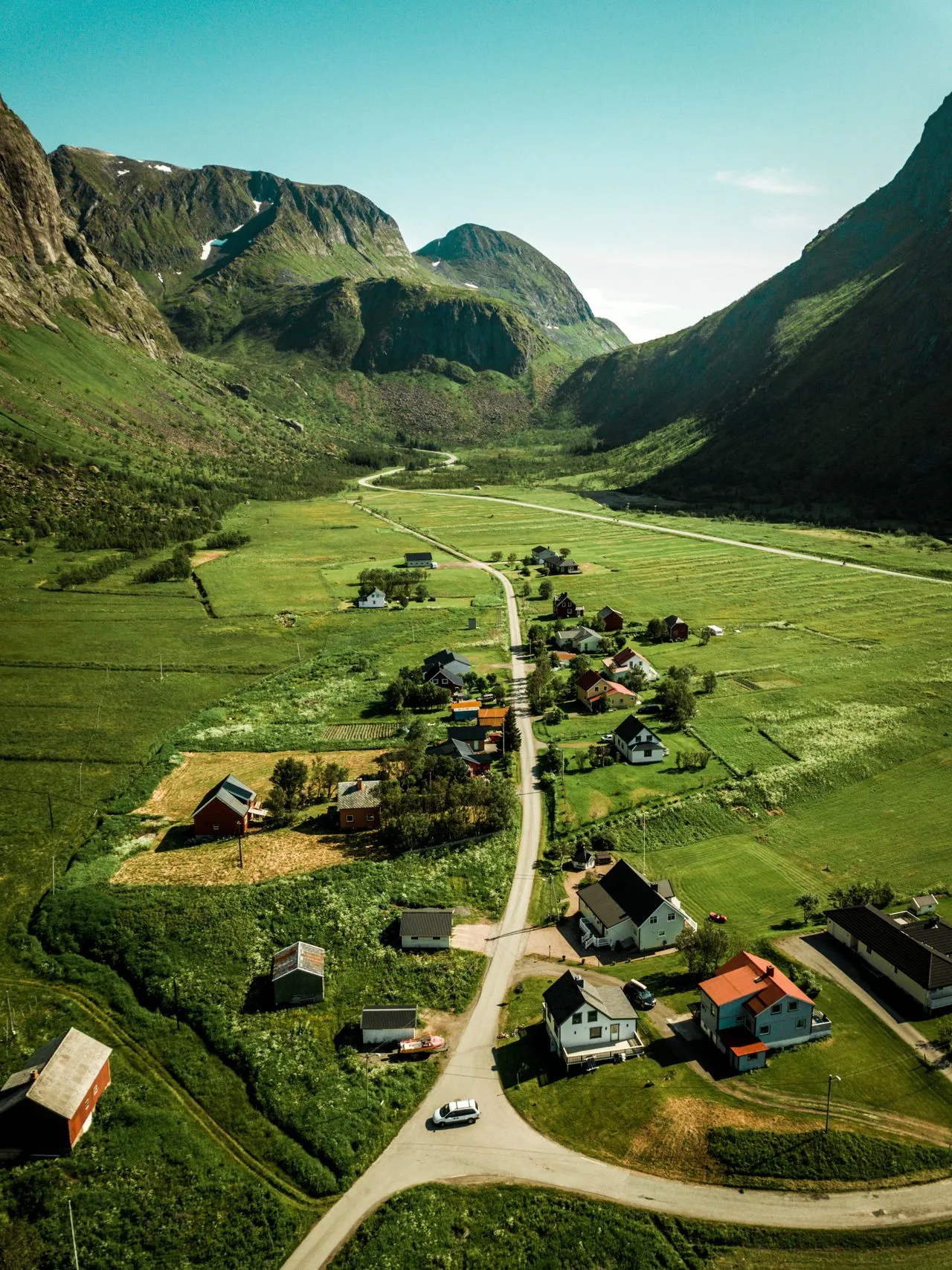
Norway has over a thousand fjords, but five dominate every conversation — and for good reason. **Geirangerfjord** is the postcard. A UNESCO World Heritage Site since 2005, it is a 15-kilometre corridor of near-vertical green cliffs, abandoned mountain farms clinging to impossible ledges, and waterfalls — the Seven Sisters and the Suitor — that drop hundreds of metres directly into the fjord. The classic experience is the car ferry from Hellesylt to Geiranger (280 NOK/$26 per person, 65 minutes). Peak season is June through August; the road to Geiranger (Trollstigen approach) closes October through May. **Sognefjord** is the longest and deepest fjord in Norway — 204 kilometres long, up to 1,308 metres deep. It is the one you take the Norway in a Nutshell train-and-ferry route through (more on that later). The inner arm, Nærøyfjord, is the narrowest and most dramatic stretch. Sognefjord is accessible from Bergen in under three hours by car or the Bergen Railway. **Hardangerfjord** is the orchard fjord — apple and cherry trees line its banks, and the May blossom season is remarkable. Trolltunga, the iconic tongue-shaped rock formation jutting 700 metres above Lake Ringedalsvatnet, sits above Hardangerfjord. The Trolltunga hike is 27 kilometres round-trip and takes 10–12 hours; it is not a casual walk. **Nærøyfjord** is a UNESCO site and technically an arm of Sognefjord, but it earns its own entry. At just 250 metres across at its narrowest point, with 1,700-metre peaks on either side, it feels like sailing through a canyon. The ferry from Gudvangen to Flåm is the classic route (included in Norway in a Nutshell). **Lysefjord** and its famous Preikestolen (Pulpit Rock) sit near Stavanger in the south. The hike to Preikestolen is 8 kilometres round-trip, about 4 hours, and ends on a flat cliff 604 metres above the fjord. It is the most accessible of Norway's iconic hikes and the one I recommend to visitors who want a single wow-moment without committing to a full-day mountain trek. The trailhead is a 40-minute drive from Stavanger.
Editor's tips
- Geirangerfjord and Nærøyfjord are the two UNESCO-listed fjords — prioritise these if you have limited time
- Trolltunga requires advance booking with a certified guide from October through May; summer (June–September) allows unguided hiking
- Preikestolen is best hiked early morning (before 8am) to avoid the 800+ daily hikers in peak July
Bergen: your fjord base camp (Bryggen, fish market, Fløibanen)
If you are visiting Norway for the fjords, fly into Bergen, not Oslo. Bergen is the second-largest city in Norway (285,000 people), the historic trading capital of western Norway, and the gateway to Sognefjord, Hardangerfjord, and Nærøyfjord. It is also, honestly, among the characterful small cities in Europe — a tight harbour ringed by seven mountains, with a UNESCO-listed waterfront of painted wooden buildings that has looked essentially the same since the 14th century. **Bryggen** is the old Hanseatic wharf district — a row of colourful wooden warehouses dating to the 1700s (the originals burned repeatedly; these are faithful reconstructions). Walk the narrow alleyways behind the facades, visit the Hanseatic Museum (150 NOK/$14), and eat at Colonialen Litteraturhuset for a modern Norwegian lunch. Bryggen is a 5-minute walk from the city centre. **The Fish Market** (Fisketorget) sits at the harbour front. Two versions exist: the outdoor stalls (seasonal, June–August) and the indoor market hall (year-round). The outdoor market is touristy and overpriced — expect 200–350 NOK ($18–32) for a plate of smoked salmon or king crab legs. It is still worth a visit for the atmosphere, but locals eat at the indoor hall or at Enhjørningen, the 300-year-old seafood restaurant on Bryggen. **Fløibanen** is the funicular railway that climbs 320 metres in 6 minutes to the summit of Mount Fløyen, where you get a panoramic view of Bergen, its harbour, and the surrounding fjords. Round-trip tickets cost 100 NOK ($9). Go at 8pm in summer for the golden-hour view. From the top, several hiking trails lead deeper into the mountains — the walk to Brushytten (45 minutes) is a gentle forest path with occasional city views. Bergen has one drawback: it rains approximately 240 days per year. Pack a waterproof layer regardless of the forecast. The locals say: "There is no bad weather, only bad clothing." They mean it.
Editor's tips
- Bergen Airport (BGO) has direct flights from London, Amsterdam, Copenhagen, and several other European hubs — often cheaper than connecting through Oslo
- The Bergen Card (380 NOK/$35 for 24 hours) includes Fløibanen, bus transport, and museum entry — pays for itself in a full day of sightseeing
- Bring a rain jacket. Seriously. Bergen averages 2,250mm of rain per year — more than triple London
The Lofoten Islands: fishing villages, midnight sun & Arctic surfing
Lofoten is the part of Norway that makes people rethink what they thought they knew about the Arctic. These islands sit above the 68th parallel — further north than most of Iceland — yet the Gulf Stream keeps temperatures surprisingly mild (summer averages 12–15°C/54–59°F). The landscape is a chain of jagged granite peaks rising directly from the Norwegian Sea, connected by bridges and tunnels, with tiny red-painted fishing cabins (rorbuer) clustered along every harbour. **What to do in Lofoten:** The islands are best experienced by car (rental from Leknes or Svolvær airport, roughly 800–1,200 NOK/$74–110 per day). The drive from Svolvær to Å (the village literally named Å) takes about 3 hours without stops and is among the scenic drives in Europe. Must-see villages include Reine (the classic red-cabin-against-mountains view), Nusfjord (preserved 19th-century fishing village), Henningsvær (the "Venice of Lofoten" with its famous football pitch on an islet), and Hamnøy (the most photographed bridge-and-cabin scene). **Midnight sun:** From late May through mid-July, the sun does not set in Lofoten. Hiking Reinebringen (1.5 hours up, steep stone stairs) at midnight, in full golden light, with the fjord 450 metres below you, is among the surreal experiences I have had anywhere. The trailhead is free. **Arctic surfing:** Unstad Beach on Lofoten's outer coast has become one of Europe's most improbable surf destinations. The water is 8–12°C (you need a 5/4mm wetsuit minimum), the waves are consistent, and the backdrop is snow-capped mountains. Unstad Arctic Surf rents boards and wetsuits for 600 NOK/$55 per half-day and offers lessons. **Accommodation:** The traditional choice is a rorbu — a converted fisherman's cabin, typically with 2–4 beds, a kitchen, and a harbourfront location. Prices range from 1,200–2,500 NOK ($110–230) per night. Eliassen Rorbuer in Reine and Nusfjord Arctic Resort are the best-known. Book 3–4 months ahead for June–August — Lofoten's accommodation is genuinely limited, and it sells out.
Editor's tips
- Fly into Leknes (LKN) or Svolvær (SVJ) from Oslo or Bodø — Norwegian and Widerøe operate daily
- The Lofoten road trip is best done in 4–5 days minimum — a day trip from Bodø is technically possible but misses the point
- Pack layers for summer: Lofoten weather changes hourly, and a sunny morning can become a rainy afternoon in 20 minutes
Tromsø & the Northern Lights: chasing the aurora (September–March)
Tromsø is Norway's Northern Lights capital and the largest city in northern Norway (77,000 people). Sitting at 69°N latitude — 350 kilometres inside the Arctic Circle — it has the infrastructure of a proper city (good restaurants, a university, an airport with direct flights from Oslo, London, and Stockholm) combined with reliable aurora access from September through March. **Northern Lights basics:** The aurora borealis is caused by solar particles colliding with atmospheric gases. It requires darkness (the polar night in Tromsø runs from late November to mid-January, with no sunrise at all) and clear skies. The statistical peak viewing months are October, February, and March — these combine sufficient darkness with better weather odds than the deep-winter months of November through January, when cloud cover is heavy. That said, I have seen remarkable displays in late September and early March. **How to see them:** You have two options. Join a guided aurora chase tour (1,200–1,800 NOK/$110–165 per person, 6–8 hours, minibus drives inland to clear skies). The guides monitor weather radar and will drive 2–3 hours to find gaps in cloud cover — this is worth it, especially for a first-timer. Or rent a car and chase independently using the Norway Lights app (free) or the Norwegian Meteorological Institute's aurora forecast at yr.no. You need to get at least 20–30 minutes outside the city to escape light pollution. Popular self-drive viewpoints include Ersfjordbotn (20 minutes from the city centre), Sommarøy island (90 minutes), and the shores of Kvaløya. **Tromsø beyond the lights:** The Arctic Cathedral (Ishavskatedralen) is a striking 1965 concrete-and-glass church shaped like an iceberg (100 NOK/$9 entry). The Polaria aquarium focuses on Arctic marine life (200 NOK/$18). The Fjellheisen cable car (250 NOK/$23 round-trip) takes you 420 metres above the city for panoramic Arctic views — in clear conditions, this is the best place to photograph the aurora from without leaving town. For food, Mathallen Tromsø serves local Arctic cuisine (reindeer, king crab, stockfish), and Bardus Bistro does a 5-course northern Norwegian tasting menu for 895 NOK ($83). **Important timing note:** The Northern Lights and the midnight sun are mutually exclusive. The midnight sun runs from May through July in Tromsø — there is no darkness, so no aurora. If you want Northern Lights, visit September through March. If you want midnight sun, visit June or July. You cannot have both on the same trip unless you visit for a very long time around the equinox.
Editor's tips
- Download the Norway Lights app (free, iOS/Android) — it gives real-time aurora forecasts with a KP index and cloud-cover overlay
- Camera settings for the aurora: ISO 1600–3200, f/2.8 or wider, 8–15 second exposure, tripod mandatory
- Book aurora tours at least 2 weeks ahead during peak season (late September through mid-October, late February through mid-March)
Norway in a Nutshell: the iconic train-bus-ferry route
Norway in a Nutshell is a pre-packaged scenic route that combines some of the country's most dramatic transport segments into a single day trip or multi-day journey. It is the single most popular tourist route in Norway, and it earns that status — this is legitimately among the scenic travel days you can have anywhere in the world. The classic route runs: Oslo → Bergen Railway (one of Europe's highest-altitude rail lines, crossing the Hardangervidda plateau at 1,222 metres) → Myrdal → Flåm Railway (a 20-kilometre mountain descent through 20 tunnels, dropping 866 metres in 1 hour — considered one of the steepest normal-gauge railway lines on Earth) → Flåm → ferry through Nærøyfjord (UNESCO-listed, the narrowest point is 250 metres wide with 1,700-metre peaks on each side) → Gudvangen → bus over Stalheimskleiva (the steepest road in northern Europe, 18% gradient, 13 hairpin turns) → Voss → train to Bergen. You can do this in one very long day (12–14 hours, starting from either Oslo or Bergen) or break it into two days with an overnight in Flåm. I strongly recommend the two-day version. The one-day route is exhausting and you spend it clock-watching instead of absorbing what is genuinely extraordinary scenery. An overnight in Flåm lets you take the evening fjord cruise, walk along the waterfront at sunset, and start the next day's ferry fresh. **Prices (2026):** The full Norway in a Nutshell package costs 2,290–3,090 NOK ($212–286) per adult depending on season and whether you start in Oslo or Bergen. You can also book each segment individually for roughly 10–15% less, but the package handles all the connections and timing. Book at visitflam.com or fjordtours.com. **Practical tip:** Sit on the left side of the Flåm Railway for the best waterfall views. On the Nærøyfjord ferry, stand on the upper deck regardless of weather — the views are not reproducible from inside the cabin.
The budget reality: what Norway actually costs in 2026
I am going to be more specific about costs than most Norway guides because vague phrases like "Norway is expensive" do not help anyone plan. Here is what you will actually spend, based on my four trips and 2026 prices. **Accommodation:** Budget hostels (Tromsø, Bergen, Oslo): 400–700 NOK ($37–65) per dorm bed. Budget hotels and Airbnbs: 1,200–1,800 NOK ($110–165) per double room. Mid-range hotels: 1,800–2,700 NOK ($165–250). High-end (Juvet Landscape Hotel, The Thief Oslo): 3,500–6,000 NOK ($325–555). **Food:** Supermarket groceries for a day (breakfast + packed lunch + dinner ingredients): 250–400 NOK ($23–37). Restaurant lunch: 180–280 NOK ($17–26). Restaurant dinner (main course + drink): 350–550 NOK ($32–51). A pint of beer at a bar: 100–130 NOK ($9–12). A coffee: 50–65 NOK ($4.60–6). A hot dog from a gas station (the Norwegian road-trip staple): 45–60 NOK ($4–5.50). **Transport:** Rental car (compact, per day): 700–1,200 NOK ($65–110). Petrol per litre: 22–24 NOK ($8–9/gallon). Domestic flight (Oslo–Tromsø, booked 3+ weeks ahead): 800–1,600 NOK ($74–148). Bergen–Flåm train: 350–520 NOK ($32–48). City bus: 40–60 NOK ($3.70–5.50) per ride. **Activities:** Fjord ferry: 200–500 NOK ($18–46). Northern Lights guided tour: 1,200–1,800 NOK ($110–165). Fløibanen funicular (Bergen): 100 NOK ($9). Museum entry: 100–200 NOK ($9–18). Guided glacier hike: 800–1,400 NOK ($74–130). **Total daily budget:** Backpacker/hostel: 800–1,200 NOK ($74–110). Mid-range comfort: 2,200–3,200 NOK ($200–295). Comfortable without counting: 3,500–4,500 NOK ($325–415). These are per-person figures. Two people sharing accommodation and a rental car can reduce per-person daily costs by 25–35%.
Money-saving hacks that actually work in Norway
Norway is expensive, but it is not uniformly expensive. There are specific, tested ways to cut your daily spend by 30–40% without downgrading the experience. Here are the ones that actually moved the needle on my trips. **Rent a cabin (hytte), not a hotel.** Norway has a deep cabin culture — roughly 500,000 hytter exist across the country. Booking a self-catering cabin on hytteavisen.no, Airbnb, or directly through local tourism boards costs 800–1,500 NOK ($74–139) per night for 2–4 people, compared to 1,800–2,700 NOK ($165–250) for a mid-range hotel room. You also get a kitchen, which eliminates restaurant dependency. **Cook your own food.** Norwegian supermarkets (Rema 1000, Kiwi, and Coop Prix are the budget chains) are expensive by international standards but massively cheaper than restaurants. A dinner for two cooked from supermarket ingredients costs 200–350 NOK ($18–32); the same dinner at a restaurant is 700–1,100 NOK ($65–102). Breakfast from a supermarket (bread, cheese, jam, coffee) costs 80–120 NOK ($7–11) versus 200–350 NOK ($18–32) for a hotel breakfast buffet. **Hiking is free.** Norway's allemansretten (right to roam) means you can hike, camp wild, and access virtually all uncultivated land for free. Preikestolen: free. Trolltunga: free (guided tours cost 800–1,400 NOK, but are only mandatory October–May). Reinebringen: free. The Besseggen ridge hike: free. Norway's greatest attraction costs nothing. **Book domestic flights early.** Norwegian Airlines (formerly Norwegian Air Shuttle) and Widerøe offer domestic flights that range from 500 NOK ($46) booked 6–8 weeks ahead to 2,500 NOK ($230) booked last-minute. The price difference is extreme. Set fare alerts on Google Flights for Oslo–Tromsø, Oslo–Leknes, and Bergen–Bodø. **Use toll-road AutoPASS.** If you are renting a car, register for AutoPASS (autopass.no) to get the non-resident toll discount — tolls are 15–20% lower with AutoPASS than the standard tourist rate. Rental agencies often add their own toll surcharge; clarify this before signing. **Drink less (or bring duty-free).** Alcohol is Norway's single biggest budget surprise. A pint at a bar costs 100–130 NOK ($9–12). A bottle of wine at a restaurant is 500–900 NOK ($46–83). Vinmonopolet (the state alcohol monopoly) is cheaper than bars but still expensive. The move: buy your full alcohol allowance at duty-free on arrival (1 litre of spirits + 1.5 litres of wine, or 3 litres of wine, per person). This alone saves 500–1,500 NOK ($46–139) over a 10-day trip.
Editor's tips
- Rema 1000 is consistently the cheapest supermarket chain — look for the yellow-and-red logo
- Wild camping (friluftsliv) is legal almost everywhere: pitch your tent at least 150 metres from the nearest house, stay a maximum of 2 nights in one spot
- The Vy (Norwegian state railway) app often has "minipris" tickets at 50–60% off standard fares if you book 30+ days ahead
The drives: Atlantic Road, Trollstigen & the routes worth renting a car for
Norway is one of the world's great road-trip countries. The combination of fjord-hugging coastal roads, mountain passes, undersea tunnels, and bridges built across open ocean creates a driving experience that is genuinely unlike anything else. **The Atlantic Road (Atlanterhavsveien):** An 8.3-kilometre stretch of road between Molde and Kristiansund that hops across eight bridges over the open Atlantic. The Storseisundet Bridge — the one in every photograph — arches dramatically over the sea, and from certain angles appears to lead to nowhere. Drive it in rough weather for the full drama (waves crash over the road in autumn storms). It is free to drive and open year-round. **Trollstigen (the Troll's Path):** A mountain road with 11 hairpin turns climbing 850 metres through a valley of waterfalls in Møre og Romsdal county. The viewing platform at the top is a cantilevered steel-and-glass structure hanging over the valley. Trollstigen is only open from late May to early October (exact dates depend on snow conditions — check vegvesen.no). It connects to Geirangerfjord via the Ørnevegen (Eagle Road), making it possible to drive Trollstigen and see Geirangerfjord in the same day. **Other essential drives:** The Lofoten Islands coastal road (E10, Svolvær to Å, 170km, 3 hours) is arguably the most scenic single drive in Europe. The Sognefjellsvegen (National Tourist Route 55) is Norway's highest mountain pass at 1,434 metres, open June through September. The Hardangervidda Plateau crossing (RV7) offers lunar-landscape driving across Europe's largest mountain plateau. **Practical driving notes:** Drive on the right. Speed limits are 80 km/h on highways and 50 km/h in towns — and they are enforced by automatic cameras. Fines start at 5,000 NOK ($460) and escalate steeply. Headlights must be on at all times, even in summer daylight. Winter tyres are mandatory from November through April. Tunnels are everywhere — the Lærdal Tunnel is the world's longest road tunnel at 24.5 kilometres. Fill up your tank when you see a station; in northern Norway, the next one can be 100+ kilometres away.
When to go: the best time for each activity
Norway is a four-season destination, but different seasons access completely different countries. Here is the honest breakdown. **Fjords (June–August):** The fjords are technically there year-round, but ferries, mountain roads (Trollstigen, the Sognefjellsvegen), and many hiking trails are only accessible in summer. Late June through mid-August is the reliable window. July is peak season with the highest prices and the most cruise ships in Geirangerfjord. Late August offers slightly cooler temperatures, fewer crowds, and the first hints of autumn colour. **Northern Lights (September–March):** Best odds in Tromsø, the Lofoten Islands, and Finnmark. Statistical peak: late September through mid-October and late February through mid-March. These shoulder windows combine sufficient darkness with better weather than deep winter. A solar maximum cycle peaks in 2025–2026, meaning aurora activity is expected to be stronger than usual through at least early 2027. **Midnight sun (late May–mid-July):** In Tromsø, the sun does not set from approximately May 20 to July 22. In Lofoten, the window is slightly shorter (late May to mid-July). In the far north (Nordkapp), continuous daylight runs from mid-May to late July. This is extraordinary for hiking, photography, and simply existing in a world without darkness. **Hiking (mid-June–September):** Mountain trails are snow-free from mid-June (earlier in the south) through September. The Trolltunga, Preikestolen, Besseggen, and Reinebringen hikes are all best done in this window. September hiking is underrated — fewer crowds, autumn colours, and still-long daylight hours. **Skiing (December–April):** Trysil, Hemsedal, and Narvik are Norway's top ski resorts. Lofoten offers ski-touring directly down to the ocean, which is exactly as surreal as it sounds. **Budget travel (May and September):** Shoulder-season prices are 20–35% lower than July peak. Weather is less reliable, but if you are flexible, these months offer the best value in Norway.
Find Flights to Norway
Direct flights reach Oslo, Bergen, and Tromsø from major European hubs. Compare fares across airlines to find the best deal for your travel dates.
Book Hotels & Cabins
From waterfront cabins in Lofoten to boutique hotels in Bergen — filter by region, price, and guest rating to lock in the right accommodation for your route.
Frequently asked questions
Late June through mid-August is the reliable window for fjord access. July offers the warmest weather and longest days but also peak prices and cruise-ship crowds in Geirangerfjord. Late August is slightly cooler with fewer tourists and early autumn colours. Mountain roads (Trollstigen, Sognefjellsvegen) and many ferry routes close from October through May, so summer is the only fully open season.
Norway is not the trip you take because it is easy or cheap. It is the trip you take because you want to stand on the edge of a cliff 600 metres above a fjord and understand, viscerally, that the Earth is capable of making things like this. It is the trip where you drive a road across the open ocean, eat the freshest fish you have ever tasted in a harbour that has been catching it for 500 years, and watch the sky turn green above an Arctic city at midnight. The cost is real — but so is every other part of it. Rent the cabin, cook your own dinners, hike for free, and spend your money on the ferry through Nærøyfjord and the aurora tour from Tromsø. Those are the moments that justify the krone. Norway does not do mediocre. Neither should your trip.
Get there
Flights
One search across 700+ airlines — find the real lowest fare for your dates.
Search flightsWhere to stay
Hotels
Browse verified hotels and stays — instant confirmation, secure booking.
Book on KKdayThings to do
Activities
Tours, attractions, and day trips — free cancellation on most experiences.
Book on KlookTours & Experiences
Book the experiences, not just the trip
Skip-the-line tickets, guided tours, and day trips — free cancellation on most, confirmed instantly.
About the author
Camille Laurent
Senior Travel Editor · Based in Lisbon · Bali
Camille has spent the last 9 years living in or reporting from over 60 countries. Former contributor to Condé Nast Traveler and Monocle, she focuses on Southeast Asia, Mediterranean Europe, and the Middle East. Currently based between Lisbon and Bali.
Read next — destinations
More from The Edit
Itineraries
Iceland Ring Road — The Definitive 10-Day Self-Drive Itinerary
1,322 kilometres, one road, zero motorways, and every landscape the planet has to offer. I've driven the Ring Road three times — here is exactly how to plan ten days that don't waste a single hour.
19 min read

When to Go
Best Time to Travel to Iceland — A Season-by-Season Honest Guide
Puffins, aurora, midnight sun, and the Laugavegur trek don't share a season. Iceland in summer and Iceland in winter are two different countries — here's which one you're actually booking.
11 min read