
Best Time to Visit Bali — A Local's Honest Calendar
Eight years of living between Bali and everywhere else taught me that the island has four micro-seasons — and the brochure describes exactly none of them accurately.
If you ask three people who live in Bali when the best time to visit is, you'll get three confident answers and probably three different months. The reason is that Bali doesn't have one tourist season — it has at least four micro-seasons, plus a Hindu lunar calendar that affects almost every practical decision (Nyepi, Galungan, Kuningan), plus a wet season that is dramatically different from the wet season of every other tropical destination most readers will have visited. After eight years of either living here or coming back, here is the calendar I actually use when I'm planning a friend's trip. If you're planning further, our 5 Days in Tokyo guide and 5 Days in Bali guide cover the logical next steps.
Planning this trip?
Find flights now
Compare prices across 700+ airlines and OTAs in one search — find the real lowest fare without the inflated middleman markup.
Search flightsNeed a place to stay?
Search hotels
The two-season myth (and why it matters)
Most guidebooks divide Bali into a dry season (April–October) and a wet season (November–March). This is technically accurate and practically misleading. The 'wet' season is rarely a continuous downpour — it's afternoon thunderstorms most days, with mornings and evenings often clear. The 'dry' season has its own complications: July and August are peak crowd months and the south coast (Canggu, Seminyak, Uluwatu) gets dust and high winds that surprise visitors expecting a postcard tropical island. The actual question isn't dry vs wet, it's: do you want fewer crowds and lower prices (April, May, October), or absolute reliable weather (June, September), or are you okay trading reliability for a deeply emerald, half-empty Bali (February, March)?
April–May: the best window for first-timers
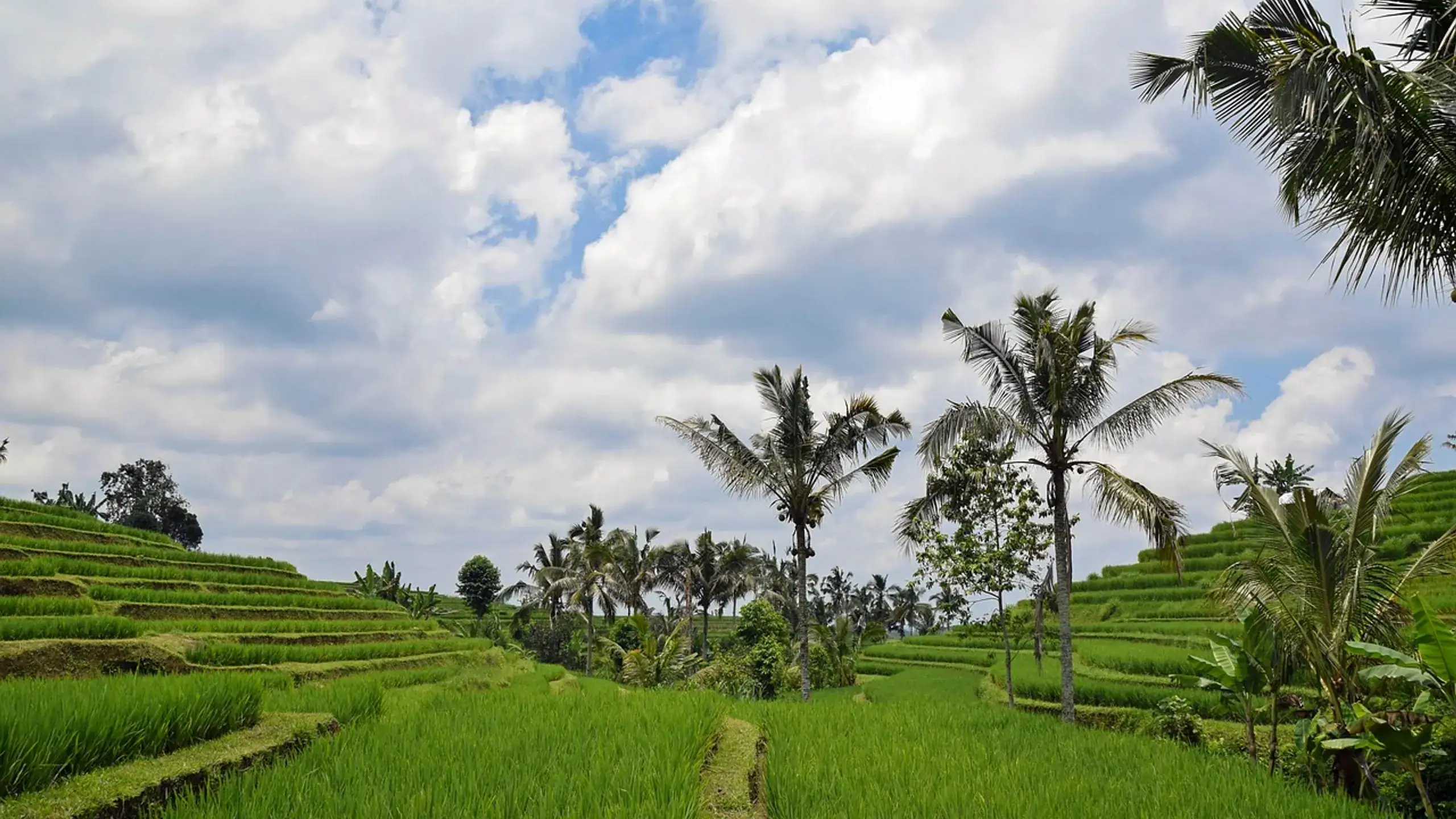
These two months are what people imagine when they imagine Bali. The wet season has tapered off, the rice terraces are at their greenest, and the south coast is settling into reliable sun. Hotel prices are still in shoulder territory — about 30% below July–August peaks. The water is clean (post-monsoon current flush), so this is also the best two-month window for diving and snorkelling around Nusa Penida and Menjangan. Sunset at Tanah Lot is consistently remarkable without the haze that arrives later in the year.
Editor's tips
- Manta Bay and Crystal Bay snorkelling visibility peaks in late April
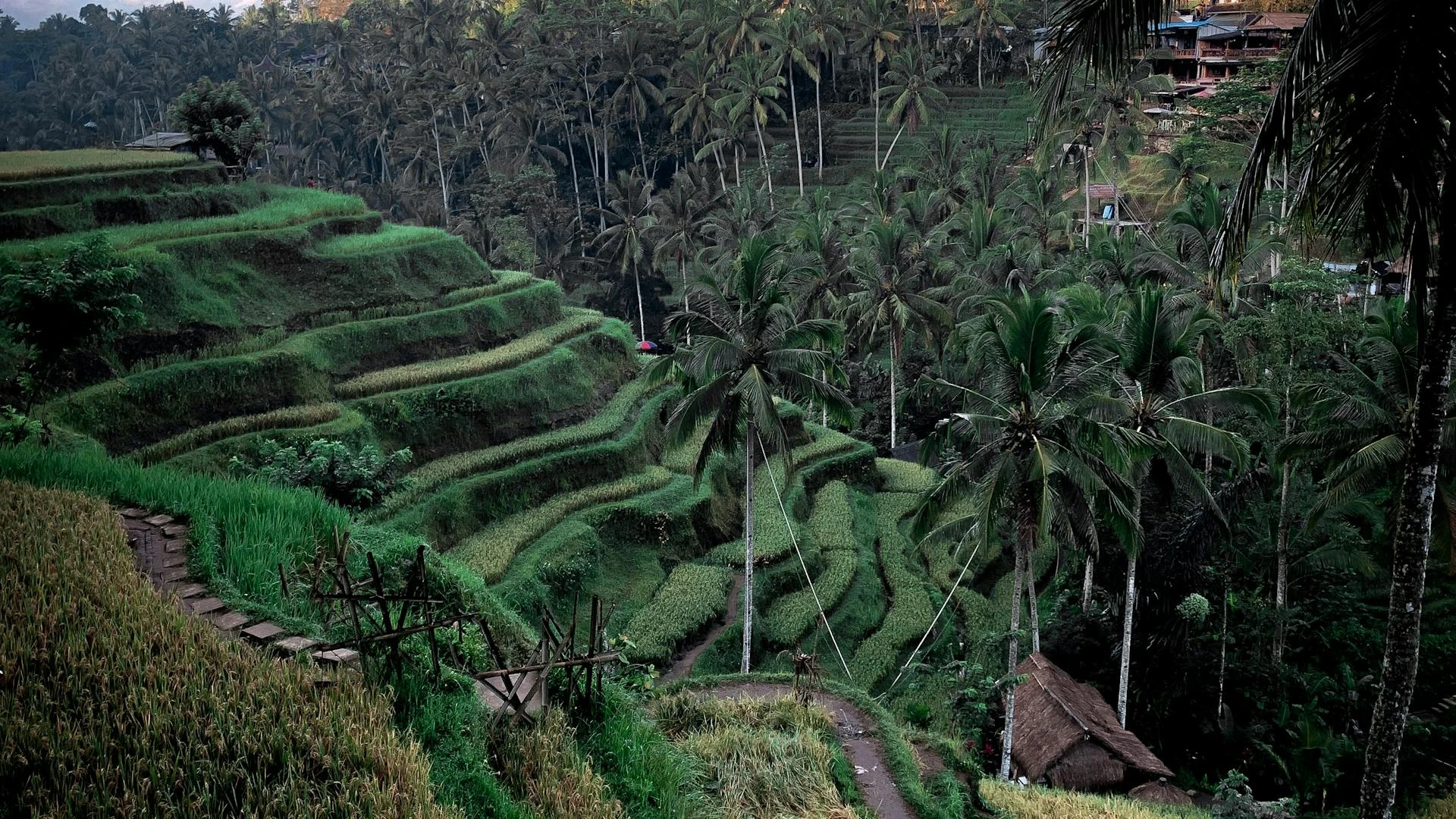
- Ubud's Tegalalang rice terraces are at peak green between mid-April and end of May
- Avoid the Galungan/Kuningan window if you want to book Hindu cooking classes — many close for the holiday week
June–August: the peak (and the trade-offs)
These are the brochure months — guaranteed sun, calm seas in the south, every restaurant open every night. They're also the most crowded and most expensive months by a meaningful margin. A villa that costs $250/night in May is $400+ in July. Canggu and Seminyak beach clubs are at full pre-booking capacity from 11am. Traffic between Ubud and the south coast can take 90 minutes for what's a 35km drive on a map. What you get in exchange is reliability: a 10-day trip built around beach days, surf sessions, and outdoor meals that you can plan in advance without weather contingencies. Right choice if it's your first Bali trip and you have one shot at it. Otherwise, May or September give you 90% of the experience for 60% of the cost.
September–early October: the hidden best window
In my opinion the single best three-week window of the year. Crowds drop sharply after the first week of September (European holidays end), prices follow within 7–10 days, and the weather is still solidly dry-season. The water visibility for diving is at its annual peak. The surf at Uluwatu and Padang Padang is at its best around the southern hemisphere swells. October introduces occasional afternoon rain by the third week — but it's usually 30 minutes, not the day-killing storms of December. If you can travel without a school-holiday calendar, September is when you should go.
Editor's tips
- Book accommodations 5–6 weeks ahead — September fills up later than July but it does fill up
- Late September is the second-best time of year for Nusa Lembongan and Nusa Penida snorkelling visibility
November–March: the wet season nobody tells you about
Here's what most planning guides get wrong about Bali in the wet months. The rain is not constant. It's typically 1–3 hours of heavy afternoon rain, followed by clear evenings. Hotels run at 40–60% of peak rates. Restaurants take walk-ins for tables that needed to be booked two weeks ahead in July. The rice terraces are at their most photogenic in February (the planting cycle). The waterfalls are at their fullest. The trade-offs are real: ocean swimming on the south coast can be dangerous (bigger swells, occasional debris), some boat tours to Nusa Penida cancel on heavy days, and humidity is meaningful (85–90%). The wet season is the right Bali for slow travellers — people who plan to spend 3+ weeks, base in Ubud or Uluwatu, and don't mind reorganising an afternoon when the rain kicks in. The crowd in February is overwhelmingly long-stay nomads and returning Australians who know the island. It's a different, often better Bali.
Editor's tips
- Avoid the south coast beaches for swimming in January–February — strong currents are real
- Ubud's Campuhan ridge walk at dawn after a rain is the single best photographic moment of the year
- Nyepi (the Hindu silent day, March 18 in 2026 and March 8 in 2027) closes the airport and the entire island for 24 hours — plan around it or embrace it
The Hindu calendar windows you need to know
Two Balinese Hindu festivals affect any visit: Nyepi (the silent day) and Galungan/Kuningan (the 10-day cycle that celebrates the victory of dharma over adharma). Nyepi is in March (date moves yearly with the lunar calendar) and means everything — including the airport and most restaurants — closes for 24 hours. Tourists are confined to their hotel grounds. Most Bali-experienced travellers either plan their trip around it or arrive specifically to experience it (which is genuinely beautiful — no electricity, no traffic, every star visible). Galungan and Kuningan are 10 days of Balinese Hindu celebration, with penjor (decorated bamboo poles) lining every village street. The atmosphere is extraordinary, but many local-run businesses close for the week. Calculate it before you book.
Quick reference: month-by-month one-line summary
January — wet, cheap, beautiful Ubud; avoid south coast beaches. February — peak green rice terraces; nomad season. March — variable, Nyepi closes the island for a day. April — first reliable dry month, lower prices. May — best month for first-timers. June — crowds building. July — peak month, peak prices, peak crowds. August — same as July. September — best three-week window of the year. October — late dry, occasional rain by week 3. November — wet season starts; better deals. December — Christmas/New Year holiday spike on south coast. Plan accordingly.
Find the Best Flight Deals
Prices vary dramatically by month. Compare live fares from hundreds of airlines to lock in the cheapest window for your travel dates.
Where to Stay
From boutique guesthouses to luxury resorts, the accommodation you choose shapes the trip. Filter by neighbourhood, price, and guest rating to find your match.
Tours & Activities
Skip the tourist traps. Book directly with vetted local operators — skip-the-line access, small groups, and money-back guarantees included.
Frequently asked questions
May and September are Bali's best months — the tail end of dry season with lower prices than peak July–August. The second half of September specifically offers dry weather, emptier rice terraces, and 20–30% lower accommodation rates than July. For budget travel, February has a secondary dry spell within the wet season and the lowest prices of the year.
If you're trying to pick one month to visit Bali, our default recommendation is the second half of September. If you're constrained by school holidays, May is excellent and December's last week is festive but expensive. If you're a long-stay traveller, February is genuinely magical. The worst month? Probably late June or first week of July — you'll pay peak prices for a season that hasn't yet hit its weather peak. Whatever you choose, build in a wet-weather contingency (an indoor cooking class, a spa day, a museum visit in Denpasar) and you'll be fine.
Get there
Flights
One search across 700+ airlines — find the real lowest fare for your dates.
Search flightsWhere to stay
Hotels
Browse verified hotels and stays — instant confirmation, secure booking.
Book on KKdayThings to do
Activities
Tours, attractions, and day trips — free cancellation on most experiences.
Book on KlookTours & Experiences
Book the experiences, not just the trip
Skip-the-line tickets, guided tours, and day trips — free cancellation on most, confirmed instantly.
About the author
Camille Laurent
Senior Travel Editor · Based in Lisbon · Bali
Camille has spent the last 9 years living in or reporting from over 60 countries. Former contributor to Condé Nast Traveler and Monocle, she focuses on Southeast Asia, Mediterranean Europe, and the Middle East. Currently based between Lisbon and Bali.
Read next — destinations
More from The Edit

Itineraries
5 Days in Tokyo: A Realistic First-Timer's Itinerary
Three days will leave you hungry. Seven will overwhelm you. Five is the right number — and here is exactly how to spend them, by neighbourhood, by meal, and by the train you should actually take.
14 min read

Itineraries
5 Days in Bali: A Realistic First-Timer's Itinerary (Without the Beach-Club Cliché)
Five days isn't enough to see all of Bali — and trying to is the most common mistake. Here's the version we'd plan for a friend, by region, by meal, by the surf forecast.
13 min read

Honest Take
Bali vs Phuket: Which Tropical Destination Should You Choose?
They're both hot, both beautiful, both well below European prices — and almost nothing else about them is the same. Here's the honest decision framework after a combined six weeks across both.
9 min read