

Best Time to Travel to Thailand in 2026 — Season by Season, Region by Region
Thailand has three distinct seasons, six meaningful tourism regions, and about four months where everything lines up. The rest of the year is still worth it — you just need to know which part of the country works when.
The standard Thailand advice — 'go in the dry season, November to February' — is correct for roughly half of Thailand. The Andaman coast (Phuket, Krabi, Koh Lanta) follows one monsoon pattern. The Gulf coast (Koh Samui, Koh Phangan, Koh Tao) follows a different one. Chiang Mai and the north have their own weather logic. Bangkok is year-round but requires adjustment in March–May heat. This guide maps the actual seasonal picture across the regions that matter most to visitors — so you can plan around what you want to do, not just 'the best month in the abstract.'
Planning this trip?
Find flights now
Compare prices across 700+ airlines and OTAs in one search — find the real lowest fare without the inflated middleman markup.
Search flightsNeed a place to stay?
Search hotels
The three seasons and what they actually mean
Cool and Dry (November–February): The best window for most of Thailand. Temperatures in Bangkok 25–32°C, Chiang Mai 15–28°C (genuinely cool evenings in December–January), and both coasts under clear skies. The Andaman Sea (Phuket, Krabi, Koh Lanta) is calm and blue. Tourism peaks in December–January — book accommodation and flights 3–4 months ahead for this window. Hot Season (March–May): Temperatures climb to 35–40°C in Bangkok and the north. April is Songkran (Thai New Year water festival, mid-April) — Chiang Mai's Songkran is the most celebrated in the country and worth the heat to experience. Beach conditions on both coasts remain good through April. May marks the transition to monsoon. Wet/Monsoon Season (June–October): The southwest monsoon hits the Andaman coast (Phuket, Krabi) hardest — June–October sees heavy rain and rough seas. The Gulf coast (Koh Samui) is actually drier during this window until October–December when its own northeast monsoon arrives. Bangkok is wet but functional; the north's rice paddies turn extraordinary green.

Editor's tips
- Songkran (Thai New Year) runs April 13–15 officially, but Chiang Mai extends it 4–6 days — if water festival crowds appeal, book Chiang Mai; if not, avoid the country mid-April
- The Phi Phi Islands and Similan Islands close to tourist boats during monsoon (June–October) — check specific island access windows before booking liveaboard diving trips
- Christmas–New Year peak in Thailand is real and expensive: Phuket's prime beach properties in December 25–January 1 book out 4–6 months ahead
Phuket and the Andaman coast: November–April
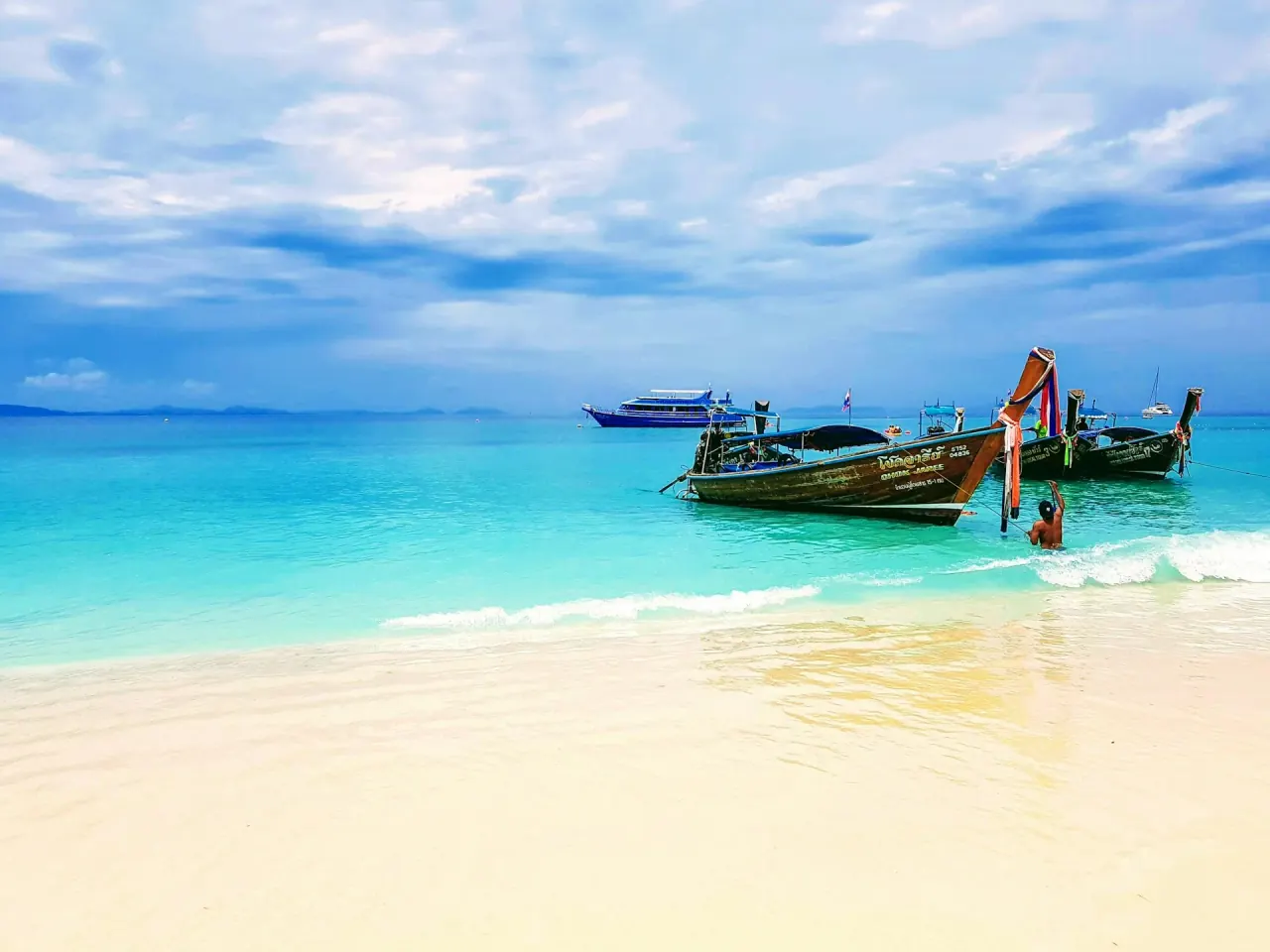
The Andaman Sea coast — Phuket, Krabi, Koh Lanta, Koh Phi Phi, and the Similan and Surin island marine parks — operates on the southwest monsoon pattern. The reliable dry window is November through April. December, January, and February are the peak months: calm seas (Beaufort 1–2), air temperatures 28–33°C, sea temperature 28°C, visibility for diving and snorkelling at its best. November and April are shoulder season on the Andaman coast — still excellent conditions, 15–20% lower accommodation prices than December–January peak. May sees the first monsoon squalls; June–October is rough-sea territory on the Andaman (some beaches become unsafe for swimming). The Similan Islands National Marine Park closes completely May 15–October 15 each year. The diving off Richelieu Rock (liveaboard access, north of the Similans) is among the best in Southeast Asia — accessible November–April only.
Koh Samui and the Gulf coast: December–September
The Gulf of Thailand coast follows the northeast monsoon — the opposite pattern from Phuket. When Phuket is wet (June–October), Koh Samui, Koh Phangan, and Koh Tao are dry and excellent. When Phuket is at peak (December–February), Koh Samui enters its own wet season: October–December brings heavy rain and the occasional tropical storm. The best months for Gulf coast islands: December to September (with the caveat that October–November on Koh Samui is genuinely wet). Koh Phangan's Full Moon Party (monthly, Haad Rin Beach) is year-round — the December and January editions have better weather but larger crowds. Koh Tao remains among Southeast Asia's most affordable dive training destinations ($350–400 for a PADI Open Water course) and is best accessed via ferry from Chumphon or Surat Thani.

Editor's tips
- The Gulf coast inverse: if your dates fall in October–November (Phuket's dry-shoulder), consider the Gulf islands instead — Koh Samui gets its worst weather October–December
- Full Moon Party on Koh Phangan: check the lunar calendar for your travel dates — the party falls on the monthly full moon and is rarely on a convenient weekend
- Koh Tao dive certification in January–February: book 2–3 weeks ahead — it fills up during peak season, and the number of dive schools makes shopping around worthwhile
Bangkok and Chiang Mai: what month to visit
Bangkok is a year-round destination with seasonal adjustments. November–February: ideal — manageable heat (27–33°C), low humidity, blue sky days. The cool-season weekend markets (Chatuchak operates year-round but is more comfortable in cool season) and outdoor eating are at their best. March–May: Bangkok in the heat is Bangkok at full-force — the Chao Phraya river breeze at riverside hotels earns its premium in April. Songkran (mid-April) changes the city with organised water fights; the Silom area and Khao San Road are the epicentres. June–October: the city is wet but functional — major temples (Wat Pho, Wat Phra Kaew, Wat Arun) are year-round accessible and less crowded in wet season. Chiang Mai's best window is November–February: mountain air temperature drops to 15–20°C at night, the Ping River valley mist creates extraordinary early-morning light, and the Saturday and Sunday Walking Streets operate in comfortable temperatures. Yi Peng (November full moon lantern festival) and Loy Krathong (same weekend, floating lanterns on the Ping River) are the most atmospheric annual events in northern Thailand. March–April in Chiang Mai brings smoke haze from agricultural burning — air quality becomes a real consideration for respiratory health.
Editor's tips
- Bangkok's Grand Palace requires shoulders and knees covered — sarong rentals available at the gate, or bring your own lightweight long clothing
- Chiang Mai's Yi Peng specific date: the festival follows the lunar calendar — check the exact November full moon date for 2026 before booking (it shifts year to year)
- Bangkok rooftop bars (Vertigo at Banyan Tree, Sky Bar at Lebua) are most enjoyable November–February; June–August humidity makes open-air dining uncomfortable after 9pm
Frequently asked questions
November to February is the best overall window: cool-dry season, comfortable temperatures across the country, and both coasts (Andaman and Gulf) in good condition. December–January is peak season — book 3–4 months ahead. November and February are quieter with identical weather quality.
The best time to visit Thailand depends on where you're going. November through February works for almost all of it: both coasts are in good shape (Koh Samui enters its wet season in late October–December, so check specifically), Chiang Mai is remarkable, and Bangkok is comfortable. For Phuket specifically, November–April is the window. For Koh Samui, the opposite: avoid October–December. Songkran in April (Chiang Mai) is worth planning around despite the heat. The wet season isn't closed — Bangkok, the north, and the Gulf islands are all functional — but the Andaman coast and the island marine parks shut down meaningfully from June onward.
Get there
Flights
One search across 700+ airlines — find the real lowest fare for your dates.
Search flightsWhere to stay
Hotels
Browse verified hotels and stays — instant confirmation, secure booking.
Book on KKdayThings to do
Activities
Tours, attractions, and day trips — free cancellation on most experiences.
Book on KlookTours & Experiences
Book the experiences, not just the trip
Skip-the-line tickets, guided tours, and day trips — free cancellation on most, confirmed instantly.
About the author
Camille Laurent
Senior Travel Editor · Based in Lisbon · Bali
Camille has spent the last 9 years living in or reporting from over 60 countries. Former contributor to Condé Nast Traveler and Monocle, she focuses on Southeast Asia, Mediterranean Europe, and the Middle East. Currently based between Lisbon and Bali.
Read next — destinations

More from The Edit

Travel Guides
Bali Travel Information Guide 2026 — Everything You Need Before You Book
Bali is not one destination. It is five different regions, two distinct seasons, a Hindu calendar that affects everything from cooking class availability to beach water quality, and a traffic system that will defeat you every time. This is the guide that pulls it together.
12 min read
When to Go
Best Time to Visit Bali — A Local's Honest Calendar
Eight years of living between Bali and everywhere else taught me that the island has four micro-seasons — and the brochure describes exactly none of them accurately.
11 min read

Honest Take
Bali vs Phuket: Which Tropical Destination Should You Choose?
They're both hot, both beautiful, both well below European prices — and almost nothing else about them is the same. Here's the honest decision framework after a combined six weeks across both.
9 min read