

Backpacking Southeast Asia — The Ultimate 2026 Route
I spent three months moving through Thailand, Laos, Vietnam, and Cambodia on $37 a day. The route hasn't changed much since the banana-pancake trail was coined in the 1990s — but the prices, visa rules, and infrastructure have. Here's what the classic Southeast Asia backpacking loop actually costs and how to do it without burning out or going broke.
Southeast Asia has been the default backpacking region for three decades, and in 2026 it still deserves the reputation. Not because it's undiscovered — it's emphatically not — but because no other region on earth combines this level of affordability, travel infrastructure, cultural density, and geographic variety within a single overland route. You can eat pad thai for $1.50 in Bangkok, take a slow boat down the Mekong, ride overnight trains through Vietnam's entire coastline, and watch sunrise over Angkor Wat — all in a single trip, all on a budget that would barely cover two weeks in Western Europe. I've done this route twice: once in 2019 and again in early 2026. The hostels have gotten marginally nicer, the SIM cards have gotten dramatically faster, and the prices have crept up about 15–20% since the pandemic. But the fundamental equation hasn't changed: Southeast Asia gives you more per dollar than anywhere else, and the banana-pancake trail exists because it works. This guide covers the classic four-country loop with real 2026 prices, honest trade-offs, and the kind of specific logistics that generic guides skip.
Planning this trip?
Find flights now
Compare prices across 700+ airlines and OTAs in one search — find the real lowest fare without the inflated middleman markup.
Search flightsNeed a place to stay?
Search hotels
Why Southeast Asia Is Still the Best Backpacking Region in 2026
The case for Southeast Asia comes down to three things: value, infrastructure, and diversity. On value: a comfortable backpacker budget in Thailand, Laos, Vietnam, and Cambodia runs $30–50 per day including accommodation, food, transport, and activities. That same budget gets you a single museum entry and a sandwich in Paris. A pad thai from a Bangkok street cart costs 50–80 baht ($1.50–2.40). A bowl of pho in Hanoi runs 40,000–60,000 dong ($1.60–2.40). A fresh beer in Phnom Penh is $0.50 at happy hour. These are not hostel-kitchen, rice-and-beans prices — you're eating some of the best street food on earth for what a vending-machine coffee costs at home. On infrastructure: the backpacker trail has existed long enough that the logistics are genuinely easy. Every major stop has English-speaking hostel staff, a Grab app that works, buses and trains bookable through 12Go Asia, and SIM cards that cost $3–8 for a month of data. ATMs are everywhere in Thailand and Vietnam. You don't need to speak the local language to work through — though you'll have a better time if you learn the basics. On diversity: in three months you move through Buddhist temple culture, French colonial architecture, Communist-era history, limestone karst landscapes, tropical islands, hill-tribe villages, and megacity chaos. You eat four radically different cuisines. You cross borders by slow boat, overnight train, and $30 budget flights. No other region packs this much variety into a single overland route at this price point. Central America is comparable on cost but thinner on cultural density. South Asia is cheaper but harder to work through. Eastern Europe has the culture but not the beaches or the street food. Southeast Asia is the complete package, and that's why the trail keeps regenerating itself.
Editor's tips
- Download Grab, 12Go Asia, and Google Translate offline packs before you land — these three apps solve 80% of logistics
- Carry a photocopy of your passport and two extra passport photos — visa-on-arrival lines move faster with photos ready
The Classic 3-Month Route: Thailand → Laos → Vietnam → Cambodia
The standard Southeast Asia backpacking loop runs counterclockwise and follows a geographic logic that minimises backtracking. You fly into Bangkok — the cheapest international gateway — and spend 2–3 days decompressing from jet lag. Then north to Chiang Mai and Pai for hill country and temples. Cross into Laos at Chiang Khong/Huay Xai and take the slow boat down the Mekong to Luang Prabang. Continue through Vang Vieng to Vientiane. Cross into Vietnam at the Cau Treo or Na Meo border, or fly from Vientiane to Hanoi for $40–60. Run Vietnam's length north to south: Hanoi, Ha Long Bay or Ninh Binh, overnight train to Hue, Hoi An, then south to Ho Chi Minh City. Bus or fly from HCMC to Phnom Penh. Hit Siem Reap for Angkor Wat, then either loop back to Bangkok overland or fly out from Phnom Penh. This route works because each country transition is a natural border crossing — no doubling back, no wasted travel days. The terrain shifts logically from urban sprawl to mountains, mountains to river valley, river valley to coastline, coastline to temples. You can do it in 60 days if you're efficient, 90 days if you're comfortable, or 120 days if you add extensions to islands or Bali. Timeline that works without burnout: Thailand 3–4 weeks, Laos 1–2 weeks, Vietnam 3–4 weeks, Cambodia 1–2 weeks. The biggest scheduling mistake is spending too long in Thailand's islands (easy to do) and rushing Vietnam (easy to regret). Vietnam has the most geographic variety and deserves at least three weeks. One critical note on direction: going clockwise (starting in Cambodia) works logistically but is harder emotionally. Thailand has the best tourist infrastructure and the gentlest learning curve — it's a much better starting point. Cambodia's infrastructure is thinner and the tuk-tuk hustle in Siem Reap hits differently when you haven't yet calibrated your Southeast Asia instincts.
Editor's tips
- Book international flights into Bangkok and out of Phnom Penh (or Ho Chi Minh City) — open-jaw tickets avoid backtracking
- 12Go Asia is the best platform for booking buses, trains, and ferries across all four countries — aggregates prices from local operators
Thailand: Bangkok, Northern Highlands, and the Islands
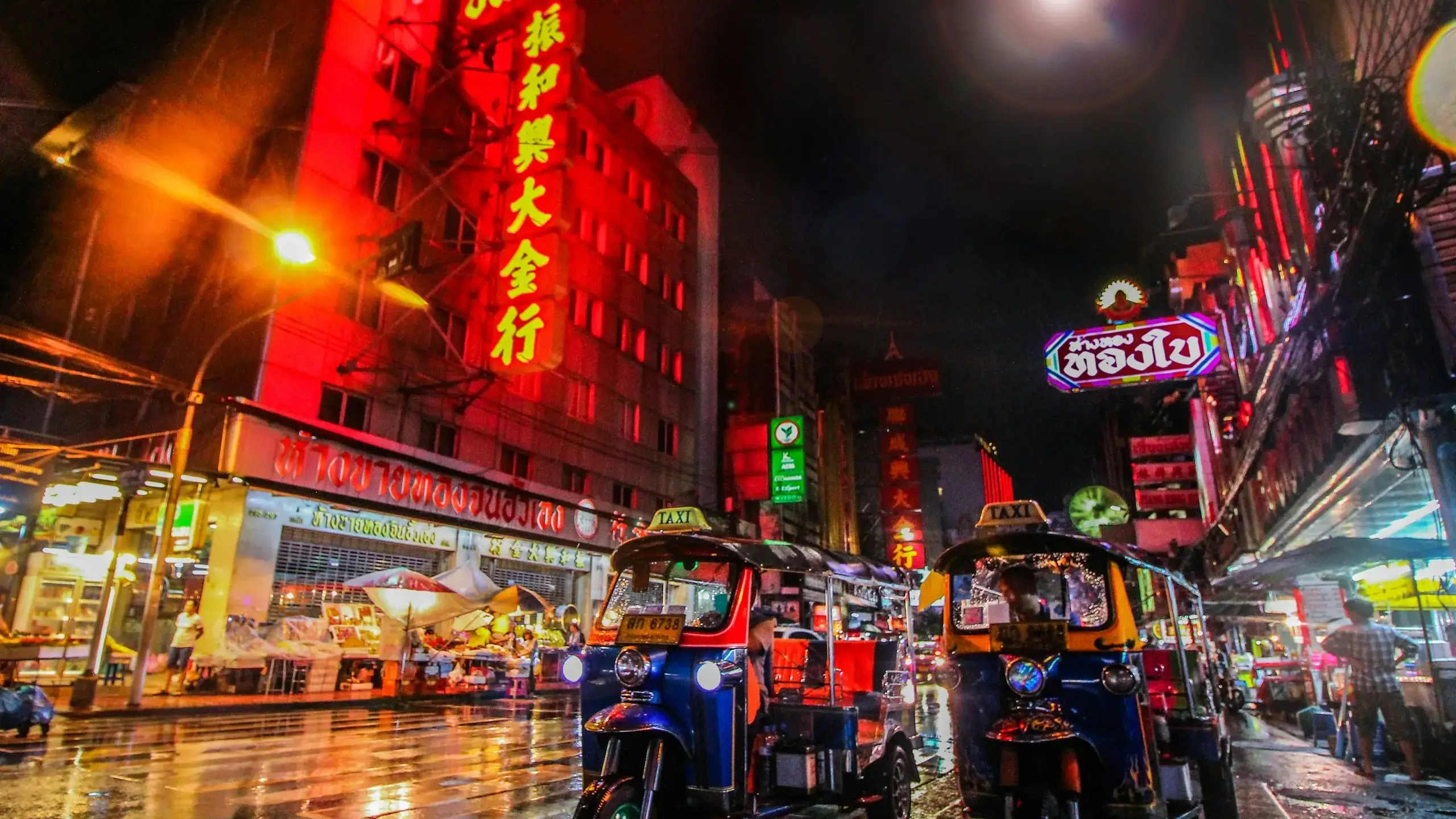
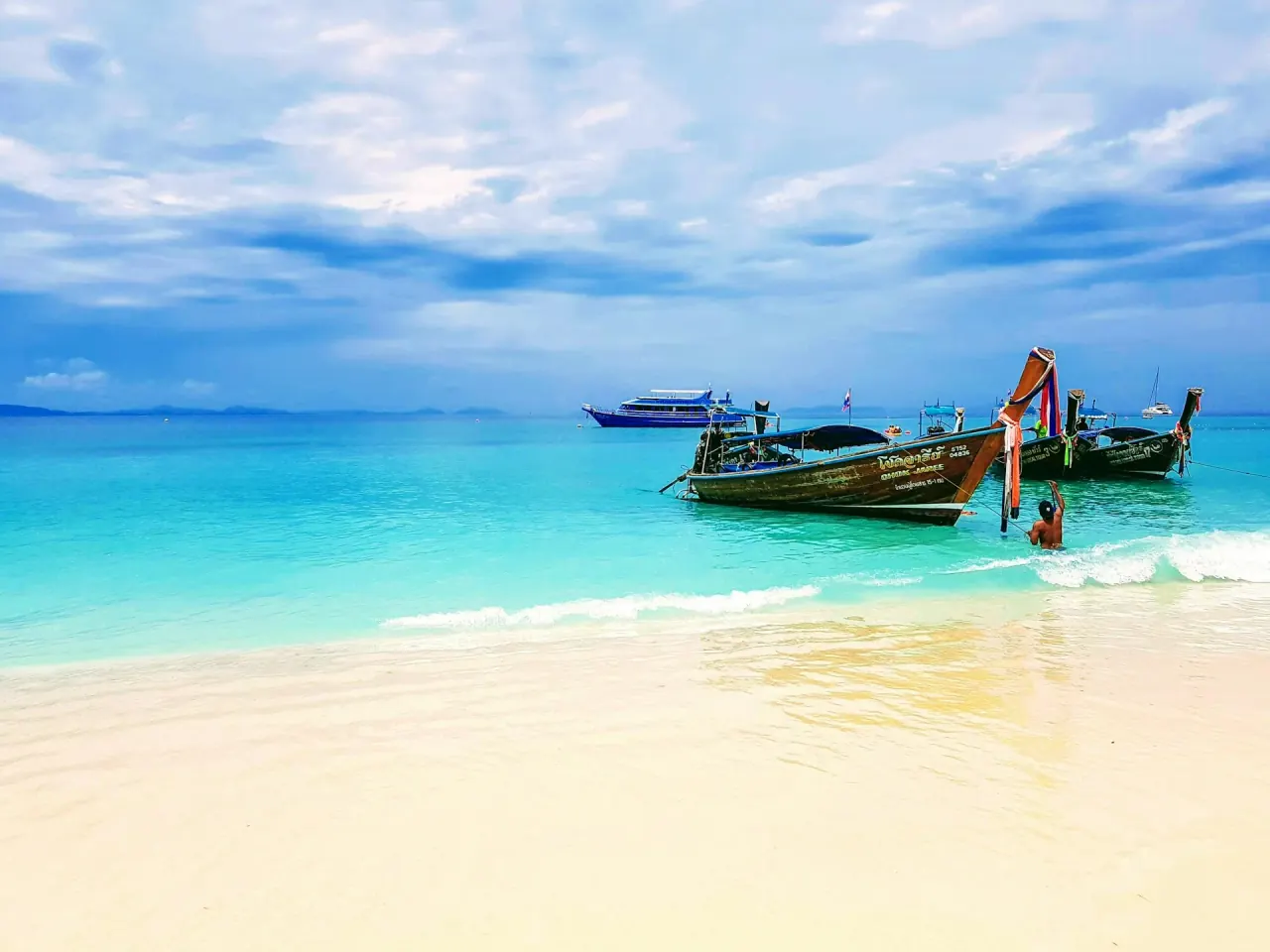
Bangkok is overwhelming and brilliant. Spend 2–3 days: the Grand Palace and Wat Pho on day one, Chatuchak Weekend Market and a canal boat through Thonburi on day two, and a street-food crawl through Chinatown's Yaowarat Road on the last evening. Stay on Khao San Road if you want the backpacker social scene — dorm beds run 250–400 baht ($7–12). Stay in Silom or Ari if you want a real neighbourhood — private rooms on Agoda for 600–900 baht ($17–26). BTS Skytrain and MRT cover the city efficiently for 16–59 baht ($0.50–1.70) per trip. Northern Thailand is the cultural heart of the trip. Chiang Mai deserves 4–5 days: Doi Suthep temple at sunrise, the Sunday Walking Street night market, a Thai cooking class ($25–35), and the old city's temple circuit. Skip the elephant "sanctuaries" that let you ride — they're not sanctuaries. Elephant Nature Park (full day $80) is the ethical option and worth the price. From Chiang Mai, take the 3-hour minivan to Pai — a mountain town that's equal parts hippie retreat and Instagram set. Pai is polarising: some people stay a week, others leave after one night. Budget 2–3 nights and decide for yourself. Pai dorm beds run $5–8. The islands are where Thailand's backpacking budget inflates. Koh Tao is the dive capital: a 4-day Open Water PADI certification costs $250–350, which is among the cheapest in the world and the main reason to visit. Dorm beds on Koh Tao run $8–12 per night. Koh Phangan draws the full-moon party crowd — budget $20–30 for the party including entry, drinks, and bucket cocktails. Krabi and Railay Beach offer the best limestone cliff scenery and rock climbing. Koh Lanta is quieter and cheaper. The honest trade-off: Thailand's islands are more expensive than the mainland by 30–50%, and during high season (December–February) prices jump again. If you're on a tight budget, pick two islands maximum and spend the extra days in Chiang Mai or Pai instead.
Editor's tips
- Take the overnight train from Bangkok to Chiang Mai — second-class sleeper is 800 baht ($23) and saves a night's accommodation
- Pad thai on Khao San Road costs 80–120 baht; walk three blocks to any side street and it's 50–60 baht for a better version
- Get a Thai SIM at the airport — AIS Tourist SIM: 299 baht ($8.60) for 15 days with 30GB data and unlimited calls
Laos: Slow Boats, Luang Prabang, and the Pace Change
Laos is the quietest country on the route, and that's exactly its value. After Thailand's sensory overload, the Mekong River crossing into Laos feels like someone turned the volume down. The classic entry is the slow boat from Huay Xai (across the border from Chiang Rai) to Luang Prabang — a two-day journey down the Mekong that costs 230,000–280,000 kip ($13–16) for a standard seat. You sleep overnight in the village of Pak Beng. The boat is not comfortable — wooden benches, no real bathroom — but the limestone gorge scenery is extraordinary. Bring a cushion, a book, snacks, and expectations calibrated for adventure, not luxury. Luang Prabang is the jewel of Laos and a genuinely beautiful small towns in Southeast Asia. It's a UNESCO World Heritage Site where 33 Buddhist temples sit alongside French colonial mansions, and the entire town occupies a peninsula at the confluence of the Mekong and Nam Khan rivers. The alms-giving ceremony at dawn — hundreds of saffron-robed monks walking through the old town — is sacred and shouldn't be treated as a photo opportunity. Budget 3–4 days: Kuang Si waterfall (entry 20,000 kip/$1.15, tuk-tuk 50,000 kip/$2.90 shared), the night market for textiles and Lao whisky, the Haw Pha Bang Royal Palace Museum (30,000 kip/$1.70), and at least one sunset over the Mekong from the top of Phousi Hill (20,000 kip/$1.15). Dorm beds in Luang Prabang: $5–8. Khao piak sen (Lao noodle soup) from the morning market: 20,000 kip/$1.15. Vang Vieng has cleaned up its act since the tubing-death years. The karst scenery is still remarkable, and the town now markets itself around kayaking, rock climbing, and hot-air balloon rides ($90 for 30 minutes) rather than Beer Lao buckets. Budget 2–3 days. From Vang Vieng, the new Lao-China Railway runs to Vientiane in 1.5 hours for about $7 — a dramatic improvement over the old 4-hour bus. Vientiane itself is the most low-key capital city in Southeast Asia: worth a day for Pha That Luang stupa and COPE Visitor Centre (which documents UXO clearance), but not a place that rewards lingering. Honest note on Laos: the country is significantly poorer than Thailand, and the infrastructure reflects this. Power outages happen. Wi-Fi is unreliable outside Luang Prabang. ATMs occasionally run out of cash. Bring more USD than you think you need as backup.
Editor's tips
- The slow boat sells out in high season — book through your Chiang Rai hostel the day before, not at the pier
- Lao kip is hard to exchange outside Laos — spend it down before crossing into Vietnam and keep USD for emergencies
Vietnam: Overnight Trains, Street Food, and 1,650km of Coastline
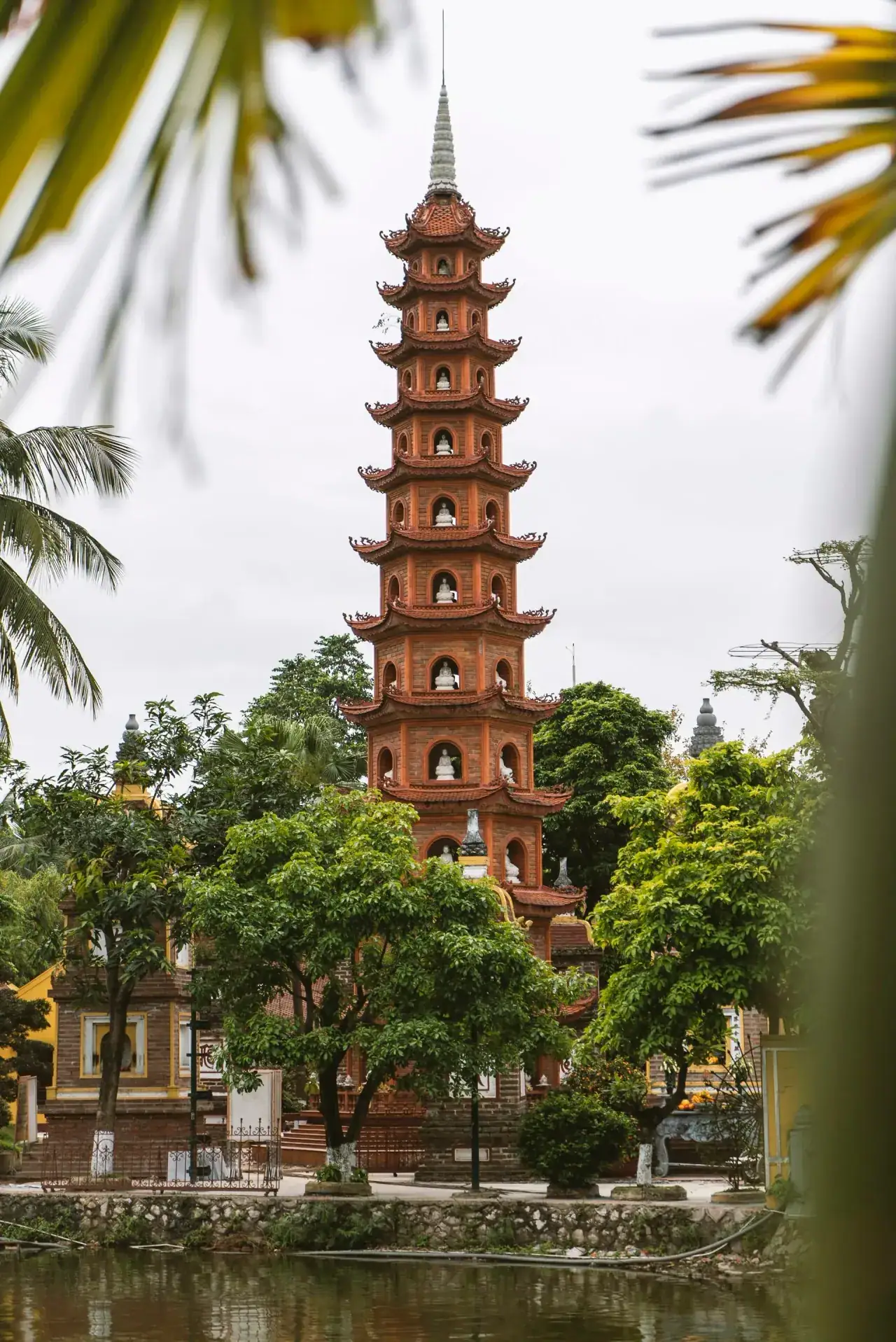
Vietnam is the most geographically rewarding country on the route — and the most logistically demanding. The country stretches 1,650km from Hanoi to Ho Chi Minh City, and the best way to experience that range is by overnight train. The Reunification Express runs the full length in roughly 33 hours — but nobody does it in one shot. The practical approach: take it in segments. Hanoi to Hue (13–14 hours, soft sleeper $25–35), Hue to Da Nang/Hoi An (2.5 hours, $5–8), and then fly Da Nang to Ho Chi Minh City ($30–50 on VietJet or Bamboo Airways). Hanoi deserves 3–4 days. The Old Quarter is chaotic, cramped, and utterly compelling — motorbikes flood every sidewalk, pho stalls open at 6am, and the 1,000-year-old street layout hasn't changed materially since the Ly Dynasty. Eat bún chả at Bún Chả Hương Liên (Obama's spot — still good, still 50,000 dong/$2), drink egg coffee at Giang Café (35,000 dong/$1.40), and visit the Ho Chi Minh Mausoleum complex (free, closed Mondays and Fridays). Take a day trip to Ninh Binh's Trang An complex — limestone karsts and rice paddies reachable by train in 2.5 hours ($3–5) — which is more accessible and less touristy than Ha Long Bay. Ha Long Bay is iconic but comes with a tourist-trap warning. Budget cruise operators ($80–120 for a 2-day/1-night boat trip) cut corners on food, boat maintenance, and group sizes. Pay $150–200 for a reputable operator or you'll spend the trip dodging selfie sticks. Alternatively, Lan Ha Bay (Cat Ba Island approach) offers the same karst scenery with 60% fewer boats. Hoi An is the town where most backpackers accidentally stay longer than planned. The Ancient Town is a UNESCO site of Japanese merchant houses, Chinese temples, and Vietnamese shopfronts along the Thu Bon River. Custom tailoring is Hoi An's commercial identity — a bespoke suit runs $80–150, a dress $30–60. Eat cao lầu (a dish that exists nowhere else, 40,000 dong/$1.60) and white rose dumplings (30,000 dong/$1.20). Budget 3–5 days. Dorm beds: $5–8. Rent a bicycle (30,000 dong/$1.20 per day) and ride to An Bang Beach. Ho Chi Minh City closes the Vietnam leg with urban intensity. The War Remnants Museum ($2.20) is mandatory — it documents the American War from the Vietnamese perspective and is among the affecting museums in Asia. The Cu Chi Tunnels (half-day tour $15–25) and the Ben Thanh Market night food stalls (banh mi 25,000–40,000 dong/$1–1.60) round out 2–3 days. HCMC is also the best place to arrange your Cambodia visa if you haven't done the e-visa online. Vietnam e-visa: $25 online, valid 90 days, multiple entry. Apply at least 5 business days before arrival. This replaced the old 30-day limit and is one of the best visa improvements in recent years.
Editor's tips
- Book Vietnam trains on vietnam-railway.com or the VNR app — aggregator sites charge 30–50% markups
- Grab works everywhere in Vietnam and eliminates all taxi negotiation — the motorbike option is cheaper and faster than cars
- Vietnamese coffee is served with condensed milk (cà phê sữa đá) — order it iced unless you want it scalding hot and strong
Cambodia: Angkor Wat, Phnom Penh, and the Islands
Cambodia is the shortest leg of the classic route — 1 to 2 weeks — but it contains the single most impressive monument in Southeast Asia. Angkor Wat is not a single temple: it's a 400-square-kilometre archaeological park containing dozens of temple complexes built between the 9th and 15th centuries. The 3-day pass costs $62, and you need all three days. Day one: Angkor Wat at sunrise (arrive by 5:15am), Angkor Thom and Bayon's stone faces, Ta Prohm (the tree-root temple from Tomb Raider). Day two: the Grand Circuit — Preah Khan, Neak Pean, Ta Som. Day three: Banteay Srei (25km north, refined red sandstone carvings) and Beng Mealea (the jungle-swallowed temple that feels like discovery). Siem Reap is the gateway town for Angkor and has developed a strong backpacker infrastructure. Pub Street is the social hub — loud, cheap beer ($0.50 for draft), and entirely geared toward tourists. Dorm beds: $4–7. Tuk-tuk drivers for temple circuits: $15–20 per day (negotiate the night before). Amok fish curry (the national dish) runs $3–5 at mid-range restaurants. The Angkor Night Market and Phare, the Cambodian Circus ($18–35), are the best non-temple activities. Phnom Penh is harder. The Tuol Sleng Genocide Museum and Choeung Ek Killing Fields ($6 each with audio guide) document the Khmer Rouge era and are among the most important — and most difficult — historical sites in Asia. Visit them. They're not optional if you want to understand the country you're in. The Royal Palace and Silver Pagoda ($10) are architecturally impressive. The riverside promenade at sunset and the Russian Market (Toul Tom Poung) for souvenirs round out 2 days. Koh Rong and Koh Rong Samloem are Cambodia's island options — less developed than Thailand's islands, which is both the appeal and the frustration. Koh Rong Samloem is the quieter choice with better beaches. Ferries from Sihanoukville cost $12–22 one way. Dorm beds on the islands: $6–10. Power and Wi-Fi can be intermittent. If you've already done Thai islands extensively, Cambodia's islands are a worthy but rougher alternative. Border crossing note: the Poipet-Aranyaprathet crossing between Cambodia and Thailand is notorious for scams — fake visa offices, inflated bus prices, and tuk-tuk drivers who insist the border is closed. It's not. Walk through and ignore everyone who isn't in an official booth. Cambodia visa on arrival: $30 plus one passport photo.
Editor's tips
- Buy the Angkor 3-day pass at the ticket office — do NOT buy from touts or online resellers who charge a premium
- Rent an e-bike in Siem Reap ($8–12/day) for temple independence — cheaper than tuk-tuks and faster than bicycles in the heat
- USD is the de facto currency in Cambodia — carry small bills, as change for $50 or $100 is often unavailable
Optional Extensions: Bali, the Philippines, and Myanmar
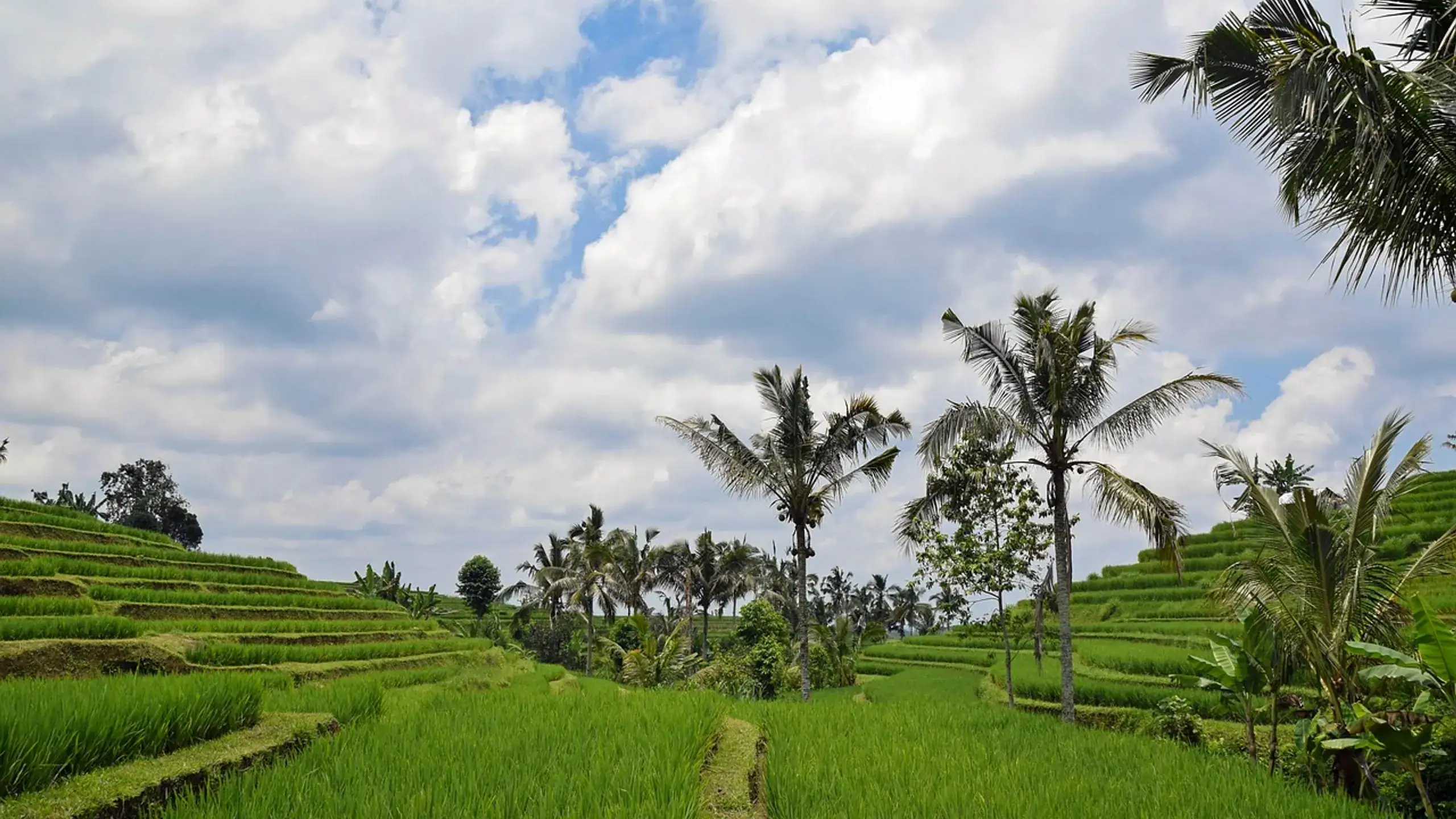
If your visa timeline and budget allow, three destinations extend the Southeast Asia trip naturally. Bali is the most common add-on — cheap flights from Bangkok, Kuala Lumpur, or Ho Chi Minh City run $50–100 on AirAsia or VietJet. Bali's backpacker infrastructure centres on Canggu (digital nomads, coworking, surfing) and Ubud (rice terraces, temples, yoga). Budget $35–55 per day — noticeably more expensive than mainland Southeast Asia but still reasonable. Two weeks is the right duration: Ubud for culture, Canggu or Uluwatu for beaches, and Nusa Penida for the Instagram cliffs and manta-ray snorkelling. Indonesian visa on arrival: $35 for 30 days, extendable once. The Philippines is the best pure-beach extension. Palawan's El Nido and Coron have limestone-lagoon scenery that rivals anything in Thailand. Siargao is a surf town with a growing backpacker scene. The challenge: the Philippines is an archipelago, and inter-island transport relies on flights ($30–80 on Cebu Pacific) and ferries that run on Filipino time. Budget 2–3 weeks and accept that logistics will be slower. Daily budget: $25–40. The 30-day visa-free entry for most nationalities simplifies everything. Myanmar is the complicated one. The country has extraordinary temple architecture (Bagan alone justifies a visit) and genuine cultural depth — but since the 2021 military coup, the ethical and safety calculus has changed. Tourist infrastructure has degraded, international sanctions complicate financial transactions, and spending money directly supports the military government. Some backpackers still go and report positive experiences; others consider it inappropriate to visit under current conditions. I'm not going to tell you what to do — but do the research, read current reports from independent journalists, and make a conscious decision rather than drifting in because it's on the map. Malaysia (Penang, Langkawi, the Cameron Highlands) is an underrated alternative extension: better food diversity than Thailand, comparable prices, and excellent infrastructure. Singapore is worth a 2-day stopover for the culture shock of going from $5 dorm beds to the most expensive city in Asia.
Editor's tips
- AirAsia and VietJet run constant sales on Southeast Asia routes — set up price alerts on Google Flights 2–3 months ahead
- The Philippines requires proof of onward travel — a fully refundable flight booking satisfies the requirement without cost
Budget Breakdown: What $30–50 Per Day Actually Buys
The $30–50/day figure is not aspirational — it's the actual median spend for a backpacker staying in dorms, eating street food and local restaurants, using local transport, and doing a reasonable number of paid activities. Here's how it breaks down in 2026 prices. **Accommodation ($8–15/day):** Hostel dorm beds range from $4–7 in Cambodia and Laos to $8–12 in Thailand and Vietnam. Private rooms in guesthouses run $15–25. Airbnb monthly stays can drop below $10/day in places like Hoi An or Chiang Mai. The quality-to-price sweet spot is the $8–12 range — air-conditioned dorm, free breakfast, decent Wi-Fi, social common area. **Food ($5–10/day):** Street food and local restaurants. Pad thai in Bangkok: 50–80 baht ($1.50–2.40). Pho in Hanoi: 40,000–60,000 dong ($1.60–2.40). Amok curry in Siem Reap: $3–5. Baguette sandwich in Luang Prabang: 15,000–25,000 kip ($0.85–1.45). Two meals from street stalls and one from a local restaurant keeps you under $8/day in all four countries. Western food (pizza, burgers, pasta) at tourist restaurants costs 2–3x more — the fastest way to blow your budget is eating what you eat at home. **Transport ($5–15/day, averaged):** Transport costs are lumpy: $0 on days you stay put, $25–40 on overnight-train days. Averaged over a month, $5–15/day is realistic. Specific costs: Bangkok BTS single trip 16–59 baht ($0.50–1.70), Chiang Mai to Pai minivan 150 baht ($4.30), slow boat Huay Xai to Luang Prabang $13–16, sleeper train Hanoi to Hue $25–35, bus HCMC to Phnom Penh $12–18, tuk-tuk day in Siem Reap $15–20. **Activities ($5–10/day, averaged):** Angkor Wat 3-day pass: $62 ($20.70/day). PADI Open Water on Koh Tao: $250–350 ($63–88/day for 4 days). Cooking class in Chiang Mai: $25–35. Most temple entries: $1–5. Averaged across a full trip with some big-ticket days and many free days, $5–10/day covers it. **Total realistic range:** $30–35/day is doable if you're disciplined — dorms, street food, local transport, selective activities. $40–50/day is comfortable — occasional private rooms, restaurant meals, most activities you want. $50–65/day adds air-conditioning upgrades, mid-range restaurants, and premium experiences (diving, balloon rides, guided tours). Above $65/day and you're not really backpacking anymore — which is also fine.
Editor's tips
- Track spending daily with the Trail Wallet or TravelSpend app — budget drift is invisible until you're broke in week 8
- Withdraw large amounts from ATMs to minimise per-transaction fees — Thai ATMs charge 220 baht ($6.30) per withdrawal regardless of amount
- Wise (formerly TransferWise) debit card gives the best exchange rate and lowest fees across all four countries
Practical Logistics: Visas, Vaccinations, SIM Cards, and Monsoon Seasons
**Visas in 2026:** Thailand: 60-day visa exemption for most Western passports (was 30, extended post-COVID). Laos: visa on arrival $35–42 depending on nationality, 30 days. Vietnam: e-visa $25, 90 days, multiple entry — apply online at evisa.xuatnhapcanh.gov.vn at least 5 business days before arrival. Cambodia: visa on arrival $30, 30 days, or e-visa $36 online. Carry two extra passport-sized photos at all times — they're required at every land border. Verify your passport has at least 6 months validity from your entry date into each country. **Vaccinations:** Required: none for most nationalities (yellow fever certificate only if arriving from an endemic country). Recommended: Hepatitis A and B, typhoid, tetanus/diphtheria booster, and Japanese encephalitis if you're spending extended time in rural areas during monsoon season. Malaria prophylaxis: generally unnecessary in major tourist areas but recommended for rural Laos and Cambodian jungle treks. Consult a travel clinic 6–8 weeks before departure. Budget $150–300 for vaccinations if you need all of them. **SIM cards:** Buy a local SIM in each country — they're cheap, fast, and make navigation, Grab rides, and restaurant discovery dramatically easier. Thailand: AIS Tourist SIM 299 baht ($8.60, 15 days, 30GB). Vietnam: Viettel 100,000 dong ($4, 30 days, 6GB/day). Laos: Unitel 50,000 kip ($2.90, 30 days, 2GB/day). Cambodia: Smart SIM $3 for 30 days with 3GB/day. Keep your home SIM in a small ziplock bag in your daypack — you'll need it when you get home. **Travel insurance:** Non-negotiable. A broken ankle in Thailand costs $3,000–8,000 without insurance. Medical evacuation from rural Laos runs $15,000–40,000. World Nomads and SafetyWing are the two most popular backpacker policies. SafetyWing costs $45/month and covers medical, evacuation, and trip interruption — not baggage or electronics, which is a reasonable trade-off for the price. World Nomads ($80–120/month) covers everything including adventure sports. Buy before you leave. **Monsoon seasons and timing:** Southeast Asia has no single monsoon — each sub-region has its own wet season. Thailand and Cambodia: wet season June–October (afternoon downpours, not all-day rain, and prices drop 20–40%). Vietnam: complicated — the north is wet May–September, central coast October–December (typhoon risk), south April–October. Laos: wet June–October. The ideal window for the full four-country route is November–February (dry, cooler, peak season) or March–May (hot, fewer tourists, pre-monsoon). June–October works but requires flexibility and rain gear. **Packing note:** One 40–50L backpack, no more. You will buy clothes in Southeast Asia — they're cheaper and lighter than what you packed. Essential non-negotiables: quick-dry towel, headlamp, padlock for hostel lockers, universal sink plug for hand-washing clothes, and a dry bag for monsoon days and island boats.
Editor's tips
- Photograph every visa stamp and immigration card — if there's a discrepancy at exit, a photo on your phone resolves it faster than an argument
- SafetyWing's monthly subscription means you can cancel anytime — useful if your trip length is uncertain
Common Mistakes and Honest Warnings
**Moving too fast.** The single most common backpacker mistake in Southeast Asia is trying to see everything. Twelve to fourteen stops in 90 days is a comfortable pace that lets you actually experience places. Twenty or more means you spend half your trip in bus stations and on booking apps, and every town blurs into the next. If you catch yourself saying "we only have one night here," you've over-planned. **The party trap.** Khao San Road, Vang Vieng, Koh Phangan's Full Moon Party, Pub Street in Siem Reap — the Southeast Asia trail has a well-worn party circuit, and it's easy to spend three weeks moving between drinking towns without seeing much of the countries you're in. There's nothing wrong with a few party nights, but if your Southeast Asia memories are exclusively hangovers and bucket cocktails, you've missed the point. The counter-programming: Chiang Mai's temple circuit at dawn, Luang Prabang's alms ceremony, Hoi An's lantern-lit river, the Mekong at sunset from a slow boat. These moments don't happen at 2am. **Scams to know.** The tuk-tuk gem scam in Bangkok (driver takes you to a "special" gem shop — the gems are glass). The "temple is closed today" redirect in Bangkok (it's not closed; they want to take you somewhere else). Taxi meters that don't run in Hanoi and HCMC (use Grab). Fake travel agencies in Siem Reap and Phnom Penh that sell bus tickets at 3x the actual price. The Vietnam sleeper-bus bait-and-switch (you book a reputable company, a different bus shows up). None of these are dangerous — they're just annoying and expensive. The universal defence: never accept unsolicited offers from strangers, always book through your hostel or a verified app, and walk away from anyone who's too eager to help. **Overtourism is real.** Ha Long Bay is crowded and polluted in peak season. Angkor Wat at sunrise draws thousands of people with phone cameras. Maya Bay (Thailand) was closed for years due to environmental damage and now limits daily visitors. Pai has more Instagram influencers than actual residents. The solution isn't to skip these places — most are famous for legitimate reasons — but to go at off-peak times, take the alternative versions (Lan Ha Bay instead of Ha Long, Beng Mealea instead of Ta Prohm), and stay long enough that you see more than the postcard. **Burnout.** Three months is a long trip, and backpacker burnout is real. Symptoms: you stop being curious, every temple looks the same, you eat at the same Western restaurant three nights in a row, you spend entire days in the hostel common room watching Netflix. The cure: slow down. Stay somewhere for a week. Rent a motorbike and drive somewhere without a plan. Take a cooking class. Learn three phrases in the local language. Backpacking is not a checklist — the best moments are the ones that aren't in any guide, including this one. **Health realities.** You will probably get sick at some point — traveller's diarrhea is almost a rite of passage. Carry Imodium, oral rehydration salts, and basic antibiotics (prescribed by your travel clinic before departure). Drink bottled water everywhere. Ice in drinks is generally safe in Thailand and Vietnam (it's commercially made) but less reliable in rural Laos and Cambodia. Dengue fever is a real risk during and after monsoon season — wear repellent with 20%+ DEET, especially at dusk.
Editor's tips
- Book at least one week-long stay during your 3 months — a cheap Airbnb in Hoi An or Chiang Mai at $12–18/night resets your energy completely
- The best antidote to burnout is a local connection — a cooking class, a language exchange, or volunteering creates the kind of experience that hostels and buses don't
Find Cheap Flights to Southeast Asia
International flights to Bangkok are the cheapest gateway — set alerts on Google Flights and Skyscanner for your departure city. Open-jaw tickets (fly into Bangkok, out of Phnom Penh or Ho Chi Minh City) eliminate backtracking and save travel days.
Book Hostels & Guesthouses
Hostelworld and Booking.com cover most Southeast Asia accommodation. For stays longer than a week, check Agoda — they often have lower prices on guesthouses and budget hotels across the region.
Tours, Diving & Local Experiences
PADI diving on Koh Tao, cooking classes in Chiang Mai, temple circuits in Siem Reap, Ha Long Bay cruises — booking through a reputable platform guarantees cancellation policies and verified reviews.
Frequently asked questions
A realistic budget is $30–50 per day covering dorm accommodation ($8–15), street food and local restaurants ($5–10), local transport ($5–15 averaged), and activities ($5–10 averaged). Thailand and Vietnam are slightly more expensive than Laos and Cambodia. Budget $3,000–4,500 for a 3-month trip excluding international flights.
Southeast Asia's backpacking route has survived three decades because it delivers on the fundamental promise: maximum experience per dollar, in a region where the logistics actually work. The pad thai is still $1.50, the slow boat still runs, and Angkor Wat still takes your breath away at dawn. What's changed in 2026 is mostly for the better — Vietnam's 90-day e-visa, the Lao-China Railway cutting transit times, better hostel standards, and mobile data that means you're never truly lost. What hasn't changed is the thing that matters: four countries, four cuisines, four landscapes, one overland route, and a daily budget that most of the world's travel destinations can't touch. Pack one bag. Fly to Bangkok. Go north. Turn left at the Mekong. The trail is there because it works — and the best way to understand why is to walk it yourself. ⚠️ Health and vaccination requirements last verified August 2026. Requirements change — check the CDC Travel Health page (wwwnc.cdc.gov/travel) and your destination's embassy for the most current guidance before you book.
Get there
Flights
One search across 700+ airlines — find the real lowest fare for your dates.
Search flightsWhere to stay
Hotels
Browse verified hotels and stays — instant confirmation, secure booking.
Book on KKdayThings to do
Activities
Tours, attractions, and day trips — free cancellation on most experiences.
Book on KlookTours & Experiences
Book the experiences, not just the trip
Skip-the-line tickets, guided tours, and day trips — free cancellation on most, confirmed instantly.
About the author
Camille Laurent
Senior Travel Editor · Based in Lisbon · Bali
Camille has spent the last 9 years living in or reporting from over 60 countries. Former contributor to Condé Nast Traveler and Monocle, she focuses on Southeast Asia, Mediterranean Europe, and the Middle East. Currently based between Lisbon and Bali.
Read next — destinations
More from The Edit
Travel Guides
Solo Travel Tips: The Complete Beginner's Guide
Everything you actually need to know before you go alone — from a traveller who's done it wrong first.
10 min read
Honest Take
Thailand vs Vietnam: Which Southeast Asia Trip Is Right for You?
Southeast Asia's two most popular destinations are frequently compared but rarely understood in opposition. Thailand has perfected tourist infrastructure. Vietnam has a geographical range — 1,650km north to south — that Thailand cannot match. The question is what kind of trip you want.
11 min read