
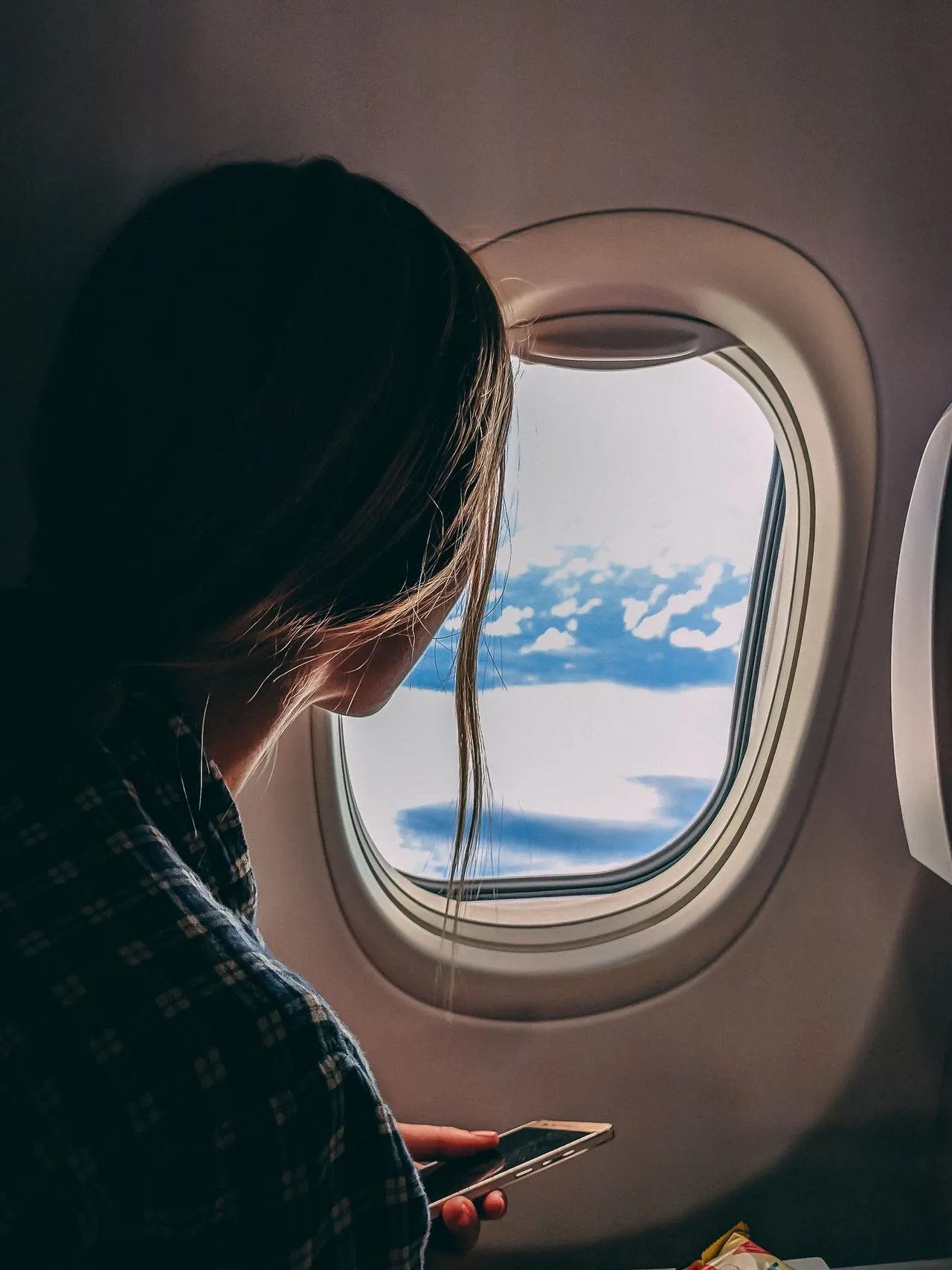
How to Beat Jet Lag — The Science-Backed Guide That Actually Works
I have crossed enough time zones to know that jet lag is not a minor inconvenience — it is a biological mutiny. Here is the protocol I use, backed by circadian rhythm science, to cut recovery time in half.
I landed in Tokyo at 4 PM local time after a 12-hour flight from Paris, and my body was absolutely certain it was 8 AM. My eyes were open but my brain was running on yesterday's schedule. I checked into my hotel, lay down for what I told myself would be a 20-minute nap, and woke up at 2 AM with the kind of wired, hollow alertness that makes you question your life choices. I then spent the next three days in a fog — exhausted by afternoon, wide awake at midnight, unable to taste food properly, and making decisions with the cognitive sharpness of someone who had been awake for 36 hours. That was the trip that made me take jet lag seriously. Not as a minor inconvenience that a cup of coffee fixes, but as a genuine physiological disruption that can flatten the first 3–5 days of a trip you spent months planning and thousands of dollars reaching. Since then, I have read the research, experimented on myself across dozens of long-haul flights, and built a protocol that consistently cuts my recovery time in half or better. This guide is that protocol — the full version, with the science explained in plain language and the practical steps laid out in order. Whether you are flying from New York to London (5 time zones, manageable), Los Angeles to Tokyo (17 hours and 8 time zones, brutal), or anywhere to Bali (which somehow always involves a 3 AM layover in Singapore), this is how you arrive functional.
Planning this trip?
Find flights now
Compare prices across 700+ airlines and OTAs in one search — find the real lowest fare without the inflated middleman markup.
Search flightsNeed a place to stay?
Search hotels
What Jet Lag Actually Is — The Circadian Science
Jet lag is not tiredness from a long flight. You can take a 14-hour flight from New York to Cape Town — same time zone — and feel physically tired but mentally sharp. Jet lag is what happens when your internal clock disagrees with the external world, and it is a fundamentally different problem. Your body runs on a circadian rhythm — a roughly 24-hour internal cycle controlled by a cluster of about 20,000 neurons in your hypothalamus called the suprachiasmatic nucleus (SCN). This clock regulates when you feel sleepy, when you feel alert, when your body temperature peaks, when your digestive enzymes activate, and when hormones like melatonin and cortisol are released. It is not a suggestion system. It is a command system. When your SCN says it is 2 AM, your body shuts down for sleep regardless of what the clock on the wall says. The SCN synchronises itself primarily through light exposure — specifically, the blue-wavelength light that is abundant in sunlight. When light hits specialised receptors in your retina (called intrinsically photosensitive retinal ganglion cells, or ipRGCs), those cells send a signal directly to the SCN that says 'it is daytime.' When light decreases, the SCN triggers the pineal gland to release melatonin, which is the hormone that makes you sleepy. This is why you get drowsy after sunset and alert after sunrise — your clock is tracking the light. The problem with crossing time zones is simple: the external light-dark cycle shifts instantly, but your SCN shifts slowly. Research published in the Journal of Clinical Investigation shows that the SCN adjusts at a rate of approximately 1–1.5 time zones per day. So if you fly from New York to Paris (6 time zones), your internal clock needs 4–6 days to fully catch up. During that gap, your body is releasing melatonin when you should be awake, suppressing digestive enzymes when you should be eating, and flooding you with cortisol when you should be winding down for sleep. This is why jet lag is not just about sleep. It affects digestion (that queasy, no-appetite feeling at mealtimes), cognition (difficulty concentrating, poor short-term memory, slow reaction times), mood (irritability, low motivation), and even immune function — a 2016 study in Current Biology found that chronic circadian disruption impairs immune cell function, which is why frequent flyers often get sick after long-haul trips. The good news: because the mechanism is understood, it can be hacked. The interventions that work all target the same thing — accelerating your SCN's adjustment to the new time zone by manipulating the inputs it uses to set its clock: light, melatonin, temperature, and meal timing.
Editor's tips
- Jet lag is not about flight duration — it is about how many time zones you cross, because each one requires roughly a day for your circadian clock to adjust
- Light exposure is the single most powerful input to your internal clock — strategic use of bright light and darkness is more effective than any supplement
Pre-Flight Prep — Start Shifting Before You Leave
The biggest mistake most travellers make is treating jet lag as something that starts when you land. It starts when you board the plane. And the smartest intervention starts 3–4 days before that. The principle is simple: if your destination is 6 time zones ahead, your body needs to advance its clock by 6 hours. You can either do that all at once after arrival (miserable) or start chipping away at it before departure (much less miserable). The research from the Sleep Research Society suggests shifting your sleep schedule by 30 minutes per day in the direction of your destination. Flying east to Europe? Go to bed 30 minutes earlier each night for 3–4 days. Flying west to Hawaii? Go to bed 30 minutes later. The 30-minute daily shift method: Day 4 before departure: shift bedtime by 30 minutes. Day 3: shift by another 30 minutes (now 1 hour total). Day 2: shift by another 30 minutes (1.5 hours total). Day 1: shift by another 30 minutes (2 hours total). You will not fully close the gap this way — for a 6-hour shift, you will have covered 2 hours before departure. But those 2 hours represent 2 fewer days of recovery at your destination. That is the difference between being functional on day 2 versus day 4. Light exposure timing: This is the accelerator. If you are shifting earlier (eastbound), get bright light exposure immediately upon waking — open the curtains, step outside, or use a 10,000-lux light therapy lamp for 20–30 minutes. Avoid bright light in the evening (dim your screens, wear blue-light-blocking glasses after 8 PM). If you are shifting later (westbound), do the opposite — avoid morning light and seek bright light in the evening. The Timeshifter app (USD 10/year): I resisted paying for a jet lag app for years because it seemed absurd. Then I tried Timeshifter on a New York to Tokyo flight and arrived more functional than I had on any previous trip to Asia. The app builds a personalised schedule based on your flight times, chronotype (whether you are naturally a morning person or night owl), and sleep patterns. It tells you exactly when to seek light, when to avoid light, when to take melatonin, and when to sleep — broken into pre-flight, in-flight, and post-arrival phases. At USD 10/year, it is the best value purchase in my entire travel toolkit. The app is not magic — it is just implementing the same circadian science described above, but it does the calculations for you and sends push notifications so you do not have to think about it. Other pre-flight prep: Hydrate aggressively the day before departure. Cabin air humidity is 10–20% (compared to 30–60% at home), and dehydration amplifies fatigue, headaches, and cognitive impairment. Start the flight well-hydrated and you are ahead. Also, adjust your meal timing to match your destination's schedule 1–2 days before departure — eating breakfast at what will be breakfast time at your destination helps your peripheral clocks (gut, liver) start shifting alongside your master clock.
Editor's tips
- Start shifting your sleep 30 minutes per day, 3–4 days before departure — 2 hours of pre-adjustment can save you 2 days of recovery
- Timeshifter (USD 10/year) builds a personalised light, sleep, and melatonin schedule for your specific flight — it is the highest-ROI travel app I use
- Hydrate heavily the day before departure — starting a long-haul flight dehydrated amplifies every jet lag symptom
In-Flight Strategy — When to Sleep, When to Stay Awake
The flight itself is where most people make their second biggest mistake: they sleep when they are tired instead of when they should be sleeping at their destination. The direction you are flying determines everything. Eastbound flights (e.g., US to Europe, Europe to Asia): You are flying into a shorter day. Your goal is to sleep during the flight so you arrive having rested through what is 'night' at your destination. On a New York to London overnight flight (departing 7 PM, arriving 7 AM London time), you should try to sleep as soon as the meal service ends — that aligns roughly with London's nighttime. Avoid screens for 30 minutes before you want to sleep. Use a good eye mask (I use the Manta Sleep mask — blocks 100% of light), earplugs or noise-cancelling headphones, and take melatonin (0.5–1 mg) about 30 minutes before your target sleep time. Westbound flights (e.g., Asia to Europe, Europe to US): You are flying into a longer day. Your goal is to stay awake during the flight for as long as possible and arrive ready for an evening at your destination. On a Tokyo to Paris flight (departing afternoon Japan time, arriving evening Paris time), resist the urge to sleep for the first 6–8 hours. Watch movies, read, walk the aisle. Nap only in the last 2–3 hours if you need to. The goal is to arrive tired enough to sleep at a normal hour at your destination. Hydration rules for every direction: Drink 250 ml (one cup) of water every hour. That sounds like a lot — it is. But cabin humidity is around 10–20%, and you lose water through respiration much faster than on the ground. A 2018 study in the Aerospace Medicine and Human Performance journal found that dehydrated passengers reported significantly worse jet lag symptoms than hydrated ones. Avoid alcohol entirely — it disrupts sleep architecture, dehydrates you further, and impairs the circadian resetting that should be happening during your flight sleep. One glass of wine on a long-haul flight costs you more recovery time than people realise. Coffee is fine in moderation during the 'awake' phase of your flight schedule, but cut it off at least 8 hours before your target sleep time. Movement: Get up and walk the aisle every 2 hours. This is partly about deep vein thrombosis (DVT) prevention, but it also helps with jet lag — light physical activity promotes alertness during your 'awake' phase and improves sleep quality during your 'sleep' phase. Do some standing stretches near the galley. The flight attendants will not mind — they have seen worse. Seat selection: Window seats are better for jet lag management because you control the window shade (light control) and you can lean against the wall to sleep without being disturbed. If you are on a long eastbound flight where sleep is the priority, window seat, melatonin, eye mask, and noise-cancelling headphones is the stack.
Editor's tips
- On eastbound flights, sleep as early as possible to align with nighttime at your destination — eye mask, melatonin, and noise-cancelling headphones are essential
- On westbound flights, stay awake as long as possible and arrive tired enough to sleep at a normal local hour
- Drink one cup of water every hour and skip alcohol completely — dehydration and alcohol are the two biggest jet lag amplifiers on any flight
Arrival Protocol — The First 12 Hours Matter Most
You have landed. You are exhausted. Your body wants to sleep. This is the moment that determines whether you recover in 2 days or 5. The first 12 hours after arrival are the highest-use window for circadian adjustment, and every decision matters. Step 1: Get sunlight immediately. This is the single most important thing you can do. As soon as you leave the airport, get outside into natural daylight. Walk to the taxi rank instead of taking the indoor shuttle. If you arrive in the morning, spend at least 30 minutes in direct sunlight before going to your hotel. If you arrive in the afternoon, still get outside — even late-afternoon sunlight is 10–50x brighter than indoor lighting and sends a powerful 'it is daytime' signal to your SCN. A 2019 meta-analysis in the Journal of Pineal Research found that timed bright light exposure is the most effective single intervention for accelerating circadian adjustment. If you arrive at night — go to your hotel, keep lights dim, and sleep. Do not try to stay up. Night arrivals are actually the easiest to manage because your body wants to sleep and the environment agrees. Step 2: Caffeine — use it, but with a hard cutoff. Coffee is your ally on arrival day, but only until the cutoff. Caffeine has a half-life of 5–6 hours, which means a coffee at 3 PM is still half-active at 9 PM. Set your cutoff at 8 hours before your target bedtime. If you want to sleep at 10 PM local time, your last coffee is at 2 PM. This is non-negotiable. I have watched fellow travellers drink espresso at 6 PM 'to make it through dinner' and then lie awake until 3 AM wondering why they cannot sleep. They cannot sleep because they have 150 mg of caffeine circulating in their bloodstream. Use caffeine in the morning and early afternoon to stay awake. Then stop. Step 3: Move your body. Exercise on arrival day — even light exercise — helps in two ways. First, physical activity increases adenosine levels in the brain, which builds sleep pressure and helps you fall asleep at the right time that evening. Second, exercise raises core body temperature, and the subsequent drop in temperature 4–6 hours later is a natural sleep cue. A 30-minute walk, a hotel gym session, or even a long stroll through your destination neighbourhood is enough. Do not do intense exercise within 3 hours of bedtime — it can delay sleep onset. Step 4: The cold shower trick. This one sounds unpleasant and it is. But a 2–3 minute cold shower (or ending your regular shower with 60 seconds of cold water) at arrival is remarkably effective at resetting alertness. Cold exposure triggers a norepinephrine spike — the same neurotransmitter that makes you feel alert and focused in the morning. It is not a circadian intervention per se, but it bridges the gap between 'my body says sleep' and 'I need to stay awake until 9 PM.' Step 5: Do not nap. (Or if you must, nap smart.) The urge to nap on arrival day is overwhelming. Resist it if you possibly can. A nap releases sleep pressure, which is the one thing you need building up so you can fall asleep at the right time that night. If you absolutely cannot stay awake, set an alarm for 20 minutes. Not 30, not 45, not 'I will just close my eyes for a bit.' Twenty minutes gives you a restorative micro-sleep without entering deep sleep stages that cause grogginess and reduce nighttime sleep pressure. Nap before 2 PM local time and never, ever after 3 PM. Step 6: Eat on local time. Your gut has its own circadian clocks (called peripheral oscillators), and meal timing is one of the signals they use to synchronise. Eat breakfast, lunch, and dinner at local mealtimes, even if you are not hungry. Keep portions moderate — your digestion is sluggish when your gut clock is misaligned, and large meals can cause bloating and discomfort. Avoid heavy, rich foods on day 1. Light protein, vegetables, and simple carbohydrates are easier to process.
Editor's tips
- Get 30+ minutes of natural sunlight immediately after landing — it is the single most effective jet lag intervention, more powerful than any supplement
- Set a hard caffeine cutoff 8 hours before your target bedtime — a 3 PM coffee will still be half-active in your system at 9 PM
- If you must nap, set a hard alarm for 20 minutes and do it before 2 PM — anything longer or later will sabotage your nighttime sleep
Supplements — What Works, What Doesn't
The supplement industry has sold a lot of pills to jet-lagged travellers. Most of them do nothing. Here is what the clinical evidence actually supports. Melatonin — WORKS (strong evidence). Melatonin is the only supplement with consistent, well-replicated clinical evidence for jet lag. A Cochrane Review (the gold standard of medical evidence synthesis) analysed 10 randomised controlled trials and concluded that melatonin 'is remarkably effective in preventing or reducing jet lag, and occasional short-term use appears to be safe.' The key details: dose matters. More is not better. Studies show that 0.5 mg is as effective as 5 mg for circadian shifting — higher doses mainly increase drowsiness without improving clock adjustment. I take 0.5–1 mg for mild jet lag (3–5 time zones) and 2–3 mg for severe jet lag (6+ time zones). Timing matters more than dose: take it 30 minutes before your target bedtime at the destination, starting the night you arrive. Do not take it during the day or in the middle of the night — poorly timed melatonin can shift your clock in the wrong direction. Magnesium — HELPS (moderate evidence). Magnesium is not a jet lag cure, but it is a useful sleep support. Magnesium glycinate (200–400 mg before bed) has been shown in multiple studies to improve sleep quality, reduce the time it takes to fall asleep, and reduce nighttime awakenings. When your circadian clock is misaligned and sleep is already fragile, anything that improves sleep quality is valuable. I take 300 mg of magnesium glycinate on the first 3 nights at a new destination. It will not fix jet lag, but it helps me stay asleep once I do fall asleep. No-Jet-Lag (homeopathic) — DOES NOT WORK (no evidence). No-Jet-Lag is a homeopathic tablet sold in airports worldwide. It contains arnica, bellis perennis, chamomilla, ipecacuanha, and lycopodium — all at homeopathic dilutions, meaning the active ingredients are diluted to the point where not a single molecule of the original substance remains. There are no peer-reviewed, randomised controlled trials supporting its efficacy for jet lag. A 1998 study cited on the product's website was a small, poorly controlled trial that did not meet modern evidence standards. Homeopathy in general has been found to perform no better than placebo in systematic reviews by the Australian National Health and Medical Research Council, the UK House of Commons Science and Technology Committee, and the European Academies Science Advisory Council. Save your USD 12. Caffeine — USEFUL BUT NOT A FIX. Caffeine blocks adenosine receptors, which temporarily reduces the feeling of sleepiness. It does not fix circadian misalignment — it just masks it. Use caffeine strategically during the 'awake' phase of your adjustment (morning and early afternoon) and respect the hard cutoff discussed in the arrival protocol section. Caffeine is a tool, not a solution. Valerian root, lavender, CBD — INSUFFICIENT EVIDENCE. These are popular sleep aids with some evidence for general insomnia but no specific evidence for jet lag. They may help you sleep, but they do not accelerate circadian adjustment. If you normally use one of these for sleep at home and it works for you, there is no reason to stop using it while travelling — but do not expect it to fix jet lag specifically. Prescription options — for severe cases only. Short-acting sleep medications like zolpidem (Ambien) or zopiclone can help with in-flight sleep and the first 1–2 nights at the destination. These are prescription-only and should be discussed with your doctor. They carry risks of dependence, next-day grogginess, and rare but real side effects including sleepwalking. I do not use them, but I know frequent business travellers who swear by a single zolpidem on eastbound overnight flights. If you go this route, try it at home first — do not discover you are a sleep-walker at 35,000 feet.
Editor's tips
- Melatonin at 0.5–3 mg taken 30 minutes before your target bedtime is the only supplement with strong clinical evidence for jet lag — timing matters more than dose
- Magnesium glycinate (200–400 mg) before bed helps sleep quality but does not directly fix circadian misalignment — use it as a complement, not a cure
- Homeopathic No-Jet-Lag tablets have zero peer-reviewed evidence supporting their efficacy — they perform no better than placebo in systematic reviews
East vs. West — Why Direction Changes Everything
If you have ever noticed that flying to Europe from the US feels worse than flying back, you are not imagining it. Eastbound travel is objectively harder than westbound, and the reason is rooted in circadian biology. Your internal clock naturally runs slightly longer than 24 hours — most studies put the intrinsic period at about 24.2 hours. This means your body finds it slightly easier to extend the day (stay up later) than to shorten it (go to bed earlier). Westbound travel asks you to extend the day — you fly from Paris to New York and gain 6 hours, so you just need to stay awake a bit longer. Eastbound travel asks you to shorten the day — you fly from New York to Paris and lose 6 hours, so you need to fall asleep 6 hours earlier than your body expects. Shortening the day fights your natural drift. Lengthening it goes with the current. A 2016 study in the journal Chaos (published by the American Institute of Physics) modelled this mathematically and found that recovery from eastbound travel takes approximately 50% longer than recovery from the same number of time zones westbound. Fly 6 time zones west: recover in about 4 days. Fly 6 time zones east: recover in about 6 days. Eastbound protocol (you are losing hours): This is the harder direction, so you need to be more aggressive. Start the pre-flight sleep shift earlier (5 days instead of 3). Use melatonin on the flight and for the first 3–4 nights at the destination. Prioritise morning sunlight aggressively — this is the most powerful signal to advance your clock. Avoid evening light (wear blue-light-blocking glasses after sunset for the first 2 days). Do not nap. The temptation is stronger with eastbound travel because you arrive exhausted, but napping delays the adjustment you desperately need. Westbound protocol (you are gaining hours): This is the easier direction, and the strategy is simpler. Stay awake as long as you can on the flight. On arrival, seek evening light (take a walk at sunset, keep lights bright in the evening). Avoid morning light for the first 1–2 days if possible — sleep in, use blackout curtains. Your body wants to shift later, and you are helping it do exactly that. Melatonin is usually unnecessary for westbound shifts of fewer than 8 time zones. The special case: 10+ time zone shifts. When you cross more than 10 time zones (e.g., US to Southeast Asia, US to Australia), the distinction between east and west starts to blur because you are closer to going 'the other way around.' For shifts of 10–12 time zones, some researchers suggest it is actually faster to adjust in the counter-intuitive direction. Flying east across 11 time zones? Your body may adapt faster by delaying its clock (treating it like a 13-hour westward shift) rather than advancing it 11 hours. The Timeshifter app handles this calculation automatically, which is another reason I recommend it for trans-Pacific and Australia-bound flights.
Editor's tips
- Eastbound travel takes roughly 50% longer to recover from than westbound — plan more aggressive interventions for flights heading east
- For eastbound trips, prioritise morning sunlight and avoid evening light for the first 2 days — this accelerates the clock-advance your body resists
- For 10+ time zone shifts, your body may adapt faster by adjusting in the opposite direction — the Timeshifter app calculates the optimal direction automatically
Recovery Timeline by Route — What to Realistically Expect
Knowing how long jet lag will last helps you plan your trip. Here are the realistic recovery timelines for major routes, based on circadian science and my own experience. 'Recovery' means you are sleeping and waking at normal local times and functioning at 90%+ cognitive capacity during the day. US East Coast to Western Europe (5–6 time zones east): 2–3 days. This is the most common long-haul route and among the manageable. The time shift is significant but not extreme. With the pre-flight prep and arrival protocol described above, most people feel 80% normal by day 2 and fully adjusted by day 3. The overnight flight format helps — you arrive in the morning, get immediate sunlight, and have a full day to stay active before a normal bedtime. Day 1 will be rough. Accept it. Do not schedule anything important. US West Coast to Western Europe (8–9 time zones east): 3–4 days. The extra 3 time zones make a meaningful difference, and you are going eastbound — the hard direction. Pre-flight prep is more important here. Expect day 1 to be a write-off and days 2–3 to feature early-morning waking (4–5 AM) and afternoon energy crashes. By day 4, most people are functional. I schedule my first 'real' activity (guided tour, important dinner) for day 3 at the earliest. US to East Asia — Tokyo, Seoul, Beijing (12–14 time zones): 4–5 days. This is where jet lag becomes a serious trip design consideration. A 12–14 hour shift is close to a full inversion of your schedule — your body's 'midnight' is the destination's 'noon.' The first 2 days will feature bizarre sleep patterns: falling asleep at 7 PM, waking at 2 AM, unable to sleep again until dawn. By day 3, the pattern starts stabilising. By day 5, most travellers are adjusted. If you are visiting Tokyo for 7 days, accept that nearly half your trip will involve some degree of jet lag. This is why I recommend at least 10 days for a first trip to Japan. US to Southeast Asia — Bali, Bangkok, Singapore (12–15 time zones): 4–6 days. Similar to East Asia but often complicated by layovers that disrupt sleep further. A typical US-to-Bali routing involves 20–28 hours of total travel time with a connection in Singapore, Doha, or Taipei. The sheer exhaustion on arrival compounds the circadian disruption. Give yourself a full recovery day on arrival — check in, swim in the pool, eat something light, and go to bed early. Do not book a sunrise temple visit for day 2. US to Australia (14–17 time zones): 5–7 days. Australia is the hardest destination from North America for jet lag, combining a massive time zone shift with brutal travel times (typically 18–24 hours including connections). The 14–17 hour difference means you are nearly fully inverted, and the direction ambiguity (eastbound vs. westbound via the Pacific) adds complexity. Sydney is roughly 16 hours ahead of New York — your body's best adjustment direction is debatable and the Timeshifter app earns its USD 10 here. Allow a full week for adjustment on a first trip. Many Australia-bound travellers I know build in a 1–2 night stopover in Hawaii, Fiji, or Singapore to break the adjustment into two smaller shifts. Europe to US (5–9 time zones west): 2–3 days. The return trip is almost always easier. You are going westbound (the easy direction), and the time shift is moderate. Most travellers feel normal by day 2. The main challenge is the first evening — you arrive in the afternoon US time and need to stay awake until at least 9 PM. Resist the nap. Get sunlight. Have a light dinner. You will sleep heavily that night and wake up close to normal. General planning advice: For any trip crossing 6+ time zones, do not schedule your most important activities for the first 2 days. No business meetings, no once-in-a-lifetime restaurant reservations, no early-morning hikes. Use days 1–2 for low-stakes exploration: walking around the neighbourhood, visiting a local market, sitting in a cafe. Your cognitive function, emotional regulation, and physical coordination are all impaired by jet lag, and the activities you planned months ago deserve you at your best.
Editor's tips
- For Tokyo or East Asia, plan at least 10 days to ensure 5+ fully functional days after jet lag clears — a 7-day trip means half your time is compromised
- For Australia, consider a 1–2 night stopover in Hawaii, Fiji, or Singapore to break a 16-hour time shift into two manageable adjustments
- Never schedule important activities (business meetings, bucket-list restaurants, early hikes) for the first 2 days after crossing 6+ time zones
Frequently asked questions
Jet lag recovery follows the rough rule of one day per time zone crossed, but direction matters. US to Europe (5-6 time zones east): 2-3 days with proper intervention. US to East Asia like Tokyo (12-14 time zones): 4-5 days. US to Australia (14-17 time zones): 5-7 days. US to Southeast Asia like Bali (12-15 time zones): 4-6 days. Westbound return trips are typically 30-50% faster to recover from than eastbound outbound trips because your body finds it easier to extend the day than shorten it.
Jet lag is not a mystery and it is not unsolvable. It is a predictable disruption to a well-understood biological system, and every effective intervention targets the same mechanism: accelerating your circadian clock's adjustment to a new light-dark cycle. Pre-flight sleep shifting, strategic light exposure, timed melatonin, disciplined hydration, and a ruthless arrival-day protocol — these are not hacks or tricks. They are the clinical evidence translated into practical steps. I have used this protocol on flights to Tokyo, Bali, Sydney, and across dozens of European routes, and it consistently cuts my recovery time by 40–60% compared to doing nothing. The first day will still be hard. You will still feel the pull of your old time zone. But the difference between arriving with a plan and arriving hoping for the best is the difference between losing 2 days and losing 5. And when you have spent months planning a trip and thousands reaching your destination, those 3 extra functional days are worth every minute of preparation.
Get there
Flights
One search across 700+ airlines — find the real lowest fare for your dates.
Search flightsWhere to stay
Hotels
Browse verified hotels and stays — instant confirmation, secure booking.
Book on KKdayThings to do
Activities
Tours, attractions, and day trips — free cancellation on most experiences.
Book on KlookTours & Experiences
Book the experiences, not just the trip
Skip-the-line tickets, guided tours, and day trips — free cancellation on most, confirmed instantly.
About the author
Camille Laurent
Senior Travel Editor · Based in Lisbon · Bali
Camille has spent the last 9 years living in or reporting from over 60 countries. Former contributor to Condé Nast Traveler and Monocle, she focuses on Southeast Asia, Mediterranean Europe, and the Middle East. Currently based between Lisbon and Bali.
Read next — destinations