
Best Time to Visit the Maldives — A Month-by-Month Calendar With Honest Trade-Offs
The dry season runs November to April, but the underrated three-week window most savvy travellers prefer is in the wet season. Here's the calendar I now use after eleven nights across three trips.
The Maldives has two seasons and a standard advice: go between November and April. That advice is technically correct and practically incomplete. The wet season averages 7–10mm of rain per day — which falls in 90-minute afternoon bursts, after which the sun comes back out. Marine life peaks during this period. Prices drop 40%. The overwater villas are half-empty. The actual calendar, factoring in price, weather, marine life, and crowd, looks quite different from what most planning guides describe.
Planning this trip?
Find flights now
Compare prices across 700+ airlines and OTAs in one search — find the real lowest fare without the inflated middleman markup.
Search flightsNeed a place to stay?
Search hotels
The two-season basics: Iruvai vs Hulhangu
Maldivian fishermen still use the local names: Iruvai (the dry, north-east monsoon, roughly November to April) and Hulhangu (the wet, south-west monsoon, roughly May to October). The transitions are about 3 weeks long either side, which is where the planning windows get interesting. In Iruvai, expect 28–31°C, 7–9 hours of sunshine daily, calm seas, excellent snorkelling visibility on the eastern atolls. In Hulhangu, expect the same temperatures, occasional afternoon thunderstorms (1–2 hours, then sun returns), and meaningfully better marine life on the western atolls because plankton blooms attract mantas and whale sharks. Most resorts stay open year-round; ferry services to local islands continue regardless of season.
December to early March — peak season, peak prices
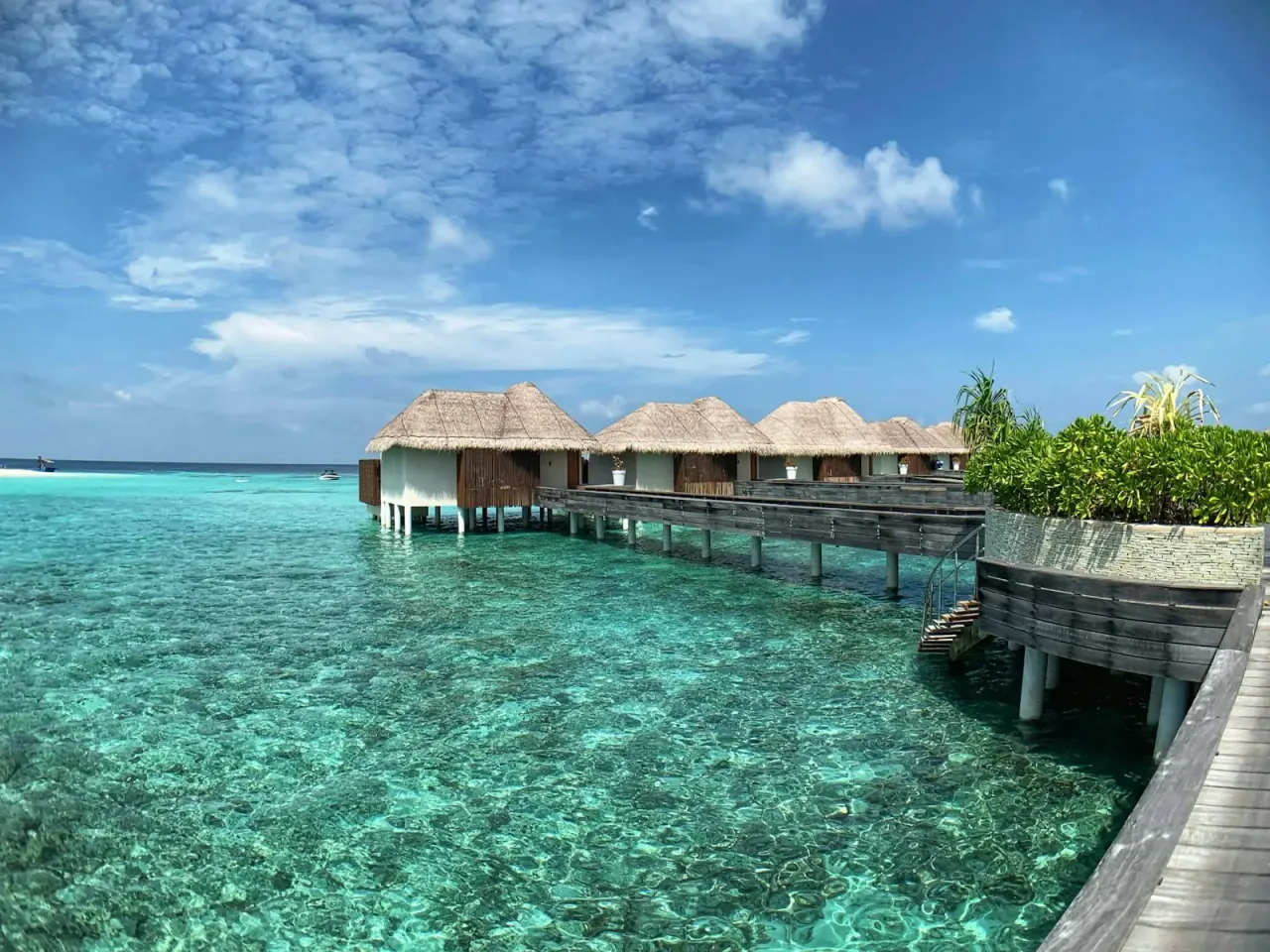
The Iruvai season hits its statistical sweet spot mid-December through end of February. Rain is rare, the sea is calmer than at any other point in the year, and snorkelling visibility on the eastern reefs reaches 30+ metres on good days. The catch: this is when European and Russian holiday traffic peaks, and prices reflect it. A water villa that runs $700/night in late November is $1,500/night between December 22 and January 3 (the absolute peak). The same villa runs $850–950/night through January and February. If you can travel any other window, you should.
Editor's tips
- Avoid December 22 to January 3 — peak rates, stiffest minimum-night requirements (often 7-night minimums)
- Mid-February is a good Northern Hemisphere half-term escape if you have school-age kids
- Hanifaru Bay manta season is closed in this window — peak is later in the year
Late April to early May — the savvy window
These three weeks are the answer for most travellers willing to think about it. The Iruvai season is winding down but the Hulhangu hasn't quite started: water visibility is still excellent, the sea is at its annual warmest (29–30°C — bath-warm), and resort prices have dropped by 40–50% from their February peaks. Crowds are at an annual low (post-European-Easter, pre-Asian-summer-holiday). Domestic flights and seaplane transfers are cheaper. The risk: by the second week of May, the wet season starts properly and showers become daily. Target the last week of April through the second week of May.
May to October — the 'wet' season nobody told you the truth about
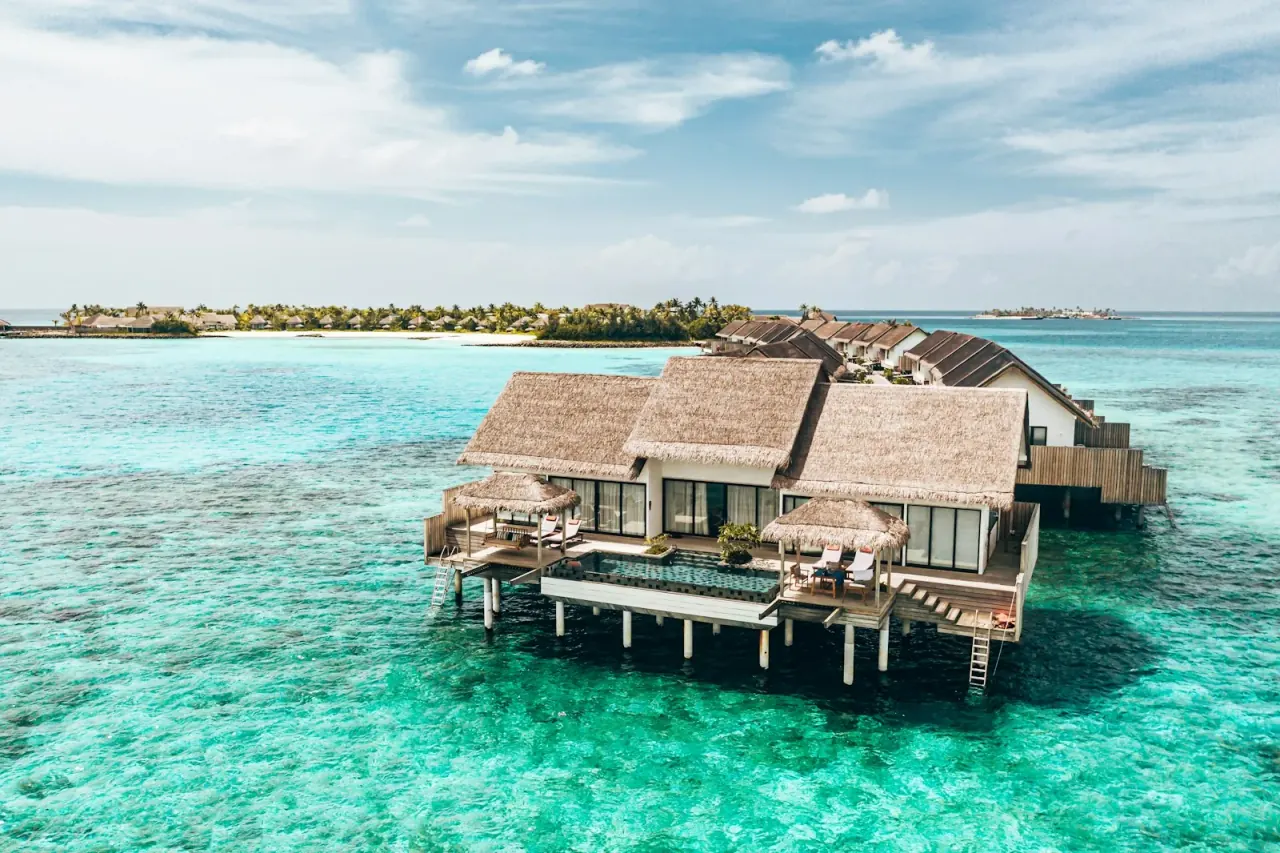
The Hulhangu wet season is the most misrepresented Maldives season. The country averages 7–10mm of rainfall per day in this window — but it falls in 1–2 hour bursts, usually in the afternoon, and the rest of the day is bright sun. June, July, and August are the busiest wet-season months because European summer holidays drive bookings; rates are mid-shoulder (about 25% below peak). What changes meaningfully: the western atolls (Baa, Raa) become the marine-life hotspot. Manta rays gather at Hanifaru Bay (a UNESCO biosphere reserve in Baa Atoll) in groups that can exceed 100 animals — peak window August–October. Whale sharks become regular at South Ari Atoll September–November. If marine encounters matter to your trip, plan for the wet season on the right atoll.
September and October — wet season at its most rewarding
These two months are the peak of wet-season marine life. The Hanifaru Bay manta phenomenon (10–20 mantas in a single feeding aggregation) is at its statistical best. South Ari whale shark sightings are the most reliable. Resort prices are at their annual lows except the actual peak weeks. The trade-off: rain is more frequent than in summer (typically 12–14 rainy days a month vs 8–10 in July), and seas can be choppier on smaller transfers. Choose the western atolls for marine focus; eastern atolls remain calm.
Editor's tips
- Hanifaru Bay snorkel permits are limited — book through your resort 2 months ahead
- Resorts in Baa Atoll (Soneva Fushi, Anantara Kihavah, Reethi Beach) are best for manta access
- Scuba certification courses are 30% cheaper in September than in February
November — the underrated bookend
First two weeks of November are the start of Iruvai season — the rains have tapered off, prices haven't yet jumped to peak, and water clarity is returning. By third week, prices begin their climb to December peak. If you missed the late-April window and want the dry-season experience without peak pricing, target the first week of November.
Quick reference: month-by-month
January — peak crowds, peak prices, perfect weather. February — same. March — winding down. April (late) — savvy window starts. May (early) — best 2 weeks of the year. May (late)–June — wet season starts, prices drop. July–August — wet season but Asian-summer crowds; manta season starts. September–October — wet season peak for marine life; lowest prices. November (early) — sweet spot before peak climb. December — peak season. Pick last week of April or first week of November if you want the best balance.
Find the Best Flight Deals
Prices vary dramatically by month. Compare live fares from hundreds of airlines to lock in the cheapest window for your travel dates.
Where to Stay
From boutique guesthouses to luxury resorts, the accommodation you choose shapes the trip. Filter by neighbourhood, price, and guest rating to find your match.
Tours & Activities
Skip the tourist traps. Book directly with vetted local operators — skip-the-line access, small groups, and money-back guarantees included.
Frequently asked questions
May and September are the cheapest months — typically 40–50% below February peaks. Resort rates can drop to $200–350/night for a beach villa (vs $700+ in peak). Wet-season travel means daily 1–2 hour afternoon showers, but most days are otherwise sunny — it's not the continuous downpour the name implies.
If forced to pick one window, late April through second week of May. If marine life matters more than weather, target October on a western-atoll resort. If you're tied to school holidays, mid-February is the least-bad peak option. The single piece of Maldives planning advice we'd add to any visit: do not split your trip across two resorts unless one is an island guesthouse and the other a luxury resort. Within the resort tier, two transfers and two checkings-in eat into the limited 5–7 days you have on the country.
Get there
Flights
One search across 700+ airlines — find the real lowest fare for your dates.
Search flightsWhere to stay
Hotels
Browse verified hotels and stays — instant confirmation, secure booking.
Book on KKdayThings to do
Activities
Tours, attractions, and day trips — free cancellation on most experiences.
Book on KlookTours & Experiences
Book the experiences, not just the trip
Skip-the-line tickets, guided tours, and day trips — free cancellation on most, confirmed instantly.
About the author
Camille Laurent
Senior Travel Editor · Based in Lisbon · Bali
Camille has spent the last 9 years living in or reporting from over 60 countries. Former contributor to Condé Nast Traveler and Monocle, she focuses on Southeast Asia, Mediterranean Europe, and the Middle East. Currently based between Lisbon and Bali.
Read next — destinations
More from The Edit
Money & Deals
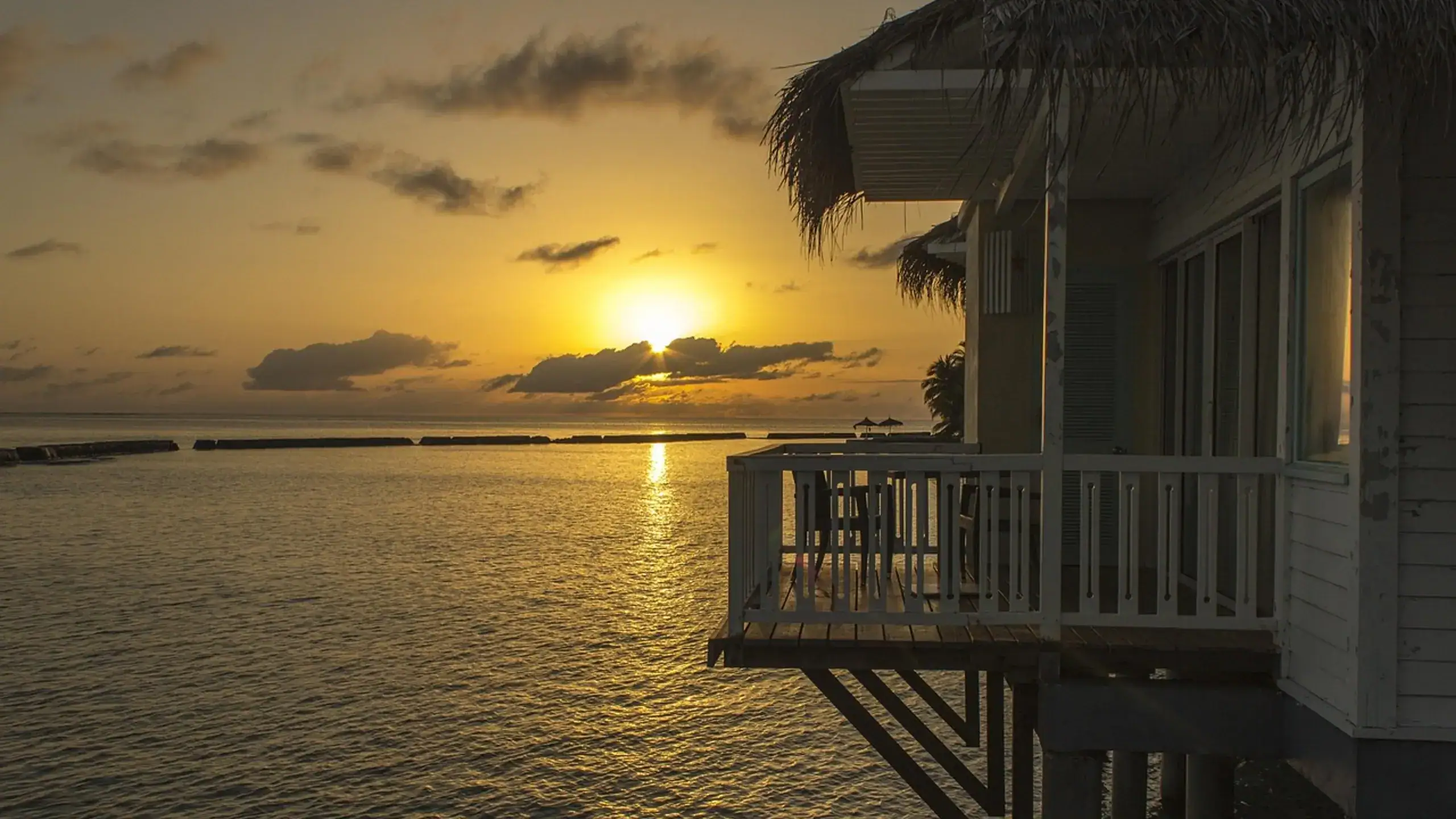
Maldives on a Budget: How to Do the Local-Island Version Under $150 a Night
The overwater bungalow Maldives is real, expensive, and not the only Maldives. Since 2009, an entire local-island guesthouse scene has opened up — with the same lagoons, the same colour, and a fraction of the price.
11 min read
When to Go
Best Time to Visit Bali — A Local's Honest Calendar
Eight years of living between Bali and everywhere else taught me that the island has four micro-seasons — and the brochure describes exactly none of them accurately.
11 min read