
Robert Frost's 'The Road Not Taken' and the Travel Philosophy It Inspired — But Doesn't Actually Describe
The most quoted travel poem in the English language is almost universally misread. What Frost actually wrote is more interesting than the inspirational poster version — and more useful as a travel philosophy.
Robert Frost published 'The Road Not Taken' in 1916, and for the last century it has been systematically misread on motivational posters, graduation speeches, and travel blogs. The title most people quote it under — 'The Road Less Traveled' — is not the poem's title. And the meaning most people extract from it — 'I took the unconventional path and it made all the difference' — inverts the poem's actual argument. What Frost wrote is more interesting, more honest, and considerably more useful as a framework for thinking about travel decisions than the inspirational version.
Planning this trip?
Find flights now
Compare prices across 700+ airlines and OTAs in one search — find the real lowest fare without the inflated middleman markup.
Search flightsNeed a place to stay?
Search hotels
What the poem actually says
The critical stanza is the second one, where the narrator looks down both paths and observes: 'Though as for that the passing there / Had worn them really about the same.' Both roads are equally worn. Neither is less traveled. The narrator cannot actually see which is less used. In the final stanza, the narrator imagines telling this story in the future: 'I shall be telling this with a sigh / Somewhere ages and ages hence: / Two roads diverged in a wood, and I — / I took the one less traveled by, / And that has made all the difference.' This is not a statement of fact. It is a prediction of the lie the narrator will tell — the comfortable retrospective narrative that turns an arbitrary choice into a meaningful one. Frost called it 'a gentle jab at his friend Edward Thomas,' who was prone to regretting whichever path they didn't walk on their hikes through England.

The travel philosophy it should inspire
If the poem is really about the stories we tell ourselves after the fact, it becomes a more useful travel guide than the inspirational version. The honest version of 'the road less traveled' as a travel philosophy would ask: how much of my preference for 'less visited' travel is genuine curiosity, and how much is the construction of a narrative about the kind of traveller I want to be? This is not a cynical question — it is a clarifying one. The traveller who genuinely prefers uncrowded spaces, authentic local culture, and difficult logistics makes different choices than the traveller who wants a good story to tell at dinner. Both are valid. Neither is more virtuous. The poem's actual gift is the invitation to be honest about which you are.
Reading the poem more carefully before you quote it
The poem is often used as a call to take the unusual path, but a careful reading is subtler. The speaker notes that the two roads were worn about the same, and the difference they describe is something they imagine looking back on later. That makes the poem as much about how we tell stories about our choices as about the choices themselves. For travellers, the takeaway is not to avoid popular places for the sake of it, but to choose deliberately and to be honest about why. A famous route can still be a rewarding one if you approach it with attention, and a lesser-known place is not automatically better. Read the poem as a reflection, not a slogan.
Destinations that reward the honest off-path traveller
If you are genuinely drawn to the less-traveled version of well-known destinations — not for the story, but for the actual experience — the logistics usually involve a 30–60 minute detour from the obvious. The Peloponnese in Greece is as historically rich as Athens and sees a fraction of the visitor infrastructure. Albania's Riviera has the Adriatic coast Croatia had 20 years ago. The Alentejo wine region in Portugal is two hours from Lisbon and almost entirely domestic tourism. The Soča Valley in Slovenia has Alpine scenery comparable to Switzerland at a third of the price. None of these are secrets. All of them are genuinely less visited than their obvious alternatives. The question Frost would ask: will you tell people you discovered them as if you had chosen a different path, or just be glad you went?
Frost in New England: where the poem was written
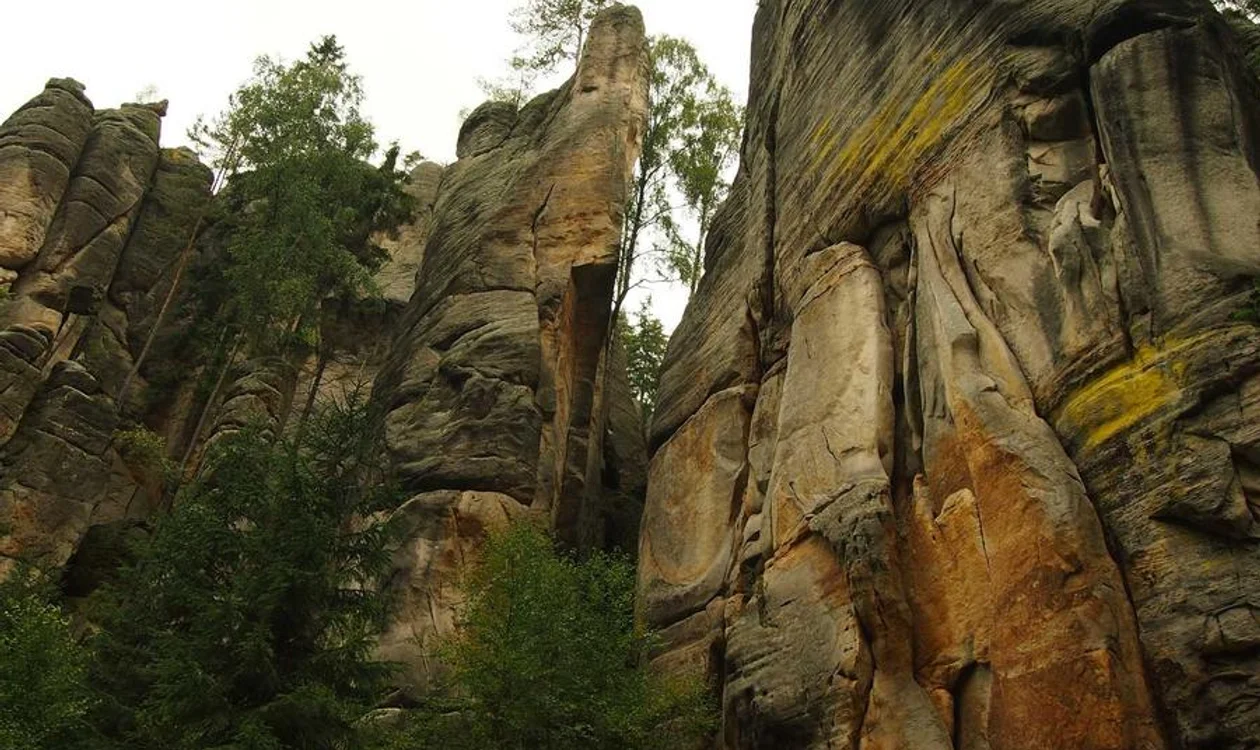
Frost wrote 'The Road Not Taken' in Gloucestershire, England (he lived there 1912–1915) but its landscape is New England — specifically Vermont and New Hampshire, where Frost spent most of his adult life. The Frost farm in Derry, New Hampshire (maintained as a state historic site) has the birch forests and woodland paths that match the poem's physical description precisely. The Robert Frost Stone House Museum in Shaftsbury, Vermont is where Frost wrote 'Stopping by Woods on a Snowy Evening.' For travellers interested in the literary landscape: the Bread Loaf campus near Middlebury, Vermont (August) has hosted the Bread Loaf Writers' Conference since 1926 — a serious literary event in the specific landscape Frost described.
Editor's tips
- Robert Frost Farm, Derry NH: open May–October, $7 adults, 45 minutes from Manchester airport
- The Frost Stone House Museum, Shaftsbury VT: open May–October, small admission, in the Taconic Mountains foothills
- Vermont's Route 100 in October delivers the foliage landscape that defines Frost's New England — drive it north to south from Stowe to Wilmington
Want to See It for Yourself?
Experience beats research every time. Compare flights, book verified accommodation, and lock in local tours — all with free cancellation options.
Plan Your Visit
If our take convinced you (or unconvinced you), here's where to start planning: flights comparison, hotel search, and selected activity booking.
Frequently asked questions
Robert Frost's 'The Road Not Taken' is about the retrospective stories we tell about our choices. In the poem, both roads are explicitly noted to be equally worn. The final claim — 'I took the one less traveled by / And that has made all the difference' — is a prediction of the self-flattering narrative the narrator will tell later, not a statement of fact.
The road less traveled, as Frost actually described it, wasn't. Both paths were equally worn, and the narrator knew it. The poem is about the retrospective story, not the choice. As a travel philosophy, that's actually more useful than the inspirational version: it invites you to be clear-eyed about why you're making the choices you make, rather than constructing a flattering narrative around them. Go to Albania or the Alentejo because you actually want to, not because the story of going makes you a particular kind of traveller. Either way, it will have made all the difference — which is exactly what Frost said, and exactly what he meant ironically.
Get there
Flights
One search across 700+ airlines — find the real lowest fare for your dates.
Search flightsWhere to stay
Hotels
Browse verified hotels and stays — instant confirmation, secure booking.
Book on KKdayThings to do
Activities
Tours, attractions, and day trips — free cancellation on most experiences.
Book on KlookTours & Experiences
Book the experiences, not just the trip
Skip-the-line tickets, guided tours, and day trips — free cancellation on most, confirmed instantly.
About the author
Camille Laurent
Senior Travel Editor · Based in Lisbon · Bali
Camille has spent the last 9 years living in or reporting from over 60 countries. Former contributor to Condé Nast Traveler and Monocle, she focuses on Southeast Asia, Mediterranean Europe, and the Middle East. Currently based between Lisbon and Bali.
Read next — destinations
More from The Edit
Travel Guides
If on a Winter's Night a Traveler — Calvino's Novel and the Italian Cities That Inspired His Fractured Geography
Italo Calvino's 1979 novel begins each chapter with 'You are about to begin reading...' and proceeds to construct a reading experience that is itself a form of travel. The Italian cities behind it are real and visitable.
10 min read
Travel Guides
How to Avoid Tourist Traps in Paris — A Local's Editorial
No €9 coffees. No €40 mediocre bistros. No 90-minute queue for a view that Tour Montparnasse does better. The rules that separate a good Paris trip from a bad one are eight, and none of them are secrets.
10 min read
Honest Take
Portugal vs Spain: Which Iberian Country Should You Visit First?
Portugal has spent fifteen years becoming one of Europe's most-visited destinations by competing on authenticity against a neighbour that built the global template for mass tourism. Spain has more of almost everything. Portugal does fewer things better. Neither answer applies to every traveller.
11 min read