
10 Overrated Destinations (and Where to Go Instead) — An Honest Take
I have stood in the checkout queue for the Blue Lagoon, fought through selfie-stick traffic in Venice, and watched a man in Kuta haggle over a fake Rolex at 9 a.m. Some famous destinations earn the fame. Others are coasting on old Instagram posts and outdated guidebook momentum. Here is the list nobody in travel marketing wants to publish.
I want to be clear about what this article is and what it is not. It is not a contrarian hot take designed to generate outrage clicks. I have visited every destination on this list — most of them more than once — and I understand why they became famous. They became famous because they were, at some point, genuinely extraordinary. But tourism changes places. Sometimes it improves them: better infrastructure, more restaurants, easier access. More often, it hollows them out. The authentic thing that made the place special gets replaced by a version of itself optimised for throughput — more tour buses, more souvenir shops, more Instagram backdrops, higher prices, and a steadily declining ratio of genuine experience to manufactured spectacle. This is a list of ten destinations where that ratio has tipped. Where the marketing image and the ground-level reality have diverged far enough that I think you deserve a warning before you book. And for each one, I am recommending an alternative that delivers what the famous place promises — often better, almost always cheaper, and without the crowds that make you wonder why you left home. I am not saying never go to these places. I am saying: know what you are walking into, and know that you have options.
Planning this trip?
Find flights now
Compare prices across 700+ airlines and OTAs in one search — find the real lowest fare without the inflated middleman markup.
Search flightsNeed a place to stay?
Search hotels
1. Dubai — Go to Oman Instead
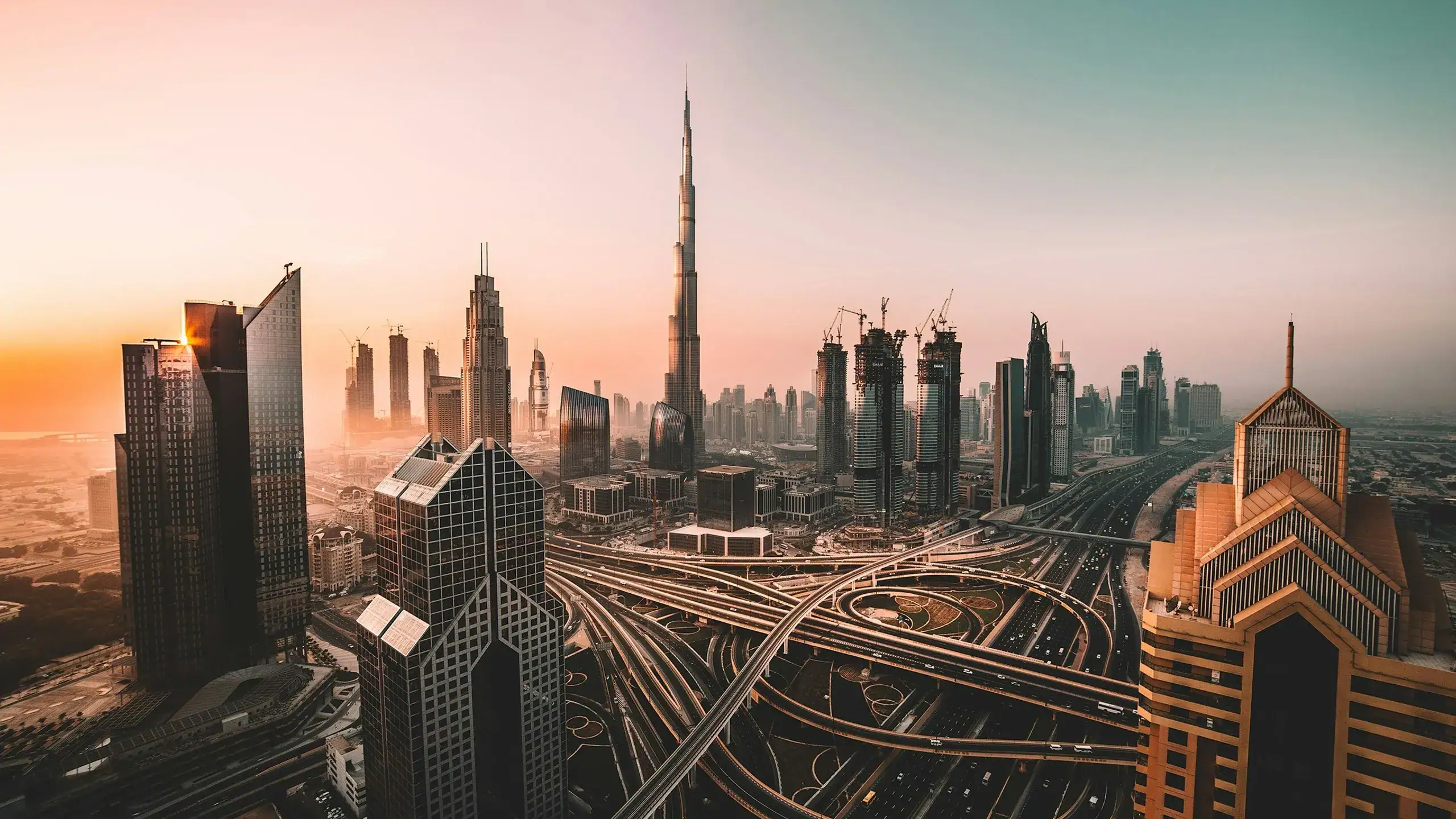
Dubai is the world's most expensive theme park pretending to be a city. I have been three times, and each visit confirmed the same thing: Dubai is remarkable to look at and hollow to experience. The Burj Khalifa is tall. The malls are enormous. The indoor ski slope exists. And after 48 hours, you have seen it all, because Dubai's attractions are things, not places — engineered spectacles designed to be photographed, posted, and moved on from. A week in Dubai in 2026 costs USD 2,500–4,000 per person for mid-range accommodation, meals, and attractions. The hotel pool is beautiful. The beach is man-made. The 'old town' in Al Fahidi is genuinely interesting but takes about 90 minutes to walk. The desert safari is a standardised product — every operator runs the same dune-bashing route followed by the same buffet dinner with the same belly-dancing show. The brunch culture is admittedly excellent, but you are paying USD 80–150 per person to eat and drink in an air-conditioned room that could be in any luxury hotel on earth. Go to Oman instead. Oman is everything Dubai pretends to be: genuinely dramatic desert landscapes (Wahiba Sands, not a managed dune circuit), real mountain villages in Jebel Akhdar, actual wadis you can swim in without a ticket, and a capital city (Muscat) with authentic souqs, striking mosques, and waterfront corniche walks that cost nothing. A week in Oman runs USD 1,200–2,000 per person — 40–50% less than Dubai — and the cultural depth is incomparable. The Sultan Qaboos Grand Mosque alone is worth the flight. Oman has luxury if you want it (the Alila Jabal Akhdar is legitimately exceptional), but the country does not require luxury to be interesting. Dubai does.
Editor's tips
- Oman is a 45-minute flight from Dubai — you can easily combine both if you want the contrast, but give Oman at least 4–5 days
- Wahiba Sands desert camps in Oman start at USD 60/night including dinner — compared to USD 200+ for Dubai's standardised safari packages
- Muscat's Mutrah Souq is what Dubai's Gold Souq wishes it was — authentic, un-renovated, and full of Omani frankincense at real prices
2. Cancun Hotel Zone — Go to Oaxaca Instead
The Cancun hotel zone is a 23-kilometre strip of identical all-inclusive resorts facing a beautiful beach that you will share with 40,000 other people. The water is genuinely striking — Caribbean turquoise, warm, calm on the lagoon side. But the hotel zone itself is a hermetically sealed tourism corridor where you eat at the buffet, drink at the pool bar, and never interact with Mexico. You could be in the Dominican Republic, Jamaica, or any other Caribbean all-inclusive destination and the experience would be functionally identical. A week at a mid-range Cancun all-inclusive in 2026 runs USD 1,400–2,200 per person. That includes food and drinks, but the food is mass-produced buffet fare — edible, not memorable. The excursions sold at the resort (Chichen Itza, Tulum, cenotes) are overpriced bus tours with 45 other guests. Downtown Cancun exists and has good taquerias, but most hotel-zone guests never see it because the strip is designed to be self-contained. Go to Oaxaca instead. Oaxaca is the real Mexico at its most lively — arguably the best food city in the Americas, with indigenous Zapotec culture, mezcal distilleries you can walk to, street markets where a tlayuda costs USD 3 and is better than anything in the Cancun buffet, and the Pacific coast beaches of Puerto Escondido and Huatulco 5–6 hours south. A week in Oaxaca city costs USD 700–1,200 per person including excellent meals, mezcal tastings, and day trips to Monte Alban and the petrified waterfalls of Hierve el Agua. You will spend half what Cancun costs and eat ten times better. The only thing Oaxaca does not have is the Caribbean beach — but Puerto Escondido's Playa Zicatela is one of the best surf beaches on the planet, and it is not lined with identical resorts.
Editor's tips
- Oaxaca's central market (Mercado 20 de Noviembre) serves the best barbacoa and tlayudas in Mexico — budget USD 5–8 for a meal that would cost USD 40 at a Cancun resort restaurant
- Mezcal distillery tours in Oaxaca cost USD 15–25 per person including tastings — the equivalent 'tequila experience' in Cancun hotel zones runs USD 60–80
3. Times Square, New York — Walk to the West Village Instead
Times Square is the place tourists go because they think they are supposed to. It is a sensory assault of LED billboards, chain restaurants (Olive Garden, Applebee's, Red Lobster — all available in every American suburb), costumed characters demanding money for photos, and crowds so dense that walking one block takes five minutes. Times Square is not New York. It is a simulacrum of New York designed to part tourists from their money as efficiently as possible. The worst part is the prices. A mediocre meal in the Times Square zone costs USD 25–40 per person. The same quality of food — actually, significantly better food — costs USD 12–20 in almost any other Manhattan neighbourhood. The 'Broadway experience' is real and worth doing, but you buy tickets online and show up 30 minutes before curtain. You do not need to spend time in Times Square itself. Walk to the West Village instead. Thirty minutes on foot south of Times Square, the West Village is what people imagine when they think of New York: tree-lined brownstone streets, independent bookshops, jazz clubs, Italian bakeries that have been open since the 1920s, and restaurants where the food is outstanding and the prices are half of Times Square. Bleecker Street, Perry Street, and the winding lanes around Christopher Park are among the most beautiful urban walks in America. Washington Square Park at sunset, with NYU students playing guitar and chess players arguing in the corner, is more New York than Times Square will ever be. And it is free. If you want the iconic skyline experience, go to Brooklyn Bridge Park or the Staten Island Ferry (free) — not to a neon corridor selling USD 8 hot dogs.
Editor's tips
- The Staten Island Ferry is free, runs every 30 minutes, and gives you the Statue of Liberty view that the paid boat tours charge USD 25–45 for
- Joe's Pizza on Carmine Street in the West Village has been serving USD 3.50 slices since 1975 — better than any Times Square restaurant at a tenth of the price
4. Phuket Patong Beach — Go to Koh Lanta Instead
Patong was once a fishing village. It is now a two-kilometre strip of go-go bars, massage parlours, overpriced beach loungers, and nightclubs that smell like Red Bull and regret. The beach itself is fine — decent sand, warm water — but it is so densely packed with tourists and vendors that finding a quiet square metre requires arriving at 7 a.m. Bangla Road at night is a carnival of noise, neon, and aggressive touts that makes Times Square look restrained. A week in Patong in 2026 costs USD 800–1,500 per person for a mid-range hotel, meals, and a few excursions. The excursions are mostly overpriced speedboat trips to Phi Phi Island, which was so damaged by over-tourism that Maya Bay had to be closed and reopened with strict capacity limits. Phuket has beautiful parts — Kata Noi, Nai Harn, the Old Town — but Patong is where most first-timers end up because it dominates the search results, and it is the worst representation of what Thailand has to offer. Go to Koh Lanta instead. Koh Lanta is the Thailand that Phuket used to be: long, quiet beaches (Long Beach, Kantiang Bay), family-run restaurants where pad thai costs THB 80 (USD 2.20), zero go-go bars, and a pace of life that actually feels like a holiday. The island's Old Town is a characterful wooden-house village built by Chinese traders, and the snorkelling at Koh Rok (a day trip from Lanta) is better than anything accessible from Patong. A week on Koh Lanta costs USD 500–900 per person — 35–40% less than Patong — and your blood pressure will thank you. The trade-off is less nightlife, but if you wanted nightlife, Bangkok does it better than Patong anyway.
Editor's tips
- Koh Lanta's Long Beach has restaurants directly on the sand serving seafood barbecue for THB 200–350 (USD 5.50–9.70) — the equivalent beachfront meal in Patong costs THB 600–1,000
- The Koh Rok snorkelling day trip from Koh Lanta costs THB 1,500 (USD 42) including lunch — Phuket's Phi Phi speedboat tours charge THB 2,500–3,500 for a more crowded experience
5. Venice in Summer — Go to Trieste Instead
Venice in July and August is an endurance test. I have been four times — twice in summer, twice in the off-season — and the difference is so stark it might as well be two different cities. Summer Venice means 30+ degree heat, 80,000–100,000 day-trippers on top of 50,000 residents, EUR 15 Aperol Spritz in Piazza San Marco, queues of 2–3 hours for the Doge's Palace, and cruise ships (still partially present despite restrictions) disgorging thousands of passengers who have four hours to 'do Venice' before reboarding. The city's EUR 5 entry fee introduced in 2024 has had minimal impact on crowds. A night in a decent hotel costs EUR 250–400 in summer. A gondola ride is EUR 80 for 30 minutes (EUR 100 after 7 p.m.). Restaurants near San Marco charge EUR 20–30 for a plate of pasta that would cost EUR 10 in any other Italian city. Venice in November or February, by contrast, is among the magical places on earth: misty canals, empty squares, EUR 3 spritzes at bacari, and the Doge's Palace with no queue. If you can only go in summer, go somewhere else. Go to Trieste instead. Trieste is Italy's most underrated city. Sitting at the Slovenian border on the Adriatic, it has the grand Habsburg architecture of Vienna, the coffee culture of Budapest (Caffe San Marco has been open since 1914), and the seafood of coastal Italy — without a single cruise ship or selfie stick in sight. A night in a good Trieste hotel costs EUR 90–140. An espresso at a historic cafe costs EUR 1.30. The Miramare Castle sits on a cliff above the sea and costs EUR 10 to visit with no queue. The Carso plateau behind the city has wine cellars called osmize where local farmers sell glasses of Vitovska for EUR 2. Trieste is 2 hours from Venice by train (EUR 15 on Trenitalia), and it is what Venice was before the world discovered it.
Editor's tips
- Trieste is 2 hours from Venice by regional train at EUR 15 — you can day-trip Venice from a Trieste base and see it without staying in it
- The osmize wine cellars on the Carso plateau above Trieste serve local wines and cured meats at farmhouse prices — EUR 10–15 for a generous tasting
6. Santorini in July–August — Go to Milos Instead
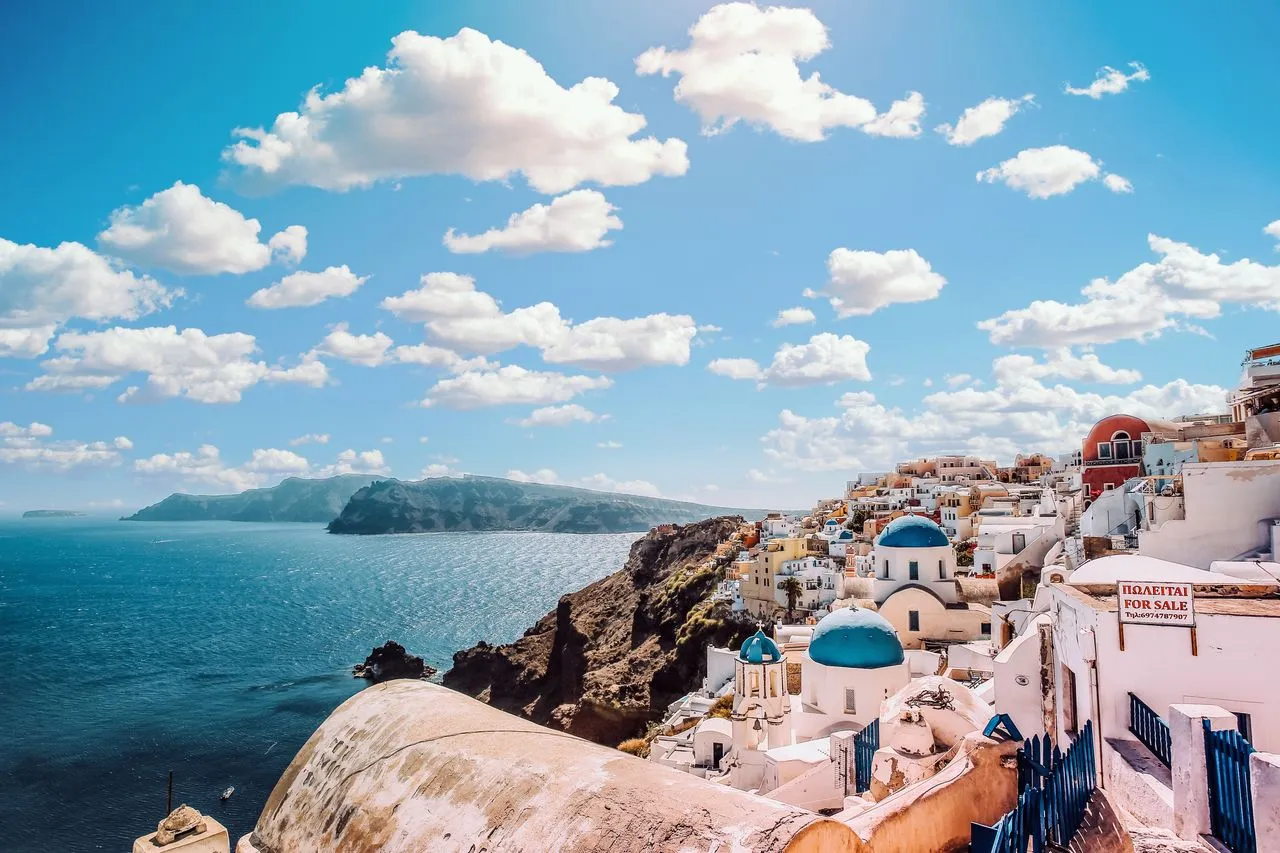
Santorini's caldera sunset is genuinely a genuinely beautiful sights in the Mediterranean. The problem is that you will share it with 5,000 other people crammed onto the Oia castle walls, each one holding a phone above their head, while a cruise ship the size of a building anchors directly in the view. In July and August 2026, a basic room with a caldera view in Oia costs EUR 350–700 per night. A transfer from the airport or port costs EUR 30–40. A meal in Oia's tourist strip costs EUR 25–40 per person for average quality. The famous 'blue dome' churches are beautiful, but you will queue for 15–20 minutes to take a photo without other tourists in the frame. Santorini in April, May, or October is a different story — manageable crowds, prices 40–50% lower, and the light is actually better for photography. But if you are locked into summer dates, skip it. Go to Milos instead. Milos is a volcanic Cycladic island 90 minutes by fast ferry from Santorini, and it has something Santorini has almost entirely lost: space. Sarakiniko Beach looks like a lunar landscape of white volcanic rock meeting turquoise water — and in June 2026, I had it mostly to myself at 10 a.m. Kleftiko sea caves are accessible by boat trip (EUR 45–60) and rival anything in the Greek islands. The fishing village of Klima has the colourful boathouse doors that are more photogenic than Santorini's blue domes. A good room on Milos in summer costs EUR 120–200 per night — half of Santorini — and the seafood tavernas in Pollonia charge EUR 12–18 for dishes that are fresher and better than Oia's tourist restaurants. Milos is Santorini before the cruise ships found it.
Editor's tips
- Milos has over 70 beaches — more than any other Cycladic island — and most are accessible only by boat or dirt road, which keeps them empty even in August
- The fast ferry from Santorini to Milos takes 90 minutes and costs EUR 40–55 — you can easily do both islands if you want the caldera view and the quiet beaches
7. Blue Lagoon Iceland at EUR 92 — Go to Myvatn Nature Baths at EUR 39 Instead
The Blue Lagoon is the most brilliantly marketed hot spring on earth. It is also a concrete pool filled with geothermal runoff from a power plant, located in a lava field 20 minutes from Keflavik Airport. It is beautiful — I will not deny that the milky-blue water against black rock is visually striking. But the Comfort package costs EUR 92 per person in 2026, the Premium costs EUR 120, and neither includes transport from Reykjavik (add EUR 20–35 each way by bus). You get a silica face mask, a drink, and 2–3 hours in water that is genuinely warm and genuinely crowded. At peak times, the lagoon holds 600–800 people simultaneously, which gives it the ambience of a luxury water park more than a natural hot spring. The experience is fine. It is pleasant. It is warm. But it is not EUR 92 worth of pleasant when Iceland has dozens of natural hot springs scattered across the country — many of them free. Go to Myvatn Nature Baths instead. Myvatn Nature Baths in northern Iceland is the Blue Lagoon's quieter, cheaper, less Instagrammed twin. Entry costs EUR 39 per person (ISK 5,900) — less than half the Blue Lagoon. The baths sit on the edge of Lake Myvatn with views of volcanic craters, steam vents, and the occasional snow-capped ridge. Maximum capacity is roughly 150 people, which means you actually have space to soak in peace. The water is the same geothermally heated mineral water, the same milky-blue colour. The difference is the price, the crowd level, and the fact that the surrounding landscape — Dimmuborgir lava formations, Hverir geothermal fields, Godafoss waterfall 30 minutes away — is dramatically more interesting than the Blue Lagoon's airport lava field. The trade-off is access: Myvatn is in northern Iceland, a 6-hour drive or 45-minute domestic flight from Reykjavik. But if you are doing a Ring Road trip (and you should — it is the best way to see Iceland), Myvatn is a natural stop.
Editor's tips
- Myvatn Nature Baths entry is EUR 39 versus EUR 92–120 at the Blue Lagoon — same geothermal water, same milky-blue colour, a quarter of the crowd
- If you must do the Blue Lagoon, book the earliest morning slot (7 or 8 a.m.) — the lagoon is half empty and the light on the steam is genuinely atmospheric
- Free hot springs like Seljavallalaug (south Iceland) and Hellulaug (Westfjords) offer authentic geothermal bathing with zero entrance fee — bring a towel and modest expectations for changing facilities
8. Niagara Falls — Go to Iguazu Falls Instead
Niagara Falls is impressive for about 20 minutes. The water volume is real, the mist is real, the roar is real. What is also real is the strip of casinos, wax museums, haunted houses, and chain restaurants (Clifton Hill on the Canadian side) that turns the surrounding area into a carnival that has nothing to do with nature. The Maid of the Mist boat ride is genuinely fun, but it costs USD 22–29 per person. The town of Niagara Falls, Ontario, feels like a waterfall got annexed by a theme park. Niagara is also, in absolute terms, not that big. It is 51 metres tall. It is wide, which is its main visual trick, but there is a reason it does not make most 'greatest waterfalls in the world' lists compiled by people who have seen more than one waterfall. Go to Iguazu Falls instead. Iguazu, on the Argentina-Brazil border, is not the same category of experience. It is 275 individual cascades spread across 2.7 kilometres of subtropical rainforest, with a total drop of 82 metres. The Devil's Throat — where 14 falls converge into a single thundering curtain — is among the overwhelming natural spectacles on earth. The first time you see it, your brain struggles to process the scale. Toucans and coatis wander the walkways. The mist creates permanent rainbows. Iguazu costs more to reach (flights from Buenos Aires are USD 80–150 each way), and the park entry is USD 28 (Argentine side) or BRL 88 / USD 17 (Brazilian side). But the total experience cost — including 2 nights in Puerto Iguazu and both sides of the falls — runs USD 300–500 per person. For a natural wonder that UNESCO calls 'among the remarkable in the world,' that is a bargain. Niagara cannot compete on any metric except proximity to New York City.
Editor's tips
- Visit both sides of Iguazu: the Argentine side has the walkways and Devil's Throat, the Brazilian side has the panoramic view — budget 1 full day per side
- Puerto Iguazu (the Argentine town) has excellent and affordable restaurants — parilla steak dinners for USD 12–18 per person with wine
9. Pisa — Go to Lucca Instead
Pisa has exactly one attraction: a tower that leans. You walk to it, you take the photo where you pretend to hold it up (everyone does, no one is original), and you are done. The Piazza dei Miracoli is genuinely beautiful — the cathedral and baptistery are underrated — but 90% of visitors never enter either building. They take the tower photo and leave. The area around the piazza is a gauntlet of souvenir shops selling miniature leaning towers and 'I Love Pisa' t-shirts. Climbing the tower costs EUR 20 and the view from the top is nice but not revelatory. Pisa is not a bad city. The Arno river walk is pleasant, the university quarter (Piazza dei Cavalieri) has character, and the food can be good if you walk far enough from the piazza. But as a destination — a place you travel to — it delivers about 2 hours of content stretched across a full day because the guidebooks told you to go there. Go to Lucca instead. Lucca is 30 minutes from Pisa by train (EUR 4 on Trenitalia) and it is the Tuscan city that Pisa should have been. A complete Renaissance wall encircles the old town — 4.2 kilometres of it, wide enough to walk or cycle on top of, with views of terracotta rooftops and the Apuan Alps. The Piazza dell'Anfiteatro is built on the exact footprint of a Roman amphitheatre and is among the photogenic squares in Italy. There are churches on every corner (San Michele in Foro is extraordinary), independent shops instead of souvenir stalls, and restaurants where a three-course Tuscan meal with local wine costs EUR 25–35. A night in a good Lucca hotel costs EUR 80–130. You could spend three days in Lucca and not run out of things to do — which is three days more than Pisa offers.
Editor's tips
- Rent a bicycle in Lucca and ride the full 4.2 km circuit on top of the Renaissance walls — bike rental costs EUR 3/hour and it is the single best way to see the city
- The Pisa-Lucca regional train runs every 30 minutes, takes 30 minutes, and costs EUR 3.60 — you can easily visit Pisa's tower as a morning side trip from a Lucca base
10. Bali Kuta Beach — Go to Amed Instead
Bali is not overrated. Kuta is overrated. The distinction matters, because Bali is a large and extraordinarily diverse island, and judging it by Kuta is like judging Italy by the Rome train station. Kuta Beach was the original Bali surf spot, and in the 1970s it was a barefoot backpacker paradise. In 2026, it is a congested strip of fast-fashion shops, nightclubs, money changers (many of them running the short-change scam), and a beach littered with enough plastic to make you reconsider your life choices. The surf is mediocre — too many beginners on foam boards crashing into each other. The traffic between Kuta and Seminyak can take 45 minutes to cover 3 kilometres. A night in a Kuta hotel costs USD 40–80, which sounds cheap until you realise that you are staying in a place that smells like exhaust fumes and sunscreen. Seminyak and Canggu, slightly north, are better but increasingly suffer from the same problems: traffic, construction noise, and a vibe that is more Bondi Beach than Bali. Go to Amed instead. Amed is on Bali's northeast coast, about 2.5 hours from the airport, and it is the Bali that travel writers were talking about before Instagram turned Kuta and Canggu into brand-partnership backdrops. The coastline is volcanic black sand backed by Mount Agung. The snorkelling is some of the best in Southeast Asia — the USS Liberty shipwreck at Tulamben (20 minutes from Amed) is a exceptional dive site accessible from shore. The pace of life is genuinely slow. Warungs serve nasi campur for IDR 25,000–35,000 (USD 1.50–2.10). Beachfront bungalows cost USD 25–50 per night, and the ones at Jemeluk Bay have views that boutique hotels in Seminyak charge USD 200+ to match. The trade-off is fewer restaurants, limited nightlife, and a bumpy road in. If you want cocktail bars and beach clubs, Amed is not for you. If you want to snorkel over coral in the morning, eat fresh fish on the beach at lunch, and watch the sun set behind Agung with a Bintang in your hand, Amed is the Bali that Kuta forgot.
Editor's tips
- The USS Liberty wreck at Tulamben near Amed is one of the world's most accessible wreck dives — you can snorkel it from shore, no boat required, for about USD 10 equipment rental
- Amed's beachfront warungs serve grilled fish caught that morning for IDR 40,000–60,000 (USD 2.50–3.70) — equivalent meals at Kuta beachfront restaurants cost IDR 150,000–250,000
- Hire a local driver for the Kuta-to-Amed transfer rather than renting a scooter — the mountain roads through Karangasem are steep and the drive takes 2.5 hours in a car
The Pattern: How Destinations Become Overrated
If you read through these ten entries, a pattern emerges. Destinations do not start overrated — they become overrated through a predictable cycle. Stage 1: Discovery. A place is genuinely special — beautiful, authentic, uncrowded. Early visitors write about it with breathless enthusiasm. Kuta in the 1970s, Santorini in the 1990s, Dubai in the early 2000s, Cancun before the megaresorts. Stage 2: Infrastructure. Hotels, restaurants, and transport are built to serve growing demand. This is usually good — the place becomes more accessible without losing its character. Lucca is permanently in this stage, which is why it works. Stage 3: Optimisation. The local economy tilts from serving residents to serving tourists. Prices rise. Authentic businesses are replaced by souvenir shops, chain restaurants, and 'experience' packages. The place starts to feel like it is performing a version of itself for visitors rather than being itself. Stage 4: Saturation. The gap between the marketing image and the actual experience becomes undeniable. You arrive expecting the Instagram photo and find a crowd of people trying to take the same Instagram photo. Prices reflect the brand name, not the quality. The place is still technically beautiful, but the experience of being there has been so degraded by volume and commercialisation that the beauty is academic — you know it is there, but you cannot feel it. Not every popular place reaches Stage 4. Paris is the most visited city on earth and most of it is magnificent — because Paris has enough depth, enough neighbourhoods, and enough cultural infrastructure to absorb the crowds without losing itself. Kyoto manages it too, mostly. Barcelona is fighting hard to stay in Stage 3. The destinations on this list have reached Stage 4, or they have a specific version (Patong, not all of Phuket; Kuta, not all of Bali; summer Venice, not November Venice) that has. The alternative I have recommended for each one is typically in Stage 1 or Stage 2 — which means if you visit now, you get the real thing before the cycle turns. Travel is not a checklist. Going to a famous place just because it is famous, taking the photo, and moving on is not travel — it is brand tourism. The places that will actually change you, the ones you will remember in ten years, are almost never the ones at the top of the 'must-see' lists. They are the places where you had an unexpected conversation, ate something you had never heard of, walked a street with no other tourists on it, and felt the particular electricity of being somewhere genuinely unfamiliar. That electricity is harder to find in places optimised for your arrival. Seek the places that are not expecting you. That is where travel lives.
Flights & Hotel Deals
Compare live fares and hotel rates for the alternative destinations in this guide — Oman, Oaxaca, Trieste, Koh Lanta, Milos, Amed, and beyond.
Frequently asked questions
None of them are bad — they are overhyped relative to the price you pay, the crowds you face, and the alternatives available. Venice in November is extraordinary. Santorini in May is magnificent. Even Kuta has serviceable surf. The issue is the specific combination of peak-season timing, inflated pricing, and mass-tourism congestion that makes the marketed experience diverge sharply from the actual experience. Each destination on this list has a version (off-season, less touristy area) or a nearby alternative that delivers what the famous name promises at 30–60% less cost and a fraction of the crowds.
Calling a destination 'overrated' is not the same as calling it bad. Every place on this list has something worth seeing — the Burj Khalifa is undeniably tall, the Santorini caldera is undeniably beautiful, and Venice is undeniably Venice. The problem is not the places themselves. The problem is the gap between what the marketing promises and what you actually experience on the ground, at current prices, at current crowd levels, in 2026. When that gap is wide enough, and when a better alternative exists at lower cost with fewer crowds, you deserve to know about it before you book. Oman over Dubai, Oaxaca over Cancun's hotel zone, Milos over summer Santorini, Lucca over Pisa, Amed over Kuta — these are not obscure contrarian picks. They are places that deliver the thing the famous destination only advertises. Go where the quality is, not where the marketing budget is. Your trip will be better for it.
Get there
Flights
One search across 700+ airlines — find the real lowest fare for your dates.
Search flightsWhere to stay
Hotels
Browse verified hotels and stays — instant confirmation, secure booking.
Book on KKdayThings to do
Activities
Tours, attractions, and day trips — free cancellation on most experiences.
Book on KlookTours & Experiences
Book the experiences, not just the trip
Skip-the-line tickets, guided tours, and day trips — free cancellation on most, confirmed instantly.
About the author
Camille Laurent
Senior Travel Editor · Based in Lisbon · Bali
Camille has spent the last 9 years living in or reporting from over 60 countries. Former contributor to Condé Nast Traveler and Monocle, she focuses on Southeast Asia, Mediterranean Europe, and the Middle East. Currently based between Lisbon and Bali.
Read next — destinations
More from The Edit
Honest Take
Croatia vs Greece — Which Mediterranean Trip Is Right for You?
Two Mediterranean heavyweights that share turquoise water and ancient stone — but deliver fundamentally different trips.
12 min read
Travel Guides
Slovenia: The Country That Has Everything Europe Charges Double For
A country smaller than New Jersey with an Alpine lake, wine valleys rivalling Tuscany, and restaurant prices that make Vienna look absurd. Slovenia is Europe's best-kept open secret.
12 min read