

Galapagos Islands Travel Guide 2026 — What to Know Before You Go
The Galapagos is the one destination that genuinely lives up to the documentary version. The planning, however, is more complex than most guides admit — permits, liveaboard vs land-based, which islands actually matter.
Charles Darwin arrived in the Galapagos in September 1835 aboard HMS Beagle and spent five weeks across four islands. What he found — finches adapted to different food sources, tortoises different between islands, marine iguanas swimming in the Pacific — eventually produced On the Origin of Species. The modern visitor gets a version of that same biological theatre, compressed into 5–14 days and substantially regulated by the Ecuadorian government to prevent what happened to most other wildlife tourism destinations. Here is how the logistics actually work. Two guides worth reading alongside this one: Best Time to Visit the Maldives and Bora Bora: When the Overwater Bungalow Is.
Planning this trip?
Find flights now
Compare prices across 700+ airlines and OTAs in one search — find the real lowest fare without the inflated middleman markup.
Search flightsNeed a place to stay?
Search hotels
Entry requirements: the TCC and national park fee
All visitors to the Galapagos must have a Transit Control Card (TCC) — obtained free at the INGALA office at Quito (UIO) or Guayaquil (GYE) airport before boarding the connecting flight to the islands. The office is in the departure terminal, landside; do not go through security before getting it. The Galapagos National Park entrance fee ($200 for adults, $100 for children under 12, cash or card) is paid on arrival at Baltra or San Cristóbal airport. Total upfront cost at arrival: $200 per adult. Keep both documents for the duration of your stay — they are checked when boarding inter-island transport.
Editor's tips
- The INGALA office at Quito airport sometimes has queues of 30+ minutes — allow 90 minutes for your layover minimum
- The $200 park fee must be paid in cash if your card issuer doesn't accept Ecuadorian transactions — check before departure
- Your TCC lists the dates of your authorised stay — overstaying is heavily penalised
Visiting the islands responsibly
The Galapagos are protected for good reasons, and visitors must follow strict rules. Stay on marked trails, keep a safe distance from animals, and never touch or feed them. Use licensed guides where required, and avoid single-use plastics, since waste management is a serious challenge. Follow instructions about cleaning footwear and gear to avoid spreading seeds or pests between islands. Book with operators that respect park rules and treat staff fairly, and check the details of any cruise or land-based itinerary. Prepare for sun, heat and seasickness, and carry reef-safe sunscreen. Because access is controlled and prices are high, plan early and choose the type of trip that matches your interests.
Liveaboard vs land-based: the real trade-offs
Liveaboard cruises (3–14 nights aboard a motor yacht or catamaran) access all visitor sites, including remote outer islands (Fernandina, Española, Genovesa) unreachable from land-based accommodation. They are expensive ($2,000–$8,000+ per person for 8 days), cramped in economy cabins, and seasick-inducing during the December–May season when swells increase. Their advantage is uncontested: you wake up at each island at dawn before other boats arrive, snorkel with hammerheads at Gordon Rocks, and see 4–6 islands on an 8-day trip. Land-based trips centre on Santa Cruz (Puerto Ayora) or San Cristóbal (Puerto Baquerizo Moreno) and use day boats to nearby visitor sites. You lose remote islands but gain a real town, better food, stable sleeping, and 30–50% lower cost. For a first Galapagos visit with any tendency toward sea sickness, land-based is honest advice.
Which islands are worth visiting
Santa Cruz is the commercial hub — Puerto Ayora, the Charles Darwin Research Station, the Tortuga Bay walk (2km of beach with marine iguanas, blue-footed boobies, and sea turtles), and day trips to Bartolomé and Seymour Norte. San Cristóbal has Playa Mann (swim with sea lions from the beach), Kicker Rock (a rock formation offshore where hammerhead sightings are common), and the Puerto Baquerizo Moreno sea lion colony that has taken over the beach benches. Española (Punta Suárez) — liveaboard only — is the best single site in the archipelago: albatross nesting colony, blue-footed booby dance, marine iguana groups so dense they require stepping around. Fernandina (liveaboard only) has the largest marine iguana colony in the world and an active shield volcano.
Wildlife calendar: what you'll see when
The Galapagos operates year-round, but the season shifts what you see. June–November (garúa season): cool Humboldt Current, green-grey ocean, better diving visibility, hammerhead sightings at Gordon Rocks peak, sea lions and fur seals most active. Giant tortoise nesting happens December–April. Blue-footed booby chicks are visible January–March. Waved albatrosses nest on Española April–December (they leave in January). Whale sharks pass Darwin and Wolf atolls (liveaboard only, northern sites) August–October. The honest truth: there is no wrong season for Galapagos wildlife — the archipelago is the only place on earth where animals evolved without natural predators and simply don't flee from humans. The experience is extraordinary regardless of month.
Editor's tips
- Gordon Rocks dive site (Santa Cruz) requires Open Water certification and experience with currents — the hammerhead sightings are more consistent here than any other accessible dive site in the Pacific
- Certified dive operators in Puerto Ayora: Scuba Iguana and Nautidiving are both well-reviewed by experienced divers
- The highlands of Santa Cruz (El Chato tortoise reserve) has free-roaming giant tortoises in a cloud forest setting — 40 minutes by taxi from Puerto Ayora, entry fee $3
Cost planning: what Galapagos actually costs
Budget (land-based): $150–$250/day including accommodation, meals, and day trips. The $200 park fee is a one-time addition. Total for 7 days: $1,250–$1,950 per person plus flights. Mid-range liveaboard: $250–$400/day all-inclusive. 8-day cruise total: $2,000–$3,200 per person. Premium liveaboard: $500–$800/day. International flight routing: most travellers fly to Guayaquil (GYE) or Quito (UIO), then connect to Baltra (GPS) or San Cristóbal (SCY). LATAM and Avianca operate this route; fares run $200–$400 return from Ecuador mainland.
Getting There: Flight Options
Compare live prices across 500+ airlines and booking platforms. Flexible date search lets you find the cheapest nearby dates.
Frequently asked questions
The Galapagos is part of Ecuador. US, EU, UK, and Canadian citizens do not require a visa for Ecuador (stays up to 90 days). You need a valid passport, the Transit Control Card (TCC) from the INGALA office at Quito or Guayaquil airport, and the $200 national park fee paid on arrival at the islands.
The Galapagos rewards the visitor who understands it on its own terms: this is not a beach holiday, a snorkel trip, or an eco-resort experience. It is a field research station where the animals happen to tolerate human observers at remarkably close range. The planning is more complex than most destinations — the TCC, the park fee, the liveaboard booking timeline (6–12 months ahead for the good boats in peak season) — but the trip itself is the clearest argument for why some places deserve the logistics. ⚠️ Entry and visa requirements last verified August 2026. Requirements can change with little notice — confirm with the official embassy or the U.S. State Department (travel.state.gov) before booking.
Get there
Flights
One search across 700+ airlines — find the real lowest fare for your dates.
Search flightsWhere to stay
Hotels
Browse verified hotels and stays — instant confirmation, secure booking.
Book on KKdayThings to do
Activities
Tours, attractions, and day trips — free cancellation on most experiences.
Book on KlookTours & Experiences
Book the experiences, not just the trip
Skip-the-line tickets, guided tours, and day trips — free cancellation on most, confirmed instantly.
About the author
Camille Laurent
Senior Travel Editor · Based in Lisbon · Bali
Camille has spent the last 9 years living in or reporting from over 60 countries. Former contributor to Condé Nast Traveler and Monocle, she focuses on Southeast Asia, Mediterranean Europe, and the Middle East. Currently based between Lisbon and Bali.
Read next — destinations
More from The Edit
When to Go
Best Time to Visit the Maldives — A Month-by-Month Calendar With Honest Trade-Offs
The dry season runs November to April, but the underrated three-week window most savvy travellers prefer is in the wet season. Here's the calendar I now use after eleven nights across three trips.
11 min read
Honest Take
Bora Bora: When the Overwater Bungalow Is Worth It (And When It Isn't)
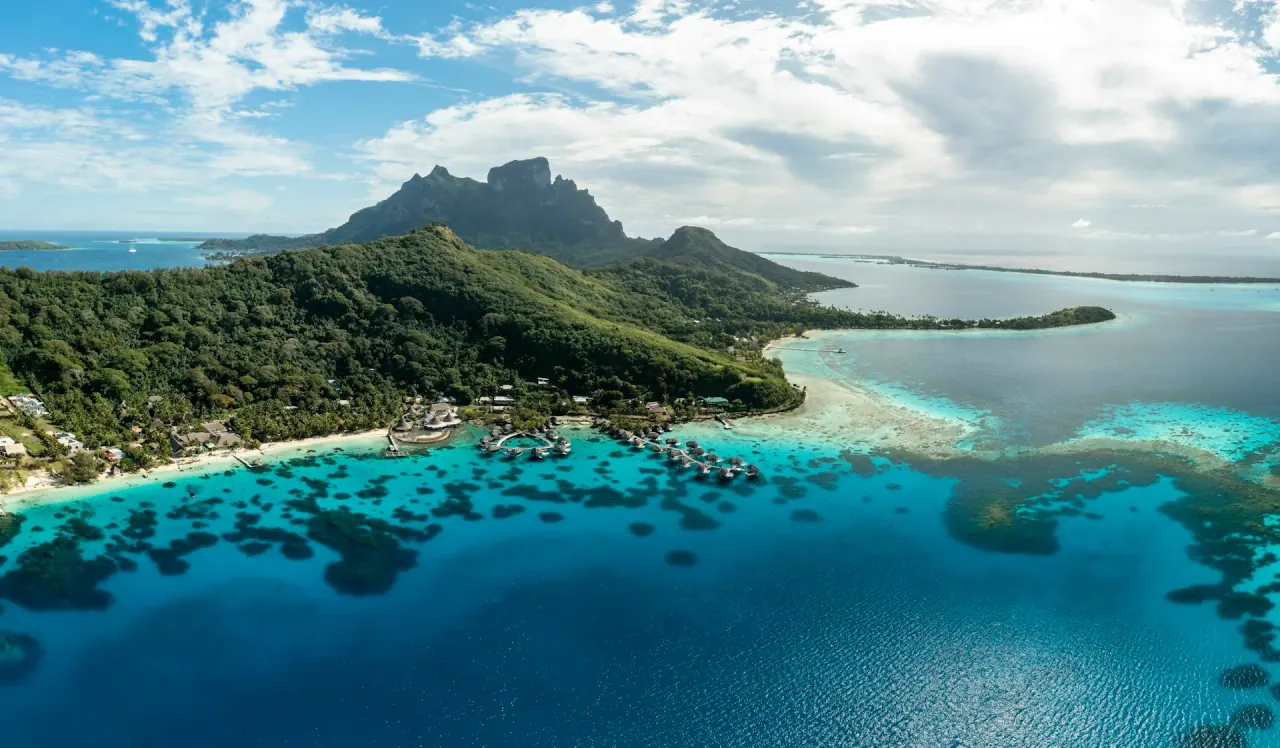
It's the trip every photo on Instagram tells you to take. After three visits and 11 nights spread across three different resorts, here is the honest decision tree.
10 min read

Travel Guides
The Busiest Travel Day of the Year — What the Data Says and How to Survive It
Multiple days compete for the title depending on how you measure it. The day before Thanksgiving is busiest for US roads. The Sunday after Thanksgiving is busiest for US airports. Understanding the pattern means you can plan around it.
8 min read