
Family Trip to Japan: A 10-Day Itinerary That Works for Kids and Parents
Japan is one of the easiest countries in the world to travel with children: spotless stations, safe streets and food that kids actually eat. The hard part is logistics, from hotel rooms built for two to suitcases that don't fit on the bullet train.
A family trip to Japan surprises most parents in the same way: the country that looks intimidating from home turns out to be one of the calmest places in the world to travel with children. Trains run on time, streets are safe, toilets are everywhere and spotless, and a seven-year-old who refuses every vegetable will still find something they like in a convenience store. What catches families out is logistics: small hotel rooms, large suitcases, crowded stations at rush hour and attractions that sell out months ahead. This 10-day itinerary is built around those problems, with costs, kids' fares and the bookings to make first.
Planning this trip?
Find flights now
Compare prices across 700+ airlines and OTAs in one search — find the real lowest fare without the inflated middleman markup.
Search flightsNeed a place to stay?
Search hotels
Why Japan is easier with children than it looks
Japan is a country designed for people who travel by train, carry little and like order, which is a surprisingly good description of a family with tired children. Station elevators, baby rooms in department stores, nursing rooms in many tourist sites and clean public toilets with child seats mean that the small daily problems of family travel are solved before you meet them. Safety is the other reason parents relax. Japan has very low rates of violent crime, and it is normal to see local children of eight or nine riding the subway alone to school. That doesn't mean you stop paying attention, but it changes the mood of the trip. You spend less time watching bags and more time watching the city. The difficult parts are real, though. Tokyo at rush hour is not a place for a stroller, hotel rooms are small, and Japan's politeness comes with quiet expectations about noise on trains. None of these are reasons to stay home. They are reasons to plan days around them, which is what the rest of this guide does.
When to plan a family trip to Japan: seasons and school holidays
Spring and autumn are the best seasons for a family trip to Japan. Late March and early April bring cherry blossoms and the biggest crowds of the year, so book early or aim for the second half of April. October and November bring mild weather and autumn colours, especially in Kyoto in mid to late November. Summer is possible but hard work: June is the rainy season, and July and August are hot and very humid, which tires children quickly. Plan indoor afternoons and early mornings if summer school holidays are your only option. Winter, from December to February, is cold but dry and clear in Tokyo and Kyoto, with fewer tourists and lower hotel prices. Three periods are worth avoiding because Japanese families travel too: Golden Week (late April to early May), Obon (mid-August) and the New Year holidays. Trains and hotels fill up, and prices rise. Our guide to the best time to visit Tokyo goes through the calendar month by month.
Editor's tips
- If you travel in summer, plan outdoor sightseeing before 11am and after 4pm, and keep the middle of the day for museums and aquariums.
- Check Japanese school holidays as well as your own; weekends at theme parks are busier than weekdays all year.
The 10-day family itinerary at a glance
Spend days one to four in Tokyo, with a slow first day to recover from the flight. On day five, take the bullet train to Kyoto, about two hours and fifteen minutes, and stay three nights, using one day for Nara, which is 45 minutes away. Days eight and nine are in Osaka, with a full day at Universal Studios Japan, and day ten is the flight home from Kansai Airport, which saves the trip back to Tokyo. The pace is deliberate: never more than one train journey in a day, one big activity per day plus one small one, and a base change only three times. Children cope well with Japan's trains, but they don't cope well with packing and unpacking every other morning. With two extra days, add a night in Hakone between Tokyo and Kyoto for hot springs and a boat on Lake Ashi, or add Hiroshima and Miyajima from Osaka for older children. Our two-week Japan itinerary shows how those extensions fit.
Tokyo with kids: where to stay and how to plan the days
On a family trip to Japan, Tokyo is where you spend the most nights, so choose a hotel near a major station on the Yamanote line, such as Shinjuku, Shibuya, Tokyo Station or Ueno, so that every day starts with a short trip. Families of four should look at hotels with dedicated family rooms or at serviced apartments, because standard Tokyo rooms are small. Our best family hotels in Tokyo lists the ones with real four-person rooms. Group each day by area to keep travel short. Ueno has the park, the zoo and the National Museum of Nature and Science. Odaiba and Toyosu have the teamLab digital art museums, a waterfront and plenty of space to run around. Asakusa combines Senso-ji temple with a river cruise. Older children usually love Akihabara and the Pokemon Centers, and the Shibuya crossing is worth seeing once from above. Two Tokyo attractions need planning far in advance. Tickets for the Ghibli Museum go on sale at 10am Japan time on the 10th of the month before your visit, for set entry times, and often sell out within the hour. Tokyo Disneyland and DisneySea sell date-specific tickets online, and weekends and holidays fill first.
Editor's tips
- Avoid the trains between about 7:30 and 9:30am on weekdays; rush hour is no place for a stroller or a tired child.
- Buy a Suica or PASMO card for each child old enough to pay; child cards charge child fares automatically.
Kyoto and Nara: temples at a child's pace
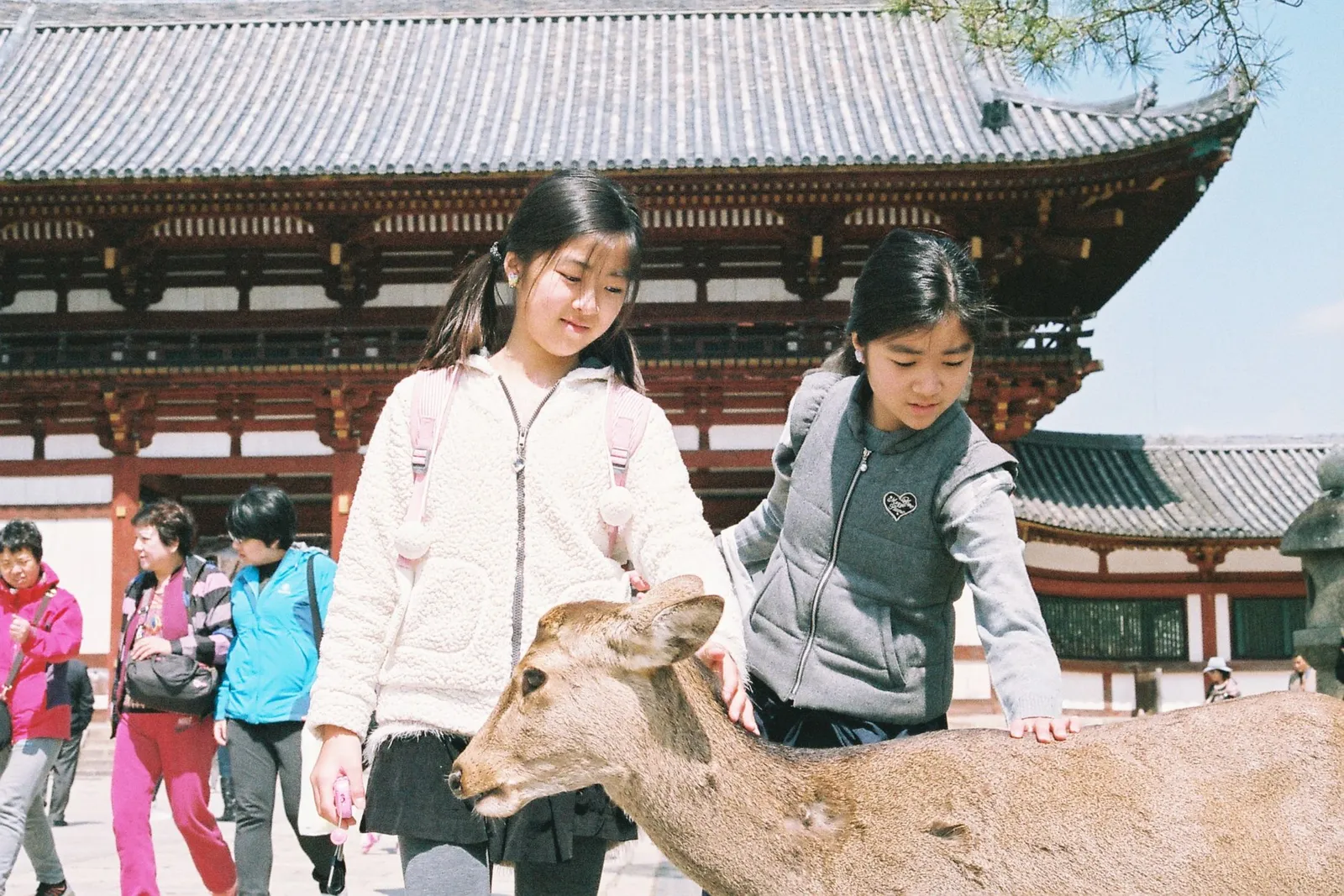
Kyoto is where a family trip to Japan most often goes wrong, because parents try to see too much. The city has more than 1,600 temples, and children have a limited appetite for them. Pick three or four highlights and visit them early. Fushimi Inari's red torii gates are quiet before 8am and spectacular for children, who tend to treat the trail as an adventure. Arashiyama's bamboo grove and monkey park make a good half day, and Kinkaku-ji, the Golden Pavilion, is short and impressive. Nara is often the highlight of the whole trip for younger children. Hundreds of deer roam Nara Park, and the bow they give when offered the special deer crackers sold in the park is the kind of moment children remember. Keep food away from the deer apart from those crackers, and watch small children, since the deer can push when they know you have something. Todai-ji's giant bronze Buddha is nearby, and the pillar with a hole said to be the size of the Buddha's nostril is a favourite with children who can squeeze through it.
Editor's tips
- Take a taxi between Kyoto sights with young children; for a family of four it often costs about the same as the bus and saves time.
- Kimono rental for children is popular in Kyoto and makes a great photo morning; book a few days ahead in high season.
Osaka and Universal Studios Japan
Osaka is louder and more casual than Kyoto, and children usually enjoy it straight away. The neon and food stalls of Dotonbori work best in the early evening, when takoyaki and okonomiyaki are an easy dinner. The Osaka Aquarium Kaiyukan, built around a central tank with a whale shark, is one of the best aquariums in Asia and a good rainy-day plan. Universal Studios Japan needs strategy. Super Nintendo World is the main reason most families go, and entry to that area is often controlled by timed tickets on busy days. Buying an Express Pass that includes a guaranteed Nintendo entry time removes the uncertainty but adds a lot to the cost. On a weekday outside school holidays, arriving before the gates open is often enough. Check the official app the night before for the day's entry rules.
Getting around: trains, kids' fares and the JR Pass question
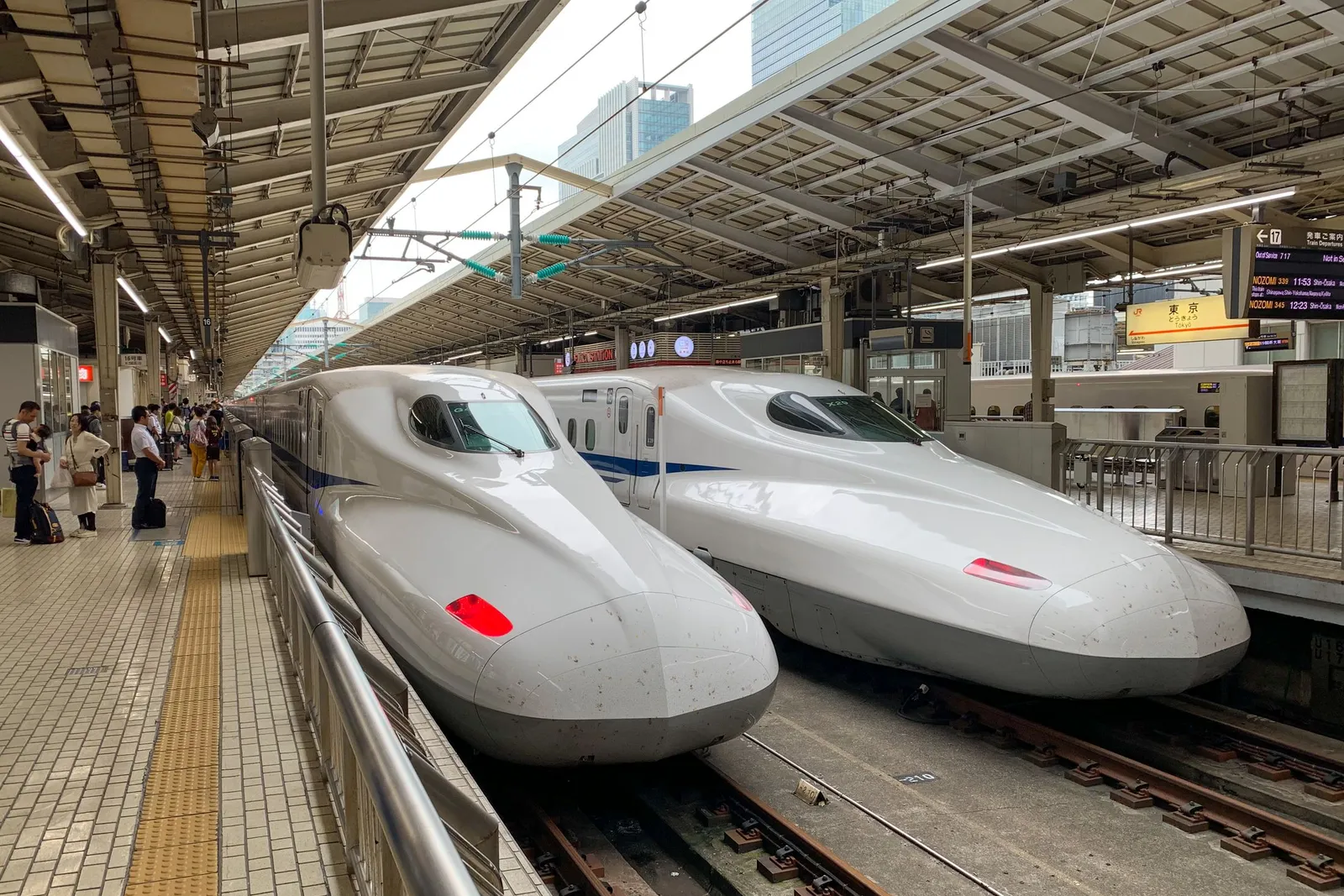
Trains are the backbone of any family trip to Japan, and children travel cheaply on them. On JR trains, children aged 6 to 11 pay half the adult fare, and children under 6 travel free as long as they don't occupy their own reserved seat. Most other railways in Japan use the same age bands. That means a bullet-train ticket for a four-year-old on a parent's lap costs nothing, but on a two-hour trip you may still want to buy a seat. The Japan Rail Pass is no longer an automatic purchase. After the big price rise in 2023, a 7-day adult pass costs around ¥50,000 when bought on the official site, with children 6 to 11 at half price, and overseas agents raised their prices again in October 2026. On the route in this guide, with one Tokyo to Kyoto trip and short regional journeys, individual tickets usually cost less. The pass makes sense only if you add Hiroshima or travel the length of the country. On the Tokaido and Sanyo bullet trains, suitcases with total dimensions over 160cm need a reserved seat with an oversized-luggage area, booked in advance. Travelling without that reservation brings a ¥1,000 fee per bag, so big family suitcases need either a reservation or the forwarding service below.
Editor's tips
- Reserve seats in the same row on long Shinkansen trips; families with young children often prefer a seat by the door for quick exits.
- Use a route app to compare single fares with the JR Pass price before you buy.
Luggage, strollers and the small logistics that make the trip
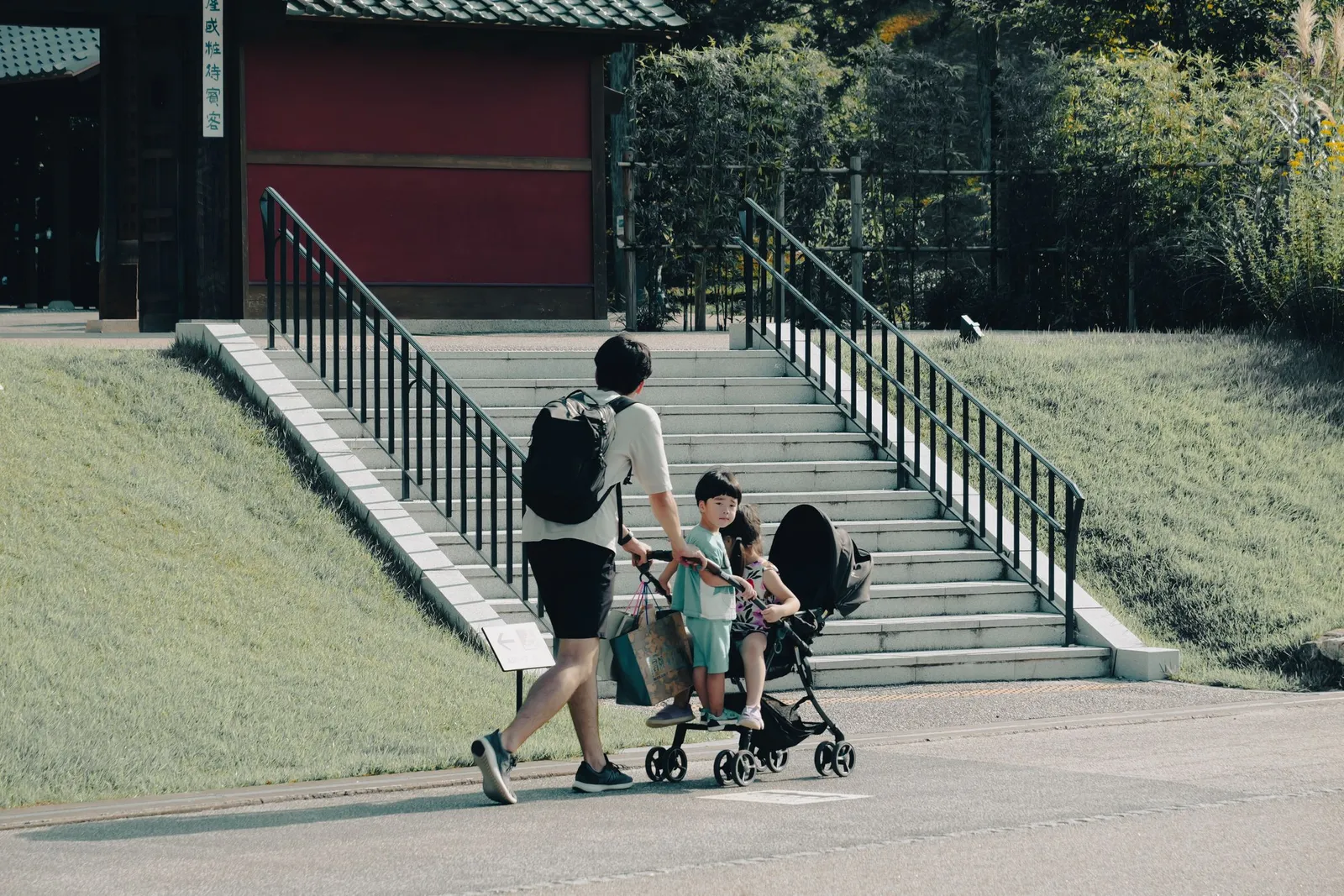
The single best tip for a family trip to Japan is luggage forwarding, known as takkyubin. Hotels and convenience stores can send your suitcases to your next hotel, usually arriving the next day, for roughly ¥2,000 to ¥3,000 per bag depending on size and distance. You then travel between cities with day bags only, which makes stations, stairs and bullet trains far easier with children. A light, compact stroller is worth bringing for children under four, because Japanese days involve a lot of walking. Most stations have elevators, but they can be at the far end of a platform, and older temple paths have steps. A carrier for babies is more practical than a stroller in busy areas. Our guide to the best travel strollers covers models that fold small enough for trains and overhead bins.
Food when your kids are picky
Food is rarely the problem on a family trip to Japan, even with picky eaters. Convenience stores such as 7-Eleven, Lawson and FamilyMart sell rice balls, sandwiches, fruit, yogurt and fried chicken around the clock, which solves breakfasts and emergency snacks. Family restaurant chains have picture menus, kids' meals and drink bars, and department store food halls in the basement offer something for everyone. For dinners, conveyor-belt sushi is a hit with children, who order on a tablet and watch plates arrive on a little train. Ramen, udon, katsu and Japanese curry are mild and familiar. If your child has a serious allergy, carry a card in Japanese explaining it, since ingredients like soy, wheat and fish stock appear in many dishes.
What a family trip to Japan costs
For a family of four on a mid-range plan, budget roughly $400 to $650 a day before international flights. Accommodation is the biggest cost: a room or apartment that really sleeps four costs about $180 to $350 a night in Tokyo and Kyoto, more in cherry blossom season. Food is good value, around $80 to $150 a day for the family, and trains and attractions add $80 to $150 depending on the day. Theme parks change the budget quickly. A day at Universal Studios Japan or Tokyo Disney Resort for four can cost $400 to $600 with tickets alone, more with an Express Pass. Over ten days, a typical mid-range family trip lands between $4,500 and $7,000 before flights. Families on a tighter budget can save with apartments, convenience-store breakfasts and one theme park instead of two, and our Japan budget travel guide has more ways to cut costs.
Editor's tips
- Ryokan prices are usually per person, not per room; check whether children are charged a full, half or no rate.
- Many hotels let young children share a bed with parents for free; confirm the age limit before booking.
How we put this plan together
We started with the problems families actually report from Japan: small rooms, heavy luggage, rush-hour trains and sold-out attractions. Then we built the route backwards from them, choosing bases near big stations, limiting moves to three, and putting the hardest bookings at the top of the list. Train fares and child rules come from the rail operators, and ticket rules from the official attraction sites, which we link to so you can check them before booking. Costs are published prices for the coming season, rounded to ranges because hotel prices in Japan move strongly with demand and exchange rates. Where a rule depends on the day, such as theme-park entry systems, we tell you where to check rather than guessing.
Entry and health basics for a family trip to Japan
Citizens of many countries, including the US, UK, Canada, Australia and most of the EU, can visit Japan visa-free for short stays, though the length allowed depends on your passport. Japan plans to introduce an online pre-travel authorisation system before the end of the decade, so check the Japan National Tourism Organization for current rules shortly before you go. No special vaccinations are needed for a typical city trip, but routine childhood vaccinations should be up to date; the CDC's Japan page lists recommendations by itinerary. Pharmacies are everywhere, but some common Western medicines are restricted or sold under different names, so bring the children's usual fever and allergy medication in original packaging.
Find the Best Flight Deals
Fly into Tokyo (HND or NRT) and home from Osaka Kansai (KIX) on an open-jaw ticket to avoid a return trip to Tokyo.
Where to Stay
Family rooms and apartments sleeping four in Tokyo, Kyoto and Osaka: $180-350/night. Book 3-6 months ahead for spring and autumn.
Tours & Activities
Book Universal Studios Japan tickets, teamLab, Kyoto kimono rental and family-friendly food tours in advance.
Frequently asked questions
Yes. Japan is safe, clean and very well organised, with elevators in most stations, baby rooms in department stores and food that children usually enjoy. The main challenges are small hotel rooms, crowded rush-hour trains and the need to book popular attractions far in advance.
A family trip to Japan is mostly a planning exercise: book the right rooms, send the suitcases ahead, start early and keep one big activity per day. Do that, and the country does the rest, with trains that run on time, food that children like and streets where everyone can relax. If you are weighing Japan against a broader trip through the region, our guide to family tours in Asia compares it with routes in Thailand, Vietnam, Singapore and Bali. ⚠️ Information last verified October 2026. Visa rules, fares and health advice change often, so confirm entry requirements with your government's travel advisory and the destination's official sources before you book.
Get there
Flights
One search across 700+ airlines — find the real lowest fare for your dates.
Search flightsWhere to stay
Hotels
Browse verified hotels and stays — instant confirmation, secure booking.
Book on KKdayThings to do
Activities
Tours, attractions, and day trips — free cancellation on most experiences.
Book on KlookTours & Experiences
Book the experiences, not just the trip
Skip-the-line tickets, guided tours, and day trips — free cancellation on most, confirmed instantly.
About the author
Marcus Chen
Hotels & Deals Editor · Based in New York City
Marcus reviews hotels for a living — and has slept in over 400 of them. Before TravelBuzzy, he ran the hotel desk at a major loyalty publication and consulted for two boutique hotel groups. He covers the Americas, Japan, and luxury travel.
More from The Edit
Hotel Picks
Best Family Hotels in Tokyo 2026
Tokyo with kids is more manageable than most parents expect — the city's trains run on time, its food courts welcome strollers, and hotels in the right neighbourhoods remove the logistical friction completely.
10 min read
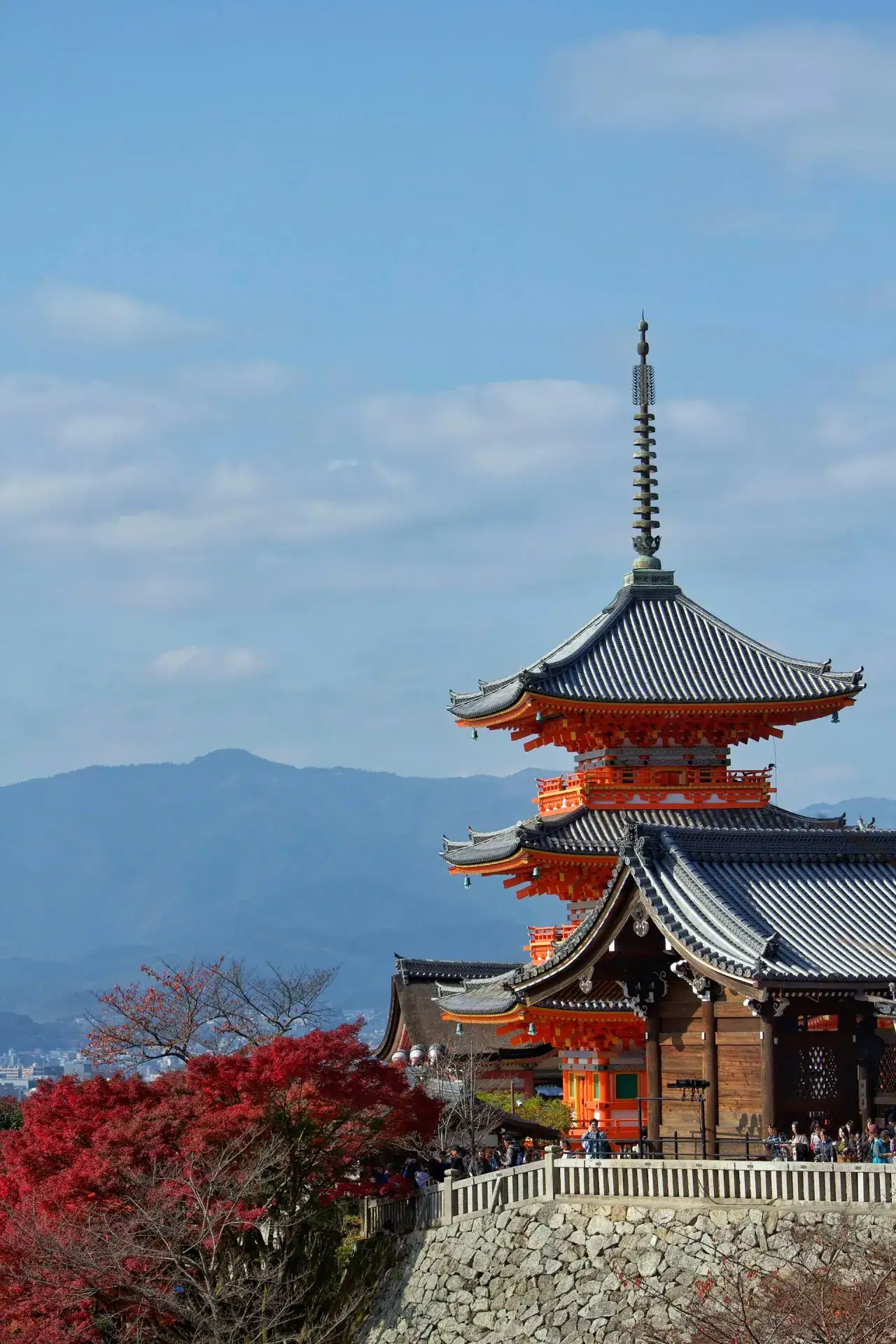
Itineraries
2 Weeks in Japan: Tokyo, Kyoto, Hiroshima, and Beyond
Japan in two weeks is the trip most people describe as life-changing. Here is the itinerary that earns that description — planned by district, by shinkansen hop, and by the meal that will follow you home.
18 min read
Travel Guides
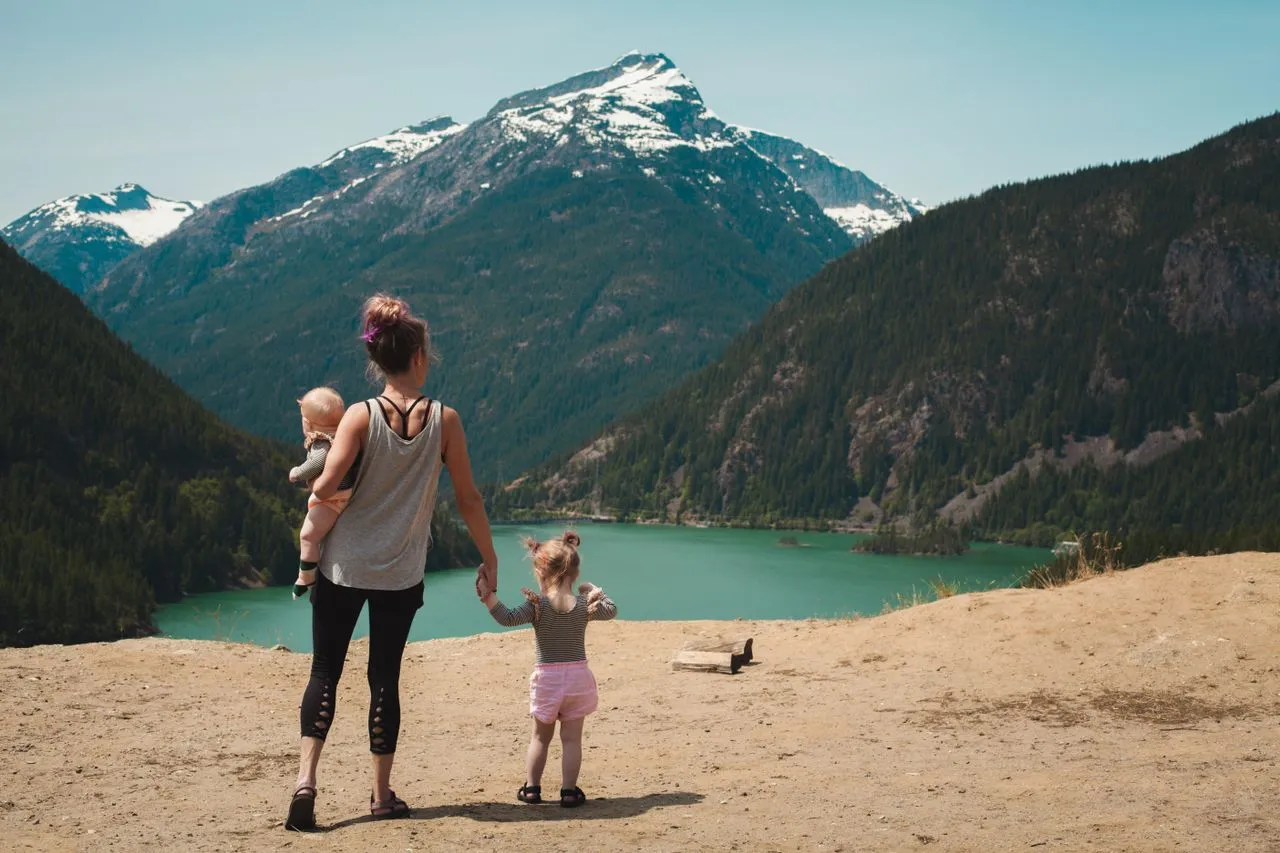
Travel with Kids in 2026 — The Honest Family Guide from Flights to Budget
Travelling with children changes everything — the destinations, the pace, the budget, the luggage. After dozens of family trips across three continents, here is what actually works, what costs more than you expect, and which destinations earn the chaos.
14 min read