
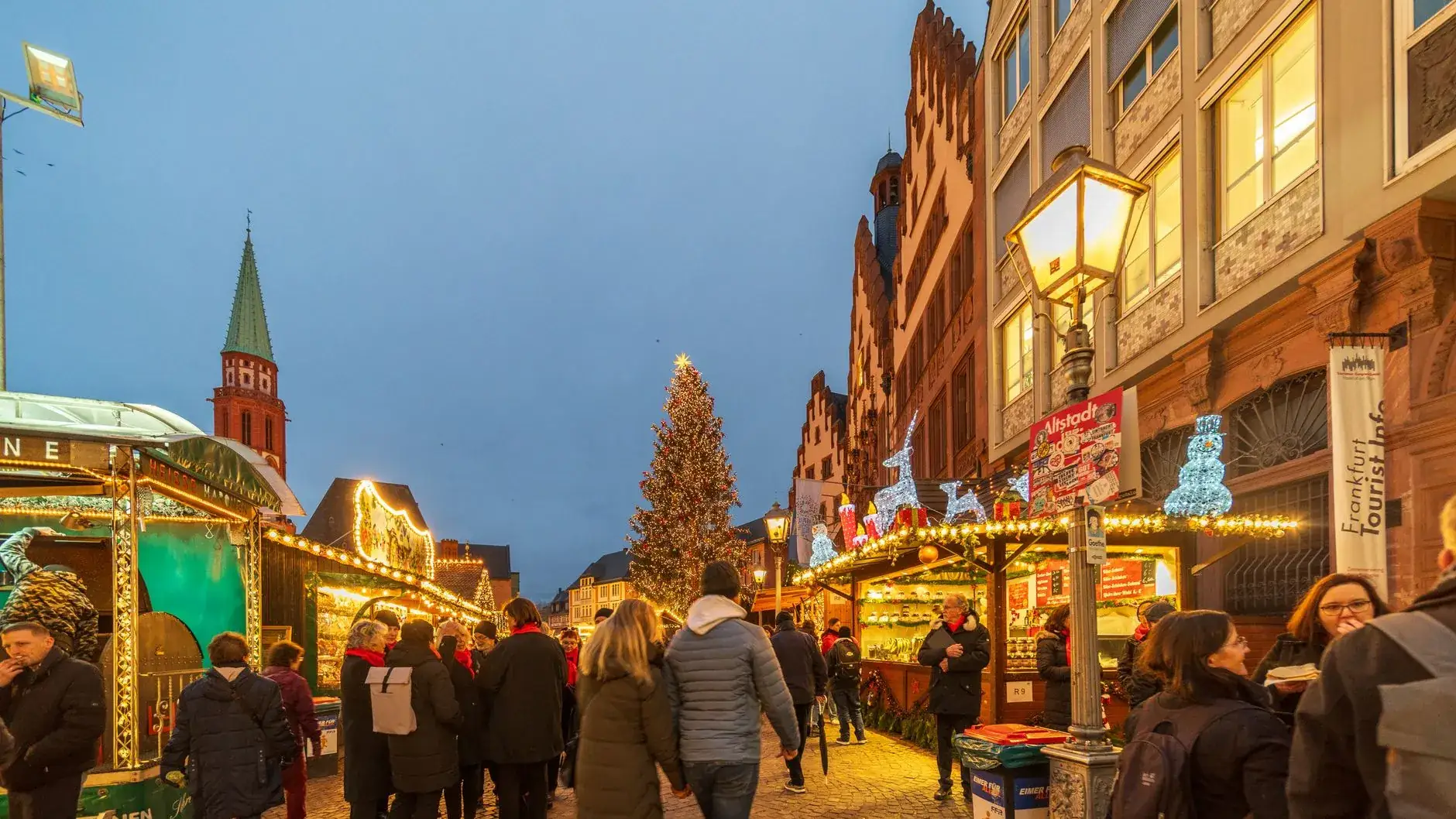
Best Christmas Markets in Europe 2026: How to Choose, When They Open and What to Expect
From Alsace and Bavaria to Vienna, Prague, Copenhagen and Tallinn, here is how the big markets differ, the opening windows reported for 2026, and how to plan around crowds, money and cold.
The first weekend of the Christmas markets sets the tone for the season: the cold arrives, the stalls open and hotel rooms in the best-known cities begin to disappear. In 2026 that moment falls in mid-November for the earliest markets and in the last week of the month for several of the most famous ones. This guide helps you choose between them by character instead of by ranking, lists the opening windows reported for 2026, and covers the practical details of timing, money, food and crowds that decide whether a market trip feels magical or merely cold.
Planning this trip?
Find flights now
Compare prices across 700+ airlines and OTAs in one search — find the real lowest fare without the inflated middleman markup.
Search flightsNeed a place to stay?
Search hotels
Choose by character, not by ranking
A best Christmas market depends on what you want from the evening. Strasbourg and Nuremberg are the traditional choices: wooden stalls, a long history and a strong sense of ritual, particularly around the opening days. Cologne spreads its markets across several squares, so you can compare atmospheres within a single trip. Vienna and Prague are capital cities first and markets second, which suits travellers who want architecture, cafés and museums alongside the stalls. Tallinn is smaller and more compact, with a medieval old town that makes the market feel like a stage set, and its winters are colder and more likely to bring snow. Copenhagen's Tivoli is different again: a market inside an amusement park, with lights and rides. If you only have a long weekend, pick one place and go deep instead of trying to stack several cities.
Reported 2026 opening windows
Opening dates shift by a few days each year, and sources disagree, particularly for Cologne and Copenhagen. The windows below are the ones most consistently reported for 2026. Treat them as a starting point and confirm on each market's official website before you book flights or hotels.
Editor's tips
- Copenhagen's Tivoli: reported from 13 or 14 November 2026 into early January 2027.
- Vienna's Rathausplatz market: reported from around 13 November, with closing reported around 26 December.
- Tallinn: 20 November 2026 to 6 January 2027, confirmed by the city's tourism site.
- Strasbourg: the city's official site lists a Friday 27 November 2026 opening; closing dates vary by source.
- Nuremberg: 27 November to 24 December, with shortened hours on 24 December.
- Prague: 28 November 2026 to 6 January 2027, across the Old Town and Wenceslas squares.
- Cologne: sources give 16 or 23 November as the start and 23 December as the close.
The classics: Strasbourg, Nuremberg and Cologne
Strasbourg calls itself the capital of Christmas and spreads its markets around the cathedral and across the old town, which makes it easy to walk from one square to the next. Nuremberg's Christkindlesmarkt is centred on the main square and is closely associated with gingerbread, known locally as Lebkuchen. Cologne places a market beside the cathedral and several others around the city, each with its own character. These three cities work well on a rail-based route, since the distances are modest and the stations sit close to the old towns. Our Europe train travel guide explains how to plan connections, and our weekend city breaks guide helps if you only have a few days.
The capitals: Vienna, Prague and Copenhagen
Vienna runs many markets across the city, with the one in front of the City Hall, the Rathausplatz, among the best known. Prague's main markets sit in the Old Town Square and on Wenceslas Square, so the city works equally well for sightseeing and for an evening among the stalls. Copenhagen's Tivoli Gardens turns its grounds into a seasonal market with lights and rides, which suits families. If Prague is on your list, our three-day Prague itinerary and Prague boutique hotel picks help you plan around the market dates. For Paris on the same trip, see the five-day Paris itinerary.
Tallinn and the north: snow, lights and a compact old town
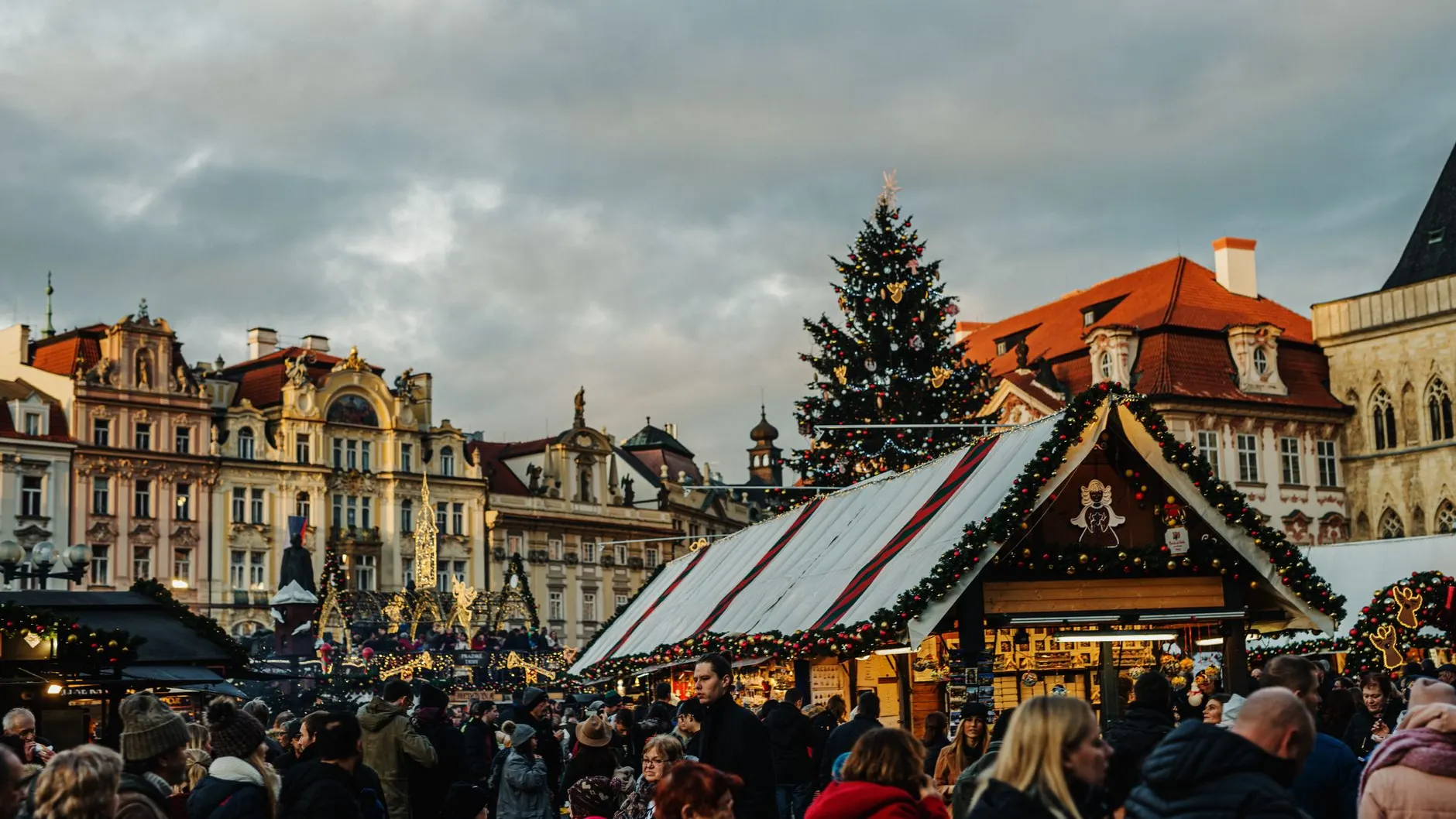
Tallinn's market sits in Town Hall Square at the heart of the old town, with the medieval roofs close enough to frame the stalls. December temperatures there are often around or below freezing, so pack for real cold, with a proper hat, gloves and shoes with grip. The compact centre means you can see the market, the old town walls and a café stop in one evening without transport.
What to eat and drink
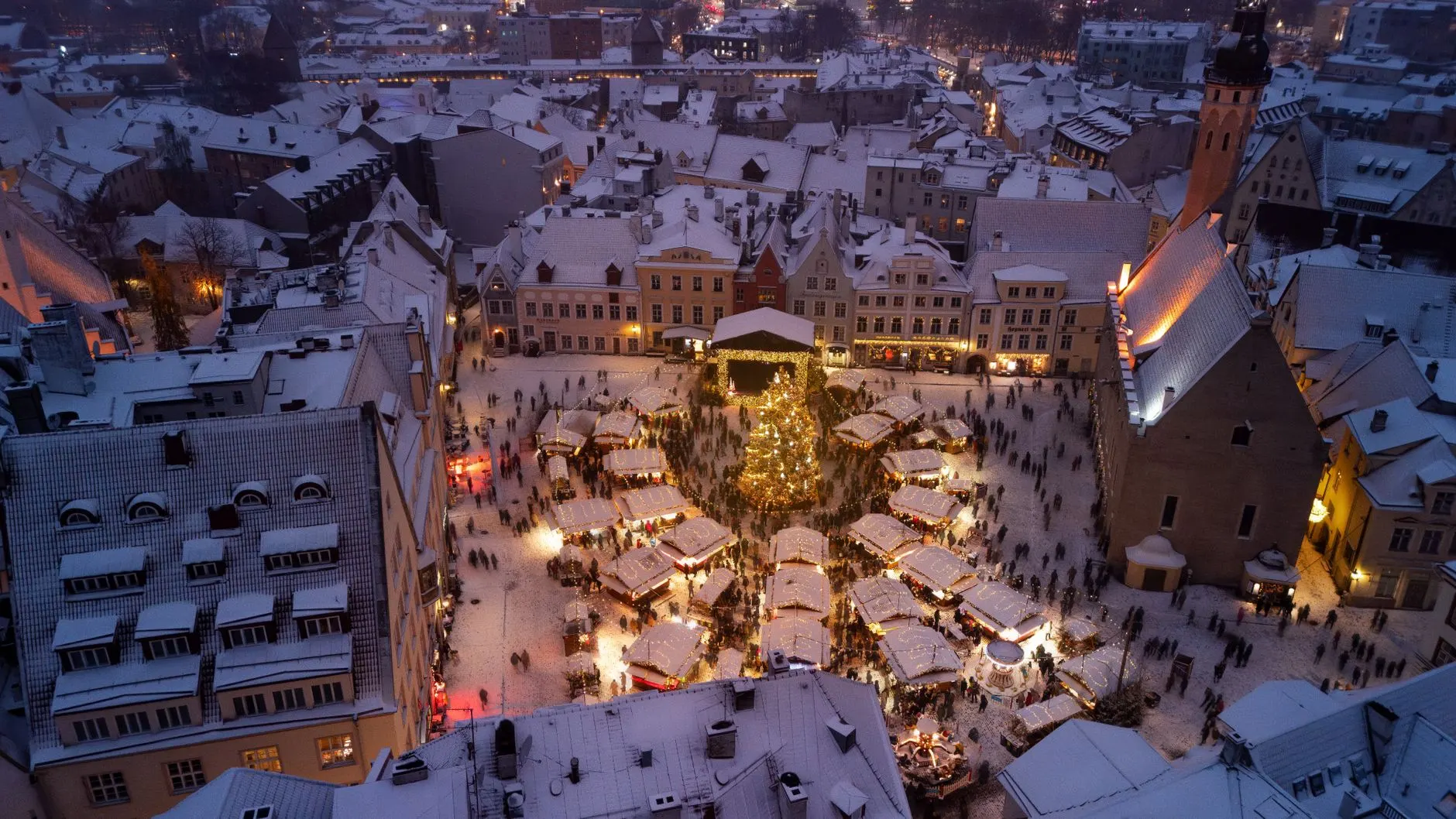
Each market has its own table, and eating locally is half the point. Mulled wine appears everywhere under different names: Glühwein in German-speaking markets, vin chaud in Alsace and gløgg in Denmark. Gingerbread is the Nuremberg signature, as noted above, while Alsace is known for small spiced Christmas biscuits called bredele. In Prague, stalls commonly sell trdelník, a sweet rolled pastry, alongside meat roasted on a spit. Roasted almonds and chestnuts turn up almost everywhere. A simple rule works well. Eat the one thing a market is known for first, then browse. Stalls with a queue of locals usually signal both turnover and fair prices, and a stall that sells only one dish tends to do it better than one selling twelve. Alcohol-free versions of hot punch are usually available, which helps if you are driving or travelling with children.
A three-night rhythm that works
A three-night trip works best when it alternates market evenings with daytime sightseeing. Arrive in time for a late-afternoon walk through the stalls, when the lights come on and the light is still good enough to see the buildings behind them. Spend the second day on museums, churches or a day trip, and return to the market in the early evening, when choirs and music programmes are typically at their fullest. Keep the final morning for a quiet stroll and any shopping, when stallholders are setting up and queues are short. Two evenings in the same market beat two different markets. The second visit lets you eat, buy and linger instead of hunting for the best stall. If you want variety, add a second market on a daytime visit, when most are open but far calmer. Where you sleep matters more in December than in summer. Staying inside or near the old town saves a lot of cold walking, but prices there rise at weekends and around opening weekends, so midweek nights are cheaper in many cities. If the old town is out of budget, pick a hotel near a tram or metro line and check the last service, which can run earlier than you expect. If you fly, allow for winter delays: a flexible fare, or an earlier flight on the return day, reduces the risk.
Making a market trip work: timing, money and crowds
Weekday afternoons are calmer than weekend evenings, and the first hour after opening is the best time to walk the stalls without queueing. Go back for the evening lights once you have seen the stalls in daylight. Many German and Austrian markets charge a refundable deposit on mugs for mulled wine, usually a few euros, returned when you hand the mug back; keep it as a souvenir if you prefer. Card payments are widely accepted in cities, but small stalls may only take cash, so carry a little. Eat the local specialty at each market instead of the same sausage everywhere. Families and anyone with limited mobility should plan differently. Cobbled squares are uneven and slippery when wet, strollers struggle in the densest crowds, and the best time for young children is the early afternoon, before the evening rush. Check each market's website for accessibility information, and keep a warm indoor stop, such as a café or museum, within a short walk for breaks. Crowded markets attract pickpockets, so keep phones and wallets in zipped inner pockets. Our phone safety guide and travel scams guide cover the basics. Weekend rooms in the best-known market cities go early, and many charge city taxes per night, which our guide to tourist taxes and entry fees explains. Visitors from outside the EU should also check entry rules in our Schengen guide before they travel. For more winter ideas, see where to travel in December.
Editor's tips
- Dress in layers and waterproof shoes: stone squares get wet and cold.
- Keep small coins for toilets and mug deposits.
- Visit on a weekday if you can; Friday and Saturday evenings are the busiest.
- Check each market's website for opening hours between 24 and 26 December.
How we compiled this
We gathered the reported 2026 dates from several travel guides and compared them with what the cities' own pages say. Where the cities publish dates, such as Tallinn's tourism site and Strasbourg's Christmas site, we gave them priority. Where sources disagreed, as with Cologne and Copenhagen, we say so instead of choosing one. ⚠️ Information last verified 1 November 2026. Opening dates and hours change, so confirm with the markets themselves: Strasbourg, Nuremberg, Vienna, Prague, Copenhagen's Tivoli, Tallinn and Cologne.
Frequently asked questions
The earliest, including Vienna's Rathausplatz and Copenhagen's Tivoli, are reported to open around 13 November. Tallinn follows on 20 November, and Strasbourg, Nuremberg and Prague open in the last days of the month. Dates change by a few days each year, so check each market's official site.
A good Christmas market trip is mostly a matter of choosing one place that fits your mood, going on a weekday if you can, and dressing for the cold. Check the opening dates on the market's own site, book rooms early, and let the evening lights do the rest.
Get there
Flights
One search across 700+ airlines — find the real lowest fare for your dates.
Search flightsWhere to stay
Hotels
Browse verified hotels and stays — instant confirmation, secure booking.
Book on KKdayThings to do
Activities
Tours, attractions, and day trips — free cancellation on most experiences.
Book on KlookTours & Experiences
Book the experiences, not just the trip
Skip-the-line tickets, guided tours, and day trips — free cancellation on most, confirmed instantly.
About the author
TravelBuzzy Editorial Team
Editorial team
TravelBuzzy is researched, written and edited by a small independent team. Our guides are built from official tourism and government sources, what hotels and booking platforms publish, and published traveller reviews, with AI tools used for research and drafting. Unless an article says otherwise, a recommendation comes from research rather than a personal stay. Our methodology page explains how we work and how affiliate income fits in.
More from The Edit
When to Go
Best Places to Travel in December: 12 Destinations Worth the Trip
December splits cleanly into two trips: the ones where you chase the sun and the ones where you embrace the season. After fifteen Decembers spent travelling for work, here is the honest shortlist for each.
10 min read
Travel Guides
Train Travel in Europe — The Complete 2026 Guide to Eurail, Night Trains & Scenic Routes
From sleeper cabins through the Austrian Alps to standing-room-only regional trains in Calabria, rail travel in Europe rewards travellers who know how each system works. Here is how to do it well.
17 min read
Itineraries
10 Best Weekend City Breaks in Europe — Ranked by Value for 2026
Here are the ten European cities that deliver the most for a weekend away — from EUR 300 budget escapes to EUR 1,200 splurges — with honest costs, 48-hour itineraries, and the mistakes to avoid.
12 min read