
Bali on a Budget — How to Do Bali for Under $50/Day in 2026
Bali's reputation as a cheap paradise is only half true — it depends entirely on where you stay, where you eat, and whether you've learned to say 'no' to a taxi driver quoting five times the real fare. Here's the full breakdown from four trips and a lot of warung rice.
I first came to Bali expecting to spend next to nothing. That's what every blog post said — $20 a day, live like royalty, infinity pools for pennies. Then I arrived in Seminyak, paid Rp 180,000 ($12) for an avocado toast that tasted like it was made for Instagram, watched a taxi driver charge a couple Rp 400,000 ($26) for a ride that should have cost Rp 80,000, and realised the budget version of Bali exists — but only if you know which version of the island you're visiting. Because there are two Balis. There's the expat-cafe, beach-club, influencer Bali where a smoothie bowl costs more than it does in Brooklyn. And there's the warung-eating, scooter-riding, homestay-sleeping Bali where a full day costs less than a single dinner in the first version. The $50/day target is not a fantasy. I've done it on four separate trips, twice for over three weeks. But it requires specific choices about where you base yourself, where you eat, and how you move around. Below: every category of spending with real 2026 prices in rupiah and US dollars, the scams nobody warns you about until it's too late, and three sample daily budgets — $30 backpacker, $50 comfortable, and $100 mid-range — so you can pick your tier and plan accordingly.
Planning this trip?
Find flights now
Compare prices across 700+ airlines and OTAs in one search — find the real lowest fare without the inflated middleman markup.
Search flightsNeed a place to stay?
Search hotels
Why $50/day is realistic — and where the money actually goes
Let me break down where your daily Rp 750,000 ($50) goes in Bali, because the distribution is not what you'd expect. Accommodation takes the largest share at roughly 30–40% of your daily budget. Food — if you eat where Balinese people eat — is almost negligibly cheap at 15–25%. Transport is minimal if you rent a scooter. And activities are the variable that can push you over or keep you under. Here's the honest daily math for a comfortable $50 day: Accommodation: Rp 150,000–230,000 ($10–15) — a clean guesthouse or homestay with breakfast included Breakfast: Rp 0 (included) or Rp 15,000–25,000 ($1–1.65) at a warung Lunch: Rp 20,000–35,000 ($1.30–2.30) at a warung Dinner: Rp 25,000–50,000 ($1.65–3.30) at a warung or local restaurant Transport: Rp 60,000–80,000 ($4–5.30) — scooter rental for the full day One activity: Rp 50,000–100,000 ($3.30–6.60) — temple entrance, waterfall, or beach Water/snacks/coffee: Rp 30,000–50,000 ($2–3.30) Total: Rp 350,000–570,000 ($23–38) That's well under $50, which means you have a cushion for the occasional splurge — a cooking class (Rp 350,000 / $23), a snorkelling trip (Rp 250,000 / $16), or a nicer dinner at a mid-range restaurant. The $50/day budget is not about deprivation. It's about choosing the Balinese economy over the tourist economy for your baseline spending, and then selectively upgrading when it matters. The critical distinction: if you eat every meal at Western-style cafes and take Grab cars everywhere, your daily cost jumps to $80–120 without any improvement in actual experience. The warung nasi campur for Rp 25,000 is frequently better than the $12 cafe version of the same dish. This isn't budget martyrdom — it's common sense.
Editor's tips
- Withdraw cash from BCA or Mandiri ATMs — they dispense Rp 100,000 notes and charge lower fees than airport exchange counters
- Always carry small bills (Rp 10,000–50,000) — street vendors and warung often can't break Rp 100,000 notes
- Track spending in IDR, not USD — the mental conversion makes everything feel cheaper than it is and leads to overspending
Accommodation: guesthouses, homestays, and the hostel scene
Bali's accommodation market has more range than any destination I've covered. The same area can offer a Rp 90,000/night ($6) dorm bed and a Rp 5,000,000/night ($330) villa with a private pool. Here's the budget hierarchy. Homestays / guesthouse rooms (Rp 150,000–300,000 / $10–20 per night) — This is the sweet spot for budget travellers. A Balinese homestay is a family-run property with simple private rooms, often surrounding a courtyard or garden. You get a private room with fan or AC (AC rooms cost Rp 50,000–80,000 more), a private bathroom, and usually a basic Balinese breakfast (banana pancake, fresh fruit, toast, coffee). In Ubud, the Junjungan and Penestanan neighbourhoods are packed with homestays in the Rp 150,000–200,000 range ($10–13). In Canggu, expect Rp 200,000–300,000 ($13–20) for a comparable room. The quality varies enormously — always check recent reviews and look for places run by families who live on-site. My favourites have been small properties with 4–6 rooms where the owner greets you by name and tells you which warung to eat at. Hostels (Rp 90,000–180,000 / $6–12 per night) — Bali's hostel scene is strong, especially in Canggu, Ubud, and Kuta. Dorm beds at well-reviewed hostels like Tribal Bali (Canggu), Bali Beans (Ubud), or Kosta Hostel (Seminyak) run Rp 100,000–150,000 ($6.50–10) for a dorm bed with locker, AC, and decent WiFi. Some include pool access. Private rooms at hostels cost Rp 200,000–350,000 ($13–23). The social scene is active — most hostels run pub crawls, motorbike tours, and temple trips. If you're solo and want to meet people, hostels in Canggu are the move. Budget guesthouses with pool (Rp 250,000–450,000 / $16–30 per night) — This is the tier that makes Bali feel like you're cheating. For under $30/night, you can find a private room with air conditioning, a pool, and breakfast included. The Nyuh Kuning area in southern Ubud and the back streets of Berawa in Canggu have dozens of options at this price point. These are not luxury villas — the rooms are simple, the pools are small — but the value-to-experience ratio is absurd by any global standard. Airbnb villas (Rp 400,000–800,000 / $26–53 per night) — If you're travelling as a couple or with friends, a private villa with a pool splits to $13–26 per person per night. The catch: many Airbnb listings in Bali have inflated cleaning fees (Rp 150,000–300,000) and charge for airport transfers separately. Always calculate the total per-night cost including all fees before comparing to hotels.

Editor's tips
- Book directly with homestays via WhatsApp (listed on Google Maps) — prices are 15–25% lower than Booking.com or Agoda
- AC rooms cost Rp 50,000–80,000/night more than fan rooms — in Ubud's cooler climate, a fan is often sufficient
- Avoid accommodation on main roads in Canggu and Kuta — traffic noise starts at 7 AM and doesn't stop
Food: warung economics and the cafe trap
This is where the two Balis diverge most dramatically. The difference between eating at a warung and eating at an expat cafe is not a small markup — it's a 5x to 10x multiplier for food that is often identical in quality. Warung (Rp 15,000–35,000 / $1–2.30 per meal) — A warung is a local Indonesian eatery, ranging from a roadside stall with plastic chairs to a simple restaurant with a tin roof and a fan. The menu is typically written on the wall or doesn't exist at all — you point at what you want from a glass display case. Nasi campur (mixed rice with several small sides — chicken, tempeh, vegetables, sambal, egg) costs Rp 20,000–30,000 ($1.30–2). Mie goreng (fried noodles) is Rp 15,000–25,000 ($1–1.65). Nasi goreng (fried rice) is the same. A fresh juice is Rp 10,000–15,000 ($0.65–1). Sate ayam (chicken satay, 10 skewers) runs Rp 15,000–25,000 ($1–1.65). Babi guling (roast suckling pig, a Balinese speciality) costs Rp 30,000–50,000 ($2–3.30) at warung Ibu Oka's original Ubud location. The food is fresh, flavourful, and cooked in front of you. I've eaten at warung on every single trip to Bali and have never been sick — the hygiene concern is dramatically overstated in Western travel content. Local restaurants (Rp 40,000–80,000 / $2.60–5.30 per meal) — A step up from warung: proper seating, menus in English, slightly larger portions, sometimes air conditioning. Restaurants like Warung Biah Biah in Ubud or Warung Murah in Canggu serve the same Indonesian dishes with a modest tourist premium. A nasi campur here costs Rp 35,000–50,000 ($2.30–3.30), and a main course like ayam betutu (slow-cooked chicken) runs Rp 45,000–65,000 ($3–4.30). This tier is excellent value and still well within a $50/day budget. Western-style cafes (Rp 80,000–230,000 / $5.30–15 per meal) — Canggu and Seminyak are saturated with cafes serving smoothie bowls (Rp 80,000–120,000 / $5.30–8), avocado toast (Rp 75,000–110,000 / $5–7.30), and flat whites (Rp 40,000–60,000 / $2.60–4). The food is fine — sometimes good — but these are Brooklyn prices in a Bali warung economy. One smoothie bowl costs the same as three full warung meals. If you're on a budget, limit cafe visits to once every few days as a treat, not a daily habit. The alcohol variable — Bintang beer at a warung or minimarket costs Rp 25,000–35,000 ($1.65–2.30). The same Bintang at a beach club costs Rp 80,000–120,000 ($5.30–8). Cocktails at beach clubs run Rp 120,000–200,000 ($8–13). Alcohol is the single fastest way to blow a budget in Bali. Two beach-club cocktails cost more than an entire day's food budget at warung prices. Drink at warung, buy Bintang at the minimarket, or visit happy hours — most Canggu bars do 2-for-1 cocktails between 4–6 PM.
Editor's tips
- Look for warung with high local traffic — the food turns over faster, which means fresher ingredients and lower food-safety risk
- Babi guling at Warung Ibu Oka in Ubud is Bali's most famous budget meal — arrive before 11:30 AM to beat the tour-group crowds
- Drink bottled or filtered water only — tap water in Bali is not safe to drink, and most accommodation provides free refill stations
Transport: scooters, Grab, and the taxi negotiation game
Transport is where budget travellers in Bali either save a fortune or get fleeced. The gap between the cheapest and most expensive way to cover the same distance is enormous. Scooter rental (Rp 60,000–80,000 / $4–5.30 per day) — This is the default for budget travel in Bali. A Honda Vario 125cc or Yamaha NMAX rents for Rp 60,000–80,000/day from local rental shops (not tourist agencies on Booking.com, which charge Rp 120,000–150,000). Weekly rates drop to Rp 50,000–60,000/day; monthly rates to Rp 35,000–45,000/day ($2.30–3). Petrol is cheap — Rp 10,000 ($0.65) fills a small tank and covers 80–100 km. Helmets are included (insist on a full-face helmet, not the decorative half-shells some shops offer). An international driving permit (IDP) with a motorcycle endorsement is technically required — police checkpoints on Jl. Sunset in Canggu and near Tanah Lot are common, and the on-the-spot 'fine' is Rp 100,000–500,000 ($6.50–33). The honest safety note: Bali roads are genuinely dangerous. Narrow lanes, dogs sleeping on the road, no lane markings, and aggressive truck traffic on main routes. If you've never ridden a motorbike before, Bali is not the place to learn. Practise in quiet Ubud backroads before attempting Canggu or the southern peninsula. Grab / ride-hailing (Rp 20,000–80,000 / $1.30–5.30 per ride) — Grab (the Southeast Asian Uber) is the second-cheapest option. A Grab bike (GrabBike) from central Ubud to the Monkey Forest costs Rp 8,000 ($0.53). A GrabCar from Canggu to Seminyak runs Rp 35,000–50,000 ($2.30–3.30). From Ubud to the airport: Rp 180,000–250,000 ($12–16). The problem: the local taxi mafia has successfully banned Grab pick-ups from major tourist zones including parts of Ubud centre, the Monkey Forest area, and some Canggu streets. You may need to walk 200–500 metres to a pick-up point. Grab is still available — just not always at your doorstep. Private drivers (Rp 500,000–800,000 / $33–53 per day) — For a full-day trip covering multiple stops (e.g., Ubud rice terraces, Tirta Empul, Tegalalang, coffee plantation), hiring a private driver is competitive if you're a couple or group. A 10-hour day with a Balinese driver including air-conditioned car and petrol runs Rp 500,000–700,000 ($33–46). Split between two or four people, that's $8–17 each — comparable to multiple Grab rides and far more convenient. Ask your accommodation for a recommendation — most homestays have a regular driver they trust. Taxis — the scam gauntlet — Metered taxis (Blue Bird is the only reliable company) charge Rp 7,000 flag fall plus Rp 6,500/km. That's roughly Rp 50,000–80,000 ($3.30–5.30) for a typical trip. Non-metered taxis — the ones that approach you at temples, markets, and tourist areas — routinely quote Rp 200,000–400,000 for the same ride. Never get in a taxi without a meter unless you've agreed on a price first and it matches Google Maps distance estimates.
Editor's tips
- Rent scooters from local shops on back streets, not from tourist-facing agencies — the same Honda Vario is Rp 60,000/day versus Rp 150,000 at a tourist shop
- Download the Grab app before arriving in Bali and link a payment method — it works immediately on arrival
- For the airport, book a Grab from outside the parking structure — inside the terminal, only the airport taxi cartel operates (fixed Rp 350,000+ to Ubud)
Free and cheap activities: temples, rice terraces, beaches, and waterfalls
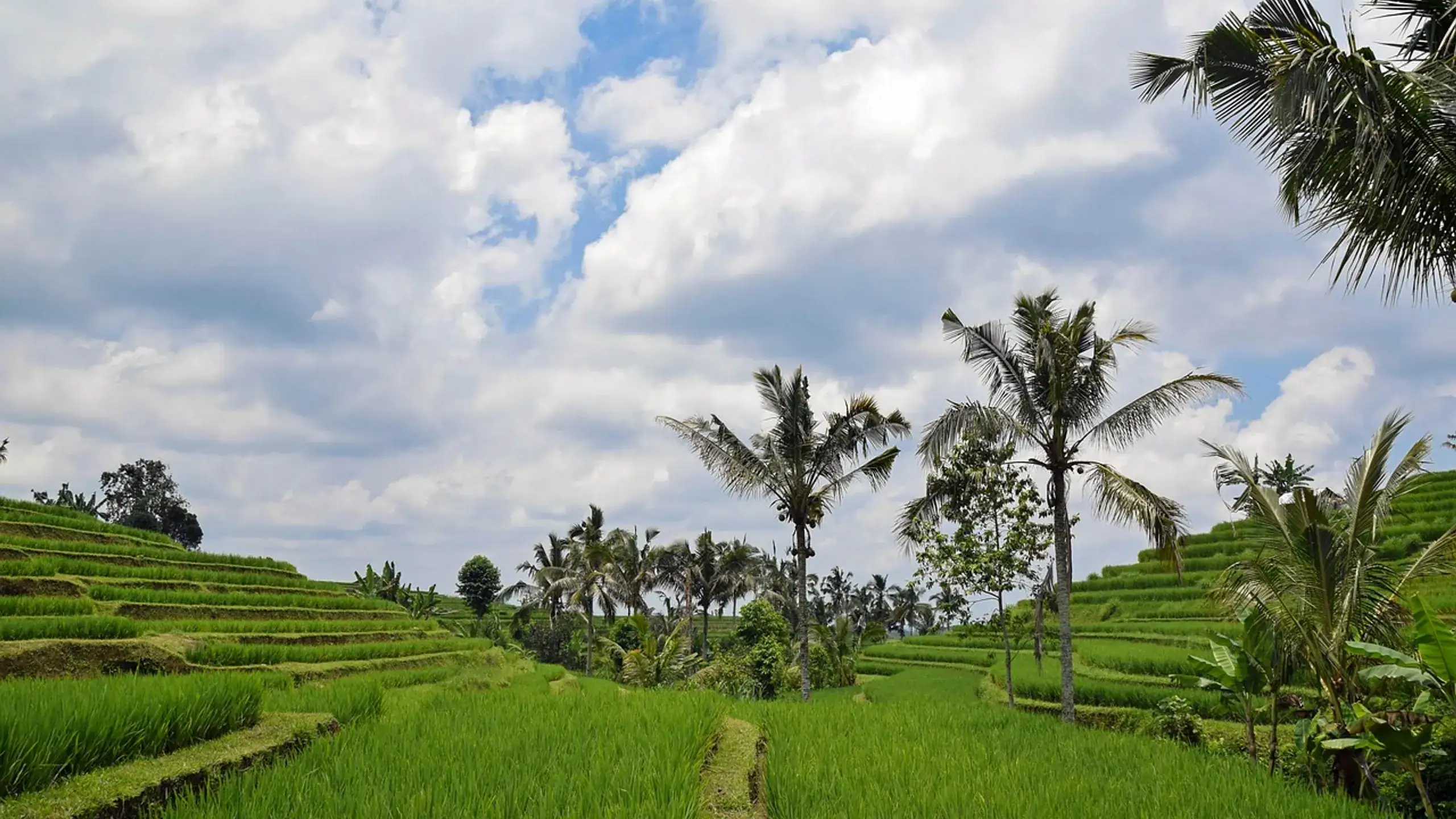
Bali has more free and nearly-free things to do than any island destination I've visited. The cultural and natural attractions alone could fill three weeks without spending more than a few dollars a day. Temples (Rp 15,000–50,000 / $1–3.30) — Bali has over 20,000 temples, and the major ones charge modest entrance fees that include a sarong rental. Tirta Empul (the holy water temple near Ubud) costs Rp 50,000 ($3.30) and offers a genuinely moving purification ceremony — you can participate, not just watch. Uluwatu Temple costs Rp 50,000 and includes the famous Kecak fire dance at sunset (an absolute must — arrive by 5 PM to get a seat). Tanah Lot (the sea temple) is Rp 60,000 ($4) and worth it for sunset. Tirta Gangga water palace costs Rp 50,000. Pura Besakih, the 'mother temple' on Mount Agung's slopes, charges Rp 60,000 — go early (before 9 AM) to avoid the guides who aggressively pressure you into paid tours. Rice terraces (Rp 0–25,000 / free–$1.65) — Tegalalang rice terraces are the famous Instagram ones — they charge Rp 25,000 ($1.65) and are crowded by 10 AM. The better move: walk the Campuhan Ridge Walk in Ubud (free, striking at sunrise) or visit the Jatiluwih terraces in Tabanan (a UNESCO site, Rp 40,000 / $2.60, and far less crowded than Tegalalang). The rice paddies visible from the road between Ubud and Tegalalang are free to walk through — just stay on the raised paths between paddies. Beaches (free) — Bali's best beaches cost nothing. Padang Padang Beach (the one from 'Eat Pray Love') is free via a staircase through a rock cave. Balangan Beach in Uluwatu is free and has cheap warung right on the sand (Rp 25,000 for a nasi goreng with an ocean view). Nyang Nyang Beach is free and almost always empty — a steep 500-step descent keeps the crowds away. In the north, Lovina Beach is free and quieter than the south, with cheap dolphin-watching boat trips at dawn (Rp 100,000 / $6.50). Canggu's Batu Bolong beach is free but increasingly dominated by beach clubs charging Rp 150,000+ minimum spends. Waterfalls (Rp 10,000–30,000 / $0.65–2) — Bali's waterfall game is exceptional. Tegenungan Waterfall near Ubud charges Rp 20,000 ($1.30) and is easily accessible (short staircase). Tibumana Waterfall is Rp 15,000 ($1) and far less visited. Sekumpul Waterfall in the north (Rp 20,000 / $1.30) is a 30-minute trek through jungle and rice paddies — it's the most remarkable waterfall on the island and worth the effort. Gitgit Waterfall is Rp 20,000 and has a warung at the bottom where you can eat mie goreng while staring at a 35-metre cascade. Free activities — The Ubud Monkey Forest charges Rp 80,000 ($5.30), but the monkeys outside the forest on Jalan Monkey Forest are free (and equally photogenic). Walking Ubud's art galleries is free. Watching the sunset at any beach is free. The morning offerings (canang sari) placed on every doorstep, temple, and motorbike are free to observe and are a genuinely beautiful daily rituals in any country I've visited.
Where to base yourself: Ubud vs Canggu vs Seminyak
Your choice of base determines your daily budget more than any other single decision. The three main tourist areas of Bali have genuinely different price floors, and the difference compounds over a two-week stay. Ubud — the budget base (daily floor: Rp 350,000–500,000 / $23–33) Ubud is the cheapest of the three main areas and, for my money, the best place to base a Bali trip. Accommodation is 20–30% cheaper than Canggu: a clean homestay with breakfast runs Rp 130,000–180,000 ($8.50–12), and guesthouses with pools start at Rp 200,000 ($13). Warung density is higher than anywhere else on the island — you can eat three full meals for under Rp 60,000 ($4). Ubud is also the cultural centre: temples, rice terraces, traditional dance performances, and art galleries are all within walking or short scooter distance. The downside: Ubud is inland (45 minutes to the nearest beach by scooter), the town centre has genuinely bad traffic congestion between 10 AM and 6 PM, and the main street has become increasingly touristy. Base yourself in Penestanan, Nyuh Kuning, or Campuhan for quieter, cheaper options within walking distance of central Ubud. Canggu — the mid-range base (daily floor: Rp 500,000–750,000 / $33–50) Canggu is where the digital nomads, surfers, and Instagram crowd have landed, and prices reflect that influx. Accommodation runs 20–40% more than Ubud: a comparable room costs Rp 200,000–350,000 ($13–23), and the hostel dorm beds that were Rp 80,000 three years ago are now Rp 130,000–150,000. The food scene is split: warung on back streets still serve nasi goreng for Rp 20,000, but the main strips (Batu Bolong, Berawa) are dominated by cafes charging Rp 80,000–120,000 for brunch. Canggu's advantage is the beach and surf access — Batu Bolong and Echo Beach are walkable from most accommodation, and board rental is Rp 50,000–100,000 ($3.30–6.50) for two hours. The downside: Canggu traffic is now worse than Ubud, the construction noise from villa developments is constant, and the 'budget Bali' era in Canggu is effectively over. Seminyak — the expensive base (daily floor: Rp 800,000–1,200,000 / $53–80) Seminyak is Bali's upscale zone: beach clubs, designer boutiques, fine dining, and accommodation that starts where Canggu's mid-range ends. Budget rooms exist but are rare — expect Rp 300,000–500,000 ($20–33) minimum for a basic room, and Rp 500,000–800,000 ($33–53) for anything with a pool. Eating cheaply in Seminyak requires deliberate warung-hunting on side streets, because the restaurant scene is oriented toward $15–30 mains. Seminyak is not a budget base. If you want a beach holiday with nightlife and boutique shopping and you're on a budget, stay in Canggu and ride 15 minutes south for Seminyak evenings. Budget picks beyond the big three — Amed (northeast coast) is excellent for snorkelling and diving, with homestays at Rp 100,000–150,000 ($6.50–10). Munduk in the central highlands has gorgeous scenery and accommodation from Rp 120,000 ($8). Lovina in the north is the cheapest beach town on the island. Nusa Penida (a 30-minute fast boat from Sanur) is more expensive than it was three years ago but still cheaper than Canggu for equivalent accommodation.
Editor's tips
- In Ubud, base yourself in Penestanan or Nyuh Kuning — both are quieter, cheaper, and within 10 minutes' walk of the centre
- Canggu's best budget warung are on Jalan Pantai Berawa and the back streets behind Finns Beach Club — not on the main Batu Bolong strip
- If you're splitting two weeks between areas, do Ubud first (cheaper, cultural adjustment) then Canggu second (beach reward)
Scams to avoid — the ones that actually cost you money
Bali is a safe destination by any global standard, but it has a well-developed tourist-extraction economy. These are the scams I've seen firsthand, ranked by how much money they cost. The money-changer scam — Independent money changers in Kuta, Legian, and some Seminyak streets advertise rates 3–5% better than banks. The trick: they use sleight of hand during counting, palming notes or folding bills to make Rp 1,000,000 look like Rp 1,500,000. You leave thinking you got a great rate and discover you're Rp 200,000–500,000 short. Solution: only change money at bank-operated exchanges (BCA, BNI, Mandiri) or official BMC/Central Kuta exchanges with electronic counting machines. Better yet, withdraw from ATMs. The temple 'guide' shakedown — At Pura Besakih and some smaller temples, men in traditional dress will approach you claiming you need a guide to enter. They quote Rp 100,000–300,000 ($6.50–20) for a 'mandatory' tour. This is not mandatory at any temple in Bali. The entrance fee is the entrance fee — pay it at the ticket booth and walk in. If someone in the car park tells you the temple is 'closed' unless you take their guide, they are lying. Walk past them. The inflated taxi fare — Non-metered taxis and drivers loitering outside temples, restaurants, and markets routinely quote 3–5x the actual fare. The Ubud–airport drive should cost Rp 250,000–350,000 ($16–23) by Grab; street drivers quote Rp 600,000–800,000 ($40–53). A short ride in Ubud that should be Rp 30,000 becomes Rp 150,000. Always check Grab first for the correct fare, then negotiate if you prefer a local driver. Blue Bird taxis with running meters are reliable and fair. The scooter damage claim — Some rental shops claim pre-existing scratches as new damage when you return the scooter. Solution: photograph the scooter from every angle when you pick it up, including existing scratches, and show the photos to the rental shop owner. Send the photos to their WhatsApp as a timestamped record. Ask whether a deposit is required before renting — reputable shops charge Rp 0 or take a photocopy of your passport, not a Rp 500,000+ cash deposit. The 'ceremony' closure — Occasionally a local will tell you a road, beach, or attraction is closed for a ceremony and offer to take you to an alternative (usually a shop or tour they get commission from). Bali does have frequent temple ceremonies, but they rarely close public roads or beaches. If something looks open, it probably is. Ask a second person. Dynamic currency conversion (DCC) — When paying by card at hotels, restaurants, or shops, the terminal may ask if you want to pay in your home currency. Always say no and pay in IDR. Choosing your home currency triggers DCC, which adds a 3–7% markup over the real exchange rate. This is the single most common 'invisible' scam and it's built into the payment terminal software — the merchant may not even know it's happening.
Editor's tips
- Photograph your rental scooter from every angle before riding off — existing scratches are the number-one dispute source
- The Blue Bird taxi app (My Blue Bird) works like Grab but uses their metered fleet — useful where Grab pick-ups are restricted
- Never pay for anything in Bali using your home currency — always choose IDR at the card terminal to avoid the 3–7% DCC markup
Sample daily budgets: $30 backpacker, $50 comfortable, $100 mid-range
Three real daily budgets based on actual spending from my trips. All prices in Indonesian rupiah with USD equivalents at the 2026 rate of approximately Rp 15,200 per dollar. The $30 backpacker day (Rp 456,000) Accommodation: Hostel dorm bed in Ubud — Rp 100,000 ($6.50) Breakfast: Warung nasi goreng + kopi Bali — Rp 18,000 ($1.20) Lunch: Warung nasi campur — Rp 22,000 ($1.45) Dinner: Warung mie goreng + Bintang beer — Rp 40,000 ($2.65) Transport: Scooter rental (weekly rate) — Rp 55,000/day ($3.60) Activity: Tegalalang rice terraces — Rp 25,000 ($1.65) Water/snacks: Refill water + market fruit — Rp 15,000 ($1) Petrol: — Rp 10,000 ($0.65) Day total: Rp 285,000 ($18.70) — Under budget with room for a cooking class or waterfall trip the next day. The $50 comfortable day (Rp 760,000) Accommodation: Guesthouse with pool and breakfast in Ubud — Rp 230,000 ($15) Breakfast: Included Lunch: Local restaurant nasi ayam + fresh juice — Rp 45,000 ($3) Dinner: Mid-range warung babi guling + Bintang — Rp 65,000 ($4.30) Transport: Scooter rental — Rp 70,000 ($4.60) Activity: Tirta Empul temple + purification — Rp 50,000 ($3.30) Coffee: Bali coffee at a local cafe — Rp 25,000 ($1.65) Water/snacks: — Rp 20,000 ($1.30) Petrol: — Rp 10,000 ($0.65) Day total: Rp 515,000 ($33.80) — Comfortably under $50 with budget left for a splurge day. The $100 mid-range day (Rp 1,520,000) Accommodation: Boutique hotel with pool in Canggu — Rp 550,000 ($36) Breakfast: Cafe smoothie bowl + flat white — Rp 130,000 ($8.50) Lunch: Beach warung seafood platter — Rp 85,000 ($5.60) Dinner: Mid-range restaurant + cocktail — Rp 250,000 ($16.50) Transport: Scooter rental — Rp 75,000 ($5) Activity: Surf lesson at Batu Bolong — Rp 350,000 ($23) Sunset drinks: Happy hour cocktails x2 — Rp 120,000 ($7.90) Petrol + misc: — Rp 25,000 ($1.65) Day total: Rp 1,585,000 ($104) — A full mid-range day with a surf lesson and evening out. For a 14-day trip: the backpacker tier totals roughly $260–420 for ground costs, the comfortable tier $475–700, and the mid-range tier $1,050–1,400 — all excluding international flights. Flights from Europe to Bali run $500–900 return; from North America, $700–1,300 via Seoul, Tokyo, or Singapore.
Visa, health, and practical essentials
The logistics that trip up budget travellers if they don't plan ahead. Visa — Most nationalities get a 30-day visa on arrival (VOA) at Ngurah Rai airport for $35, payable by card or cash. The VOA is extendable once for another 30 days at an immigration office (Rp 500,000 / $33 fee, or Rp 750,000–1,000,000 / $50–65 through a visa agent who handles the paperwork and queues). Overstaying carries a Rp 1,500,000 ($100) per-day fine with no negotiation. For stays over 60 days, you need a B211A social/cultural visa arranged before arrival through a sponsor or agent (costs Rp 3,500,000–5,000,000 / $230–330 total). The e-VOA system launched in 2023 lets you pre-purchase the visa online at molina.imigrasi.go.id — this saves 30–60 minutes in the immigration queue on arrival. Do it. Health — No mandatory vaccinations for Bali, but hepatitis A and typhoid are recommended. Bali belly (traveller's diarrhoea) is common in the first few days — carry Imodium and oral rehydration salts. Dengue fever is present, especially in the wet season (November–March) — use mosquito repellent with DEET, especially at dawn and dusk. The nearest quality hospital is BIMC (Kuta) or Kasih Ibu (Denpasar) — both accept international insurance. Pharmacies (apotek) are everywhere and stock common medications without prescription. Sunburn is the most common health issue among tourists: Bali is 8 degrees south of the equator and the UV index regularly hits 11+. Money — ATMs are everywhere in tourist areas. BCA and Mandiri ATMs have the best rates and highest withdrawal limits (Rp 2,500,000–3,000,000 per transaction / $165–200). Use cards with no foreign transaction fees (Wise, Revolut, Charles Schwab). Always withdraw in IDR, never in your home currency. Credit cards are accepted at hotels, larger restaurants, and shops — but warung, local markets, and small businesses are cash-only. Carry Rp 500,000–1,000,000 in cash at all times. SIM card — Buy a local SIM at the airport (Telkomsel or XL Axiata, Rp 100,000–200,000 / $6.50–13 for 15–30 GB data, valid 30 days). You'll need to show your passport. Registration is mandatory — the shop staff will handle it. Mobile data in Bali is reliable in tourist areas and most of Ubud, Canggu, and Seminyak. Coverage drops in the central highlands and northern coast. Best time to go on a budget — Shoulder season (April–May and September–October) offers dry weather, lower accommodation prices (20–30% below peak), and thinner crowds. Peak season (July–August, Christmas–New Year) pushes accommodation prices up 40–60% and makes popular temples and beaches uncomfortably crowded. The wet season (November–March) is cheapest but brings daily afternoon downpours — manageable if you plan morning activities and accept the rain.
Editor's tips
- Buy the e-VOA online at molina.imigrasi.go.id before your flight — it saves up to an hour in the airport immigration queue
- Telkomsel has the best Bali coverage including the highlands and Nusa Penida — worth the extra Rp 30,000 over cheaper SIM options
- Travel insurance is non-negotiable: a scooter accident without insurance can result in a $5,000–$15,000 hospital bill at BIMC Kuta
Flights & Getting to Bali
Compare live fares across carriers flying to Ngurah Rai International Airport. Flexible-date search helps you find the cheapest departure window — shoulder season (April–May, September–October) consistently delivers the best prices.
Budget-Friendly Hotels in Bali
From Ubud homestays to Canggu guesthouses with pools, filter by price and guest rating to find accommodation that keeps your daily budget under $50.
Tours & Activities Worth Paying For
Temple tours, rice terrace treks, snorkelling in Nusa Penida, and sunrise hikes to Mount Batur — book verified activities with free cancellation at the best available price.
Frequently asked questions
Yes — $50/day (approximately Rp 760,000) comfortably covers a clean guesthouse or homestay with breakfast ($10–15/night), three meals with at least one at a warung ($4–8 total), scooter rental ($4–5), one activity such as a temple visit or waterfall ($1–7), and water and snacks ($2–3). The key is eating at warung rather than Western-style cafes, and renting a scooter rather than taking taxis. On a strict backpacker budget, $25–30/day is achievable with hostel dorms and all-warung meals.
Bali broke the myth that cheap travel means bad travel. The $50/day version of Bali — warung meals, homestay rooms, scooter transport, temple visits — is not the compromise version. It is, in most ways, the better version. You eat food cooked by the family who runs the warung, not reheated by a cafe kitchen designed to look good on Instagram. You stay in places where the owner's grandmother makes your breakfast. You ride through rice paddies on a scooter instead of watching them through an air-conditioned car window. The expensive Bali exists for a reason, and some of it is worth the money — a sunset dinner at a cliffside restaurant, a private villa for a special occasion, a diving trip to Nusa Penida. But the daily baseline does not need to be expensive. Eat at warung, sleep in homestays, ride a scooter, and spend your money on experiences instead of cafes. That is the $50/day formula, and it works every time. ⚠️ Health and vaccination requirements last verified August 2026. Requirements change — check the CDC Travel Health page (wwwnc.cdc.gov/travel) and your destination's embassy for the most current guidance before you book.
Get there
Flights
One search across 700+ airlines — find the real lowest fare for your dates.
Search flightsWhere to stay
Hotels
Browse verified hotels and stays — instant confirmation, secure booking.
Book on KKdayThings to do
Activities
Tours, attractions, and day trips — free cancellation on most experiences.
Book on KlookTours & Experiences
Book the experiences, not just the trip
Skip-the-line tickets, guided tours, and day trips — free cancellation on most, confirmed instantly.
About the author
Camille Laurent
Senior Travel Editor · Based in Lisbon · Bali
Camille has spent the last 9 years living in or reporting from over 60 countries. Former contributor to Condé Nast Traveler and Monocle, she focuses on Southeast Asia, Mediterranean Europe, and the Middle East. Currently based between Lisbon and Bali.
Read next — destinations
More from The Edit
When to Go
Best Time to Visit Bali — A Local's Honest Calendar
Eight years of living between Bali and everywhere else taught me that the island has four micro-seasons — and the brochure describes exactly none of them accurately.
11 min read

Itineraries
5 Days in Bali: A Realistic First-Timer's Itinerary (Without the Beach-Club Cliché)
Five days isn't enough to see all of Bali — and trying to is the most common mistake. Here's the version we'd plan for a friend, by region, by meal, by the surf forecast.
13 min read

Travel Guides
Best Digital Nomad Destinations 2026 — Where to Live and Work Abroad
I've worked from eight countries in the past three years, and I can tell you with certainty that the Instagram version of digital nomad life leaves out the visa headaches, the loneliness, and the $47 coworking coffee.
14 min read