

The Time Traveler's Wife (2009) — What the Film Does Right, What It Changes, and Where to See the Chicago It Uses
Robert Schwentke's adaptation of Audrey Niffenegger's novel compresses a 500-page love story into 107 minutes. Something has to give. What it keeps — the Chicago architecture, Rachel McAdams, and the specific texture of longing — is worth examining.
Audrey Niffenegger's novel is 500 pages and covers 40 years of a marriage interrupted by involuntary time displacement. The 2009 film has 107 minutes. Something has to give, and what Schwentke chose to compress and what to keep reveals exactly where the production understood the book and where it settled for something more commercially legible. The result is a film that works better than it has any right to as a pure romantic drama, and worse than it should as an adaptation of a novel whose power comes from accumulation rather than selected scenes. For related planning, see our The Time Traveler's Wife guide, or Sisterhood of the Traveling Pants 2 Locations if that fits your trip better.
Planning this trip?
Find flights now
Compare prices across 700+ airlines and OTAs in one search — find the real lowest fare without the inflated middleman markup.
Search flightsNeed a place to stay?
Search hotels
What the 2009 film does well
The film's two genuine achievements are Rachel McAdams and the Chicago visual language. McAdams plays Clare from age 20 to 40, and the performance earns each decade — the first appearance of adult Clare has a confidence in its awkwardness that is very precisely calibrated, and the later Clare's exhaustion with the uncertainty of Henry's disappearances reads as lived rather than performed. Chicago is used well: the Newberry Library's exterior establishes Henry's professional world with a single shot; Lincoln Park's paths and the Gold Coast neighbourhood give Clare's world a specific physical texture. The 2022 series has better dialogue (Moffat wrote Doctor Who; he can write time-travel emotional logic) but no single performance as consistent as McAdams.
What the adaptation loses
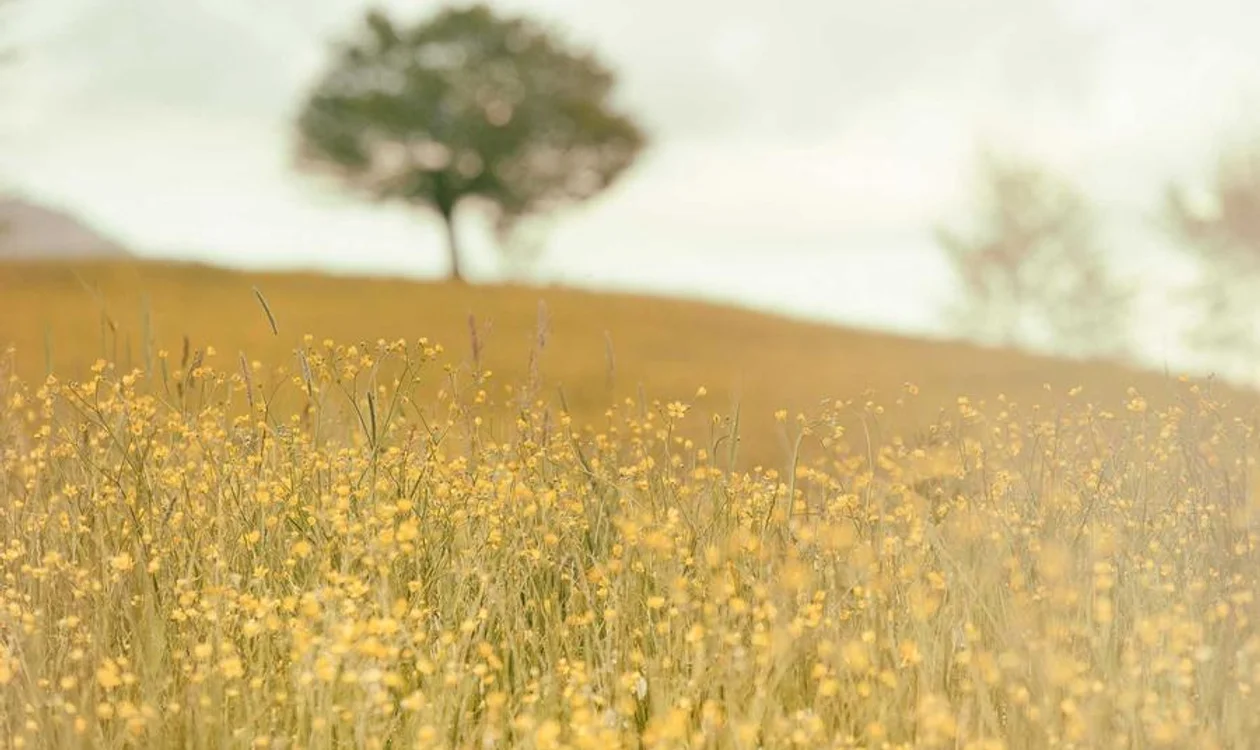
The novel's power comes from its accumulation of small scenes: Henry and Clare in the Michigan meadow across 20 years of his future and her childhood, the texture of their apartment on Balmoral Avenue, the specific grief of Henry's relationship with his opera-singer mother who dies when he is a child. The film loses most of this. The meadow sequences are reduced to a handful of meetings that can't accumulate the way the novel's 50-page meadow section does. Henry's mother disappears almost entirely. The subplot involving Gomez (Clare's friend who loves her) is minimised. What's left is the romantic core — which works — but without the novel's weight of time and loss behind it.
Reading the changes as an adaptation problem
Turning a long, structurally complicated novel into a feature film forces choices, and the interesting question is what those choices reveal. A book can spread time-jumping across hundreds of pages, moving between ages and timelines while the reader assembles the pattern. A film has less room and tends to simplify the structure into a clearer romance. That makes it more accessible, but it also removes some of the ambiguity and slow accumulation that give the story its emotional weight. Casting and performance carry a lot of the load, and a strong lead can make up for lost detail. Pacing is another issue, because scenes that build gradually in prose can feel rushed on screen. Rather than treating differences as flaws, it helps to ask what each medium does best. The film offers immediacy and a visual sense of place, while the novel offers depth and time, and the best way to appreciate both is to keep those strengths separate.
Turning the film into a Chicago walk
Chicago is the reason many readers and viewers connect with this story, and it works well as a compact city itinerary. Start with a museum or library visit, then head to the lakefront for a long walk that shows how the city meets the water. A park in the north side offers a quieter counterpoint to the downtown grid. An architecture boat tour on the river is one of the most rewarding ways to see the skyline, and it tells you why the city is so distinctive. Leave time for a meal in a neighbourhood away from the main tourist streets. Weather matters, since winter can be harsh and summer can be humid, so plan indoor options. Not every filming location is open to the public, so check access before you go. Approach it as a city walk inspired by a film, not a checklist, and you will get more from the day.
The 2009 vs 2022 version: which to watch first
If you've read the novel: watch the 2022 HBO series first. Steven Moffat's adaptation is more faithful to the book's darker, more complex emotional register, and Rose Leslie's Clare is rawer than McAdams's. If you haven't read the novel: the 2009 film is the more immediately accessible entry point — it moves faster, the romance is cleaner, and Eric Bana's Henry is a more sympathetic figure than Theo James's version (which plays Henry's self-destructive side harder). The honest recommendation: watch the 2009 film, then read the novel, then watch the 2022 series. The reverse order makes the film feel like a reduction rather than a different lens.
Visiting the Chicago locations
The Newberry Library (60 W Walton St, Chicago's Gold Coast) is open to visitors Monday–Saturday; the ground floor exhibition gallery is free. Lincoln Park is a free public space — the park paths and lagoon used in the film run along the lakefront north of Oak Street Beach. The Gold Coast neighbourhood (east of Rush Street, north of the Magnificent Mile) is the residential world the film uses for Clare's apartment sequences — the tree-lined streets between Dearborn and Lake Shore Drive have the specific architecture and light the film captures. For a half-day Chicago itinerary based on the film: Newberry Library in the morning, Lincoln Park in the afternoon, dinner at a Gold Coast restaurant (Maple and Ash or Gibsons are the area's reliable addresses).
Editor's tips
- The Newberry Library is an independent humanities research library — it has a small café and rotating exhibitions accessible without a library card
- Lincoln Park's South Pond (near Diversey) is the most atmospheric section of the park and less crowded than the main beach corridor
- Millennium Park (4 miles south of the Gold Coast) appears in the 2022 HBO series but not the 2009 film — add it if combining both productions' Chicago geographies
Getting There: Flight Options
Compare live prices across 500+ airlines and booking platforms. Flexible date search lets you find the cheapest nearby dates.
Activities & Local Experiences
Join small-group tours led by local experts — temple visits, cooking classes, trekking, and more. Instant confirmation, free cancellation on most.
Frequently asked questions
The 2009 film stars Eric Bana as Henry DeTamble (the time-travelling librarian) and Rachel McAdams as Clare Abshire (his wife). Ron Livingston plays Gomez. Arliss Howard plays Richard DeTamble. The film was directed by Robert Schwentke and produced by New Line Cinema.
The 2009 Time Traveler's Wife film works as a romantic drama and fails as a complete adaptation. Those are not contradictory assessments — most good novels produce films that are best understood as interpretations rather than reproductions. The Chicago visual language and McAdams's performance are the film's permanent contributions. The 2022 series provides the emotional complexity the novel's admirers missed. Both are worth seeing. Neither replaces reading the book.
Get there
Flights
One search across 700+ airlines — find the real lowest fare for your dates.
Search flightsWhere to stay
Hotels
Browse verified hotels and stays — instant confirmation, secure booking.
Book on KKdayThings to do
Activities
Tours, attractions, and day trips — free cancellation on most experiences.
Book on KlookTours & Experiences
Book the experiences, not just the trip
Skip-the-line tickets, guided tours, and day trips — free cancellation on most, confirmed instantly.
About the author
Camille Laurent
Senior Travel Editor · Based in Lisbon · Bali
Camille has spent the last 9 years living in or reporting from over 60 countries. Former contributor to Condé Nast Traveler and Monocle, she focuses on Southeast Asia, Mediterranean Europe, and the Middle East. Currently based between Lisbon and Bali.
Read next — destinations
More from The Edit
Travel Guides
The Time Traveler's Wife — Real Filming Locations for the Movie and the 2022 TV Series
The 2009 film and 2022 HBO series both used a mix of Chicago landmarks, Ontario countryside, and Scotland for the landscapes that anchor Henry and Clare's impossible love story. Here's what was shot where — and what it looks like today.
9 min read
Travel Guides
Sisterhood of the Traveling Pants 2 Filming Locations — Where the Movie Was Actually Shot
The summer that sent Lena to Greece, Tibby to New York, Carmen to Vermont, and Bridget to Turkey was filmed in places you can visit. Here's exactly where, and what each location looks like today.
9 min read