
Route 66 in 2026: The Definitive Road Trip Before the Centennial Crowds Hit
Route 66 turns 100 on November 11, 2026. The anniversary events are selling out, motel prices are climbing, and the window for driving the Mother Road without a crowd is closing fast.
I've driven Route 66 twice — once in 2019 when it was niche nostalgia, and again in spring 2026 when centennial buzz had tripled social mentions and inflated motel prices. Large sections have been replaced by I-40. Some towns are genuinely abandoned. Your GPS will fight you. And it remains the single best American road trip. We've also covered Best Places to Travel in the US in 2026 and Best Places for Solo Female Travel in US in more depth, if either is relevant to you.
Planning this trip?
Find flights now
Compare prices across 700+ airlines and OTAs in one search — find the real lowest fare without the inflated middleman markup.
Search flightsNeed a place to stay?
Search hotels
The budget reality: $3,000–5,000 for two weeks
Car rental Chicago one-way to LA: $1,200–1,800. Gas: $400–550 for 2,600 miles. Accommodation: $800–1,400 (budget motels $65–95, classic Route 66 motels $110–160). Food: $40–60/day. Attractions: $150–300.
Editor's tips
- Book one-way rental 6+ weeks ahead
- Fill up at Costco in Chicago, St. Louis, OKC, Albuquerque
Illinois and Missouri: Chicago to Gateway Arch (300 miles, days 1–2)
Start at the Begin sign on East Adams Street. Deep-dish at Lou Malnati's ($18–24). Springfield: Lincoln's home (free), Cozy Dog Drive In ($4–7). St. Louis: Gateway Arch tram $16, 30-mile view. Drive: 5–6 hours with stops.
Editor's tips
- Begin sign is on Adams between Michigan and Wabash
- Cross Chain of Rocks Bridge on foot (free, pedestrian-only) — original Route 66 Mississippi crossing
Oklahoma: the state that kept Route 66 alive (400 miles, days 3–4)
More drivable original alignment than any other state. Tulsa: Philbrook Museum ($12), Blue Dome District. Pops: 700 soda varieties and a 66-foot bottle. Clinton: Route 66 Museum ($7) — the best on the entire route. Western Oklahoma: desolation starts, gas thins out.
Editor's tips
- Route 66 Museum in Clinton closes at 5pm — arrive by 3:30
- Tulsa's Mother Road Market: 15+ vendors, $8–15/meal
Texas Panhandle: Cadillac Ranch and the Big Texan (150 miles, days 4–5)
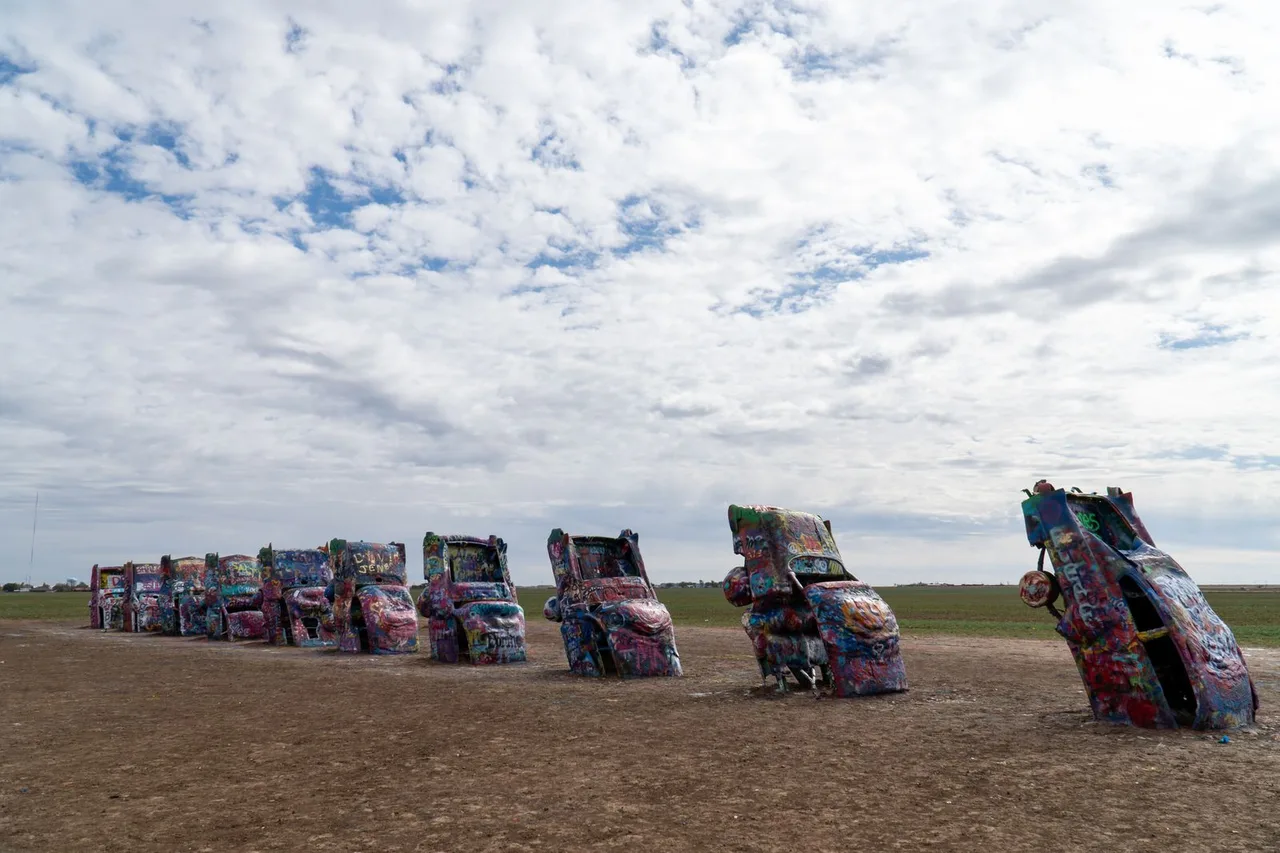
Cadillac Ranch: ten Cadillacs buried nose-first, free, bring spray paint ($4–6 at Walmart). Big Texan: free 72-oz steak if eaten in one hour, or $72 if you fail. Reasonable $28–45 dinner menu. Amarillo motels $70–100/night.
Editor's tips
- Cadillac Ranch at sunset for best light
- MidPoint Cafe in Adrian has excellent pie — Route 66's geographic midpoint
New Mexico: where the road gets beautiful (500 miles, days 5–7)
Blue Swallow Motel in Tucumcari ($110–140). Blue Hole: 80-foot crystal-clear spring. Albuquerque Old Town. Detour 60 miles to Santa Fe: Canyon Road galleries, Meow Wolf ($45), The Shed ($18–30). West of Albuquerque: the most beautiful 200-mile stretch — red mesas, Pueblo communities.
Editor's tips
- Santa Fe is a 60-mile detour but the cultural highlight of the trip — don't skip it
- Albuquerque's Central Avenue neon motel signs — drive after dark
Arizona: Petrified Forest, Meteor Crater, Grand Canyon (400 miles, days 7–9)
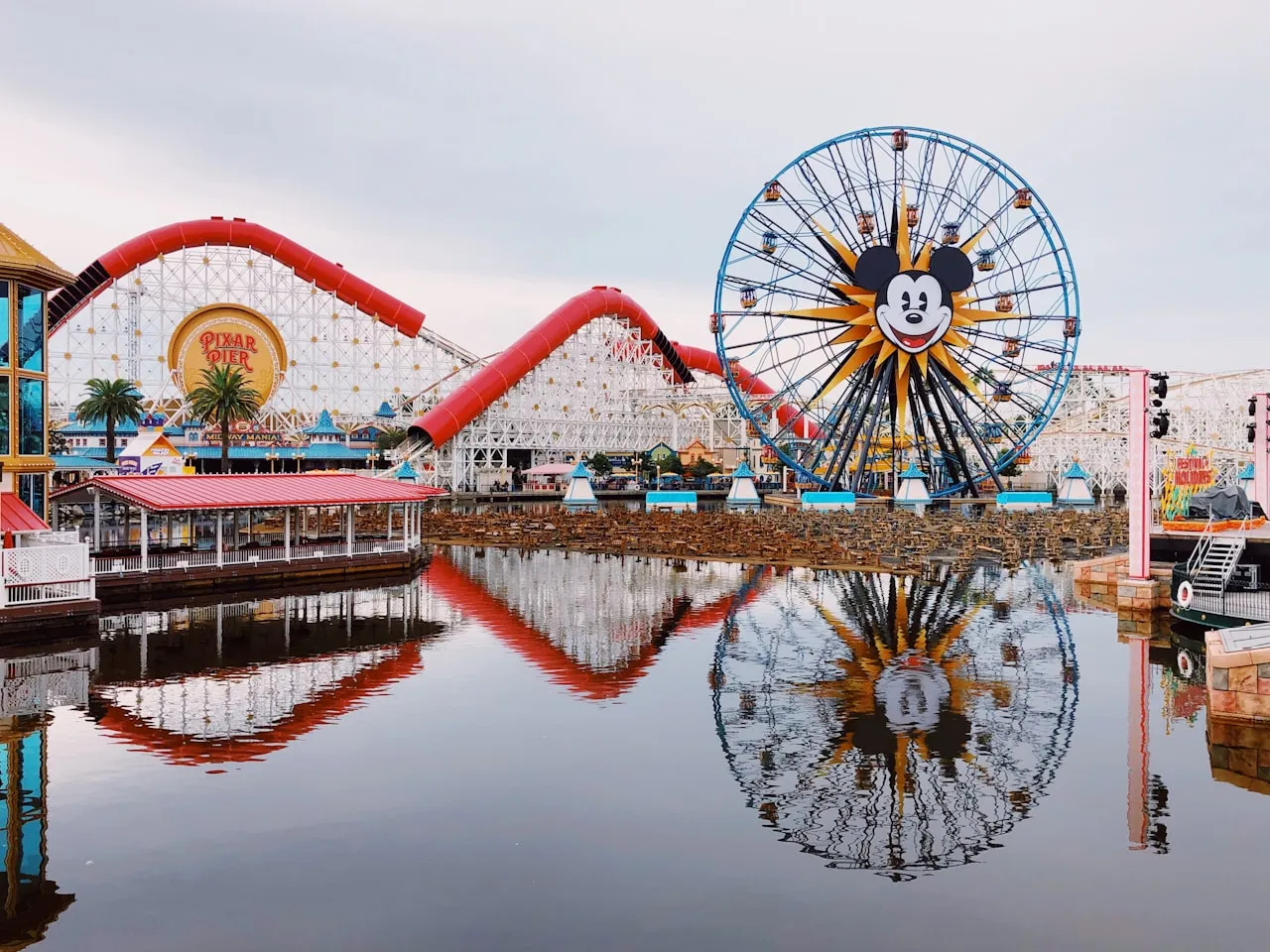
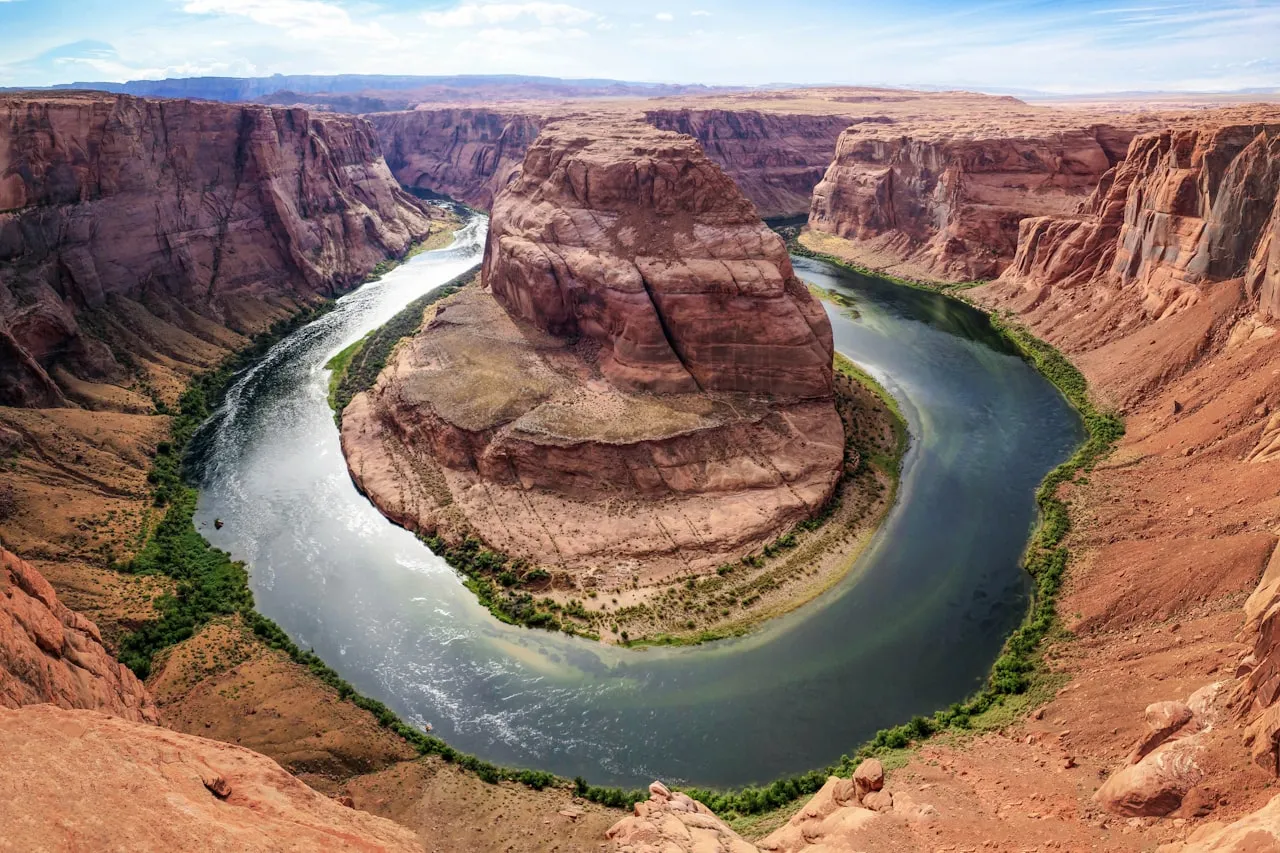
Petrified Forest ($25/vehicle). Meteor Crater ($25/person) — much larger than photos suggest. Grand Canyon 60-mile detour from Williams ($35/vehicle). Seligman inspired Pixar's Cars. Oatman: wild burros on main street, former gold mining town, Oatman Hotel $75/night. Sitgreaves Pass: no guardrails, steep switchbacks, remarkable.
Editor's tips
- Grand Canyon: budget a full half-day minimum
- Oatman's burros will eat anything — keep car windows closed
California: Mojave and Santa Monica finish (300 miles, days 9–11)
Needles: 115°F in summer. Roy's Motel sign in Amboy. Barstow: Mother Road Museum (free). Last 60 miles into Santa Monica: urban freeway, LA traffic can add 90 minutes. End of the Trail sign at Santa Monica Pier. Park at pier lot ($3/hour weekdays).
Editor's tips
- Drive the Mojave before 10am in summer
- Carry 2 gallons of water per person through the Mojave
The honest warning: what centennial hype won't tell you
Decommissioned in 1985. GPS doesn't know the historic route — Google Maps routes you onto I-40. Buy the EZ66 Guide ($20). Some towns are abandoned. The romantic vision of neon-lit diners is true for 30% of the drive. The other 70% is interstate and desert. Go with accurate expectations.
Editor's tips
- The EZ66 Guide is the difference between the real route and 1,500 miles of I-40
- Join the Route 66 Association for discount cards
Planning the driving days realistically
The classic mistake on Route 66 is planning by total mileage instead of by pace. The historic alignment is slower than the interstate that replaced it, with frequent stops, sections that require detours onto frontage roads, and attractions that reward lingering. A comfortable target is somewhere around 250 to 300 miles a day, which leaves time for photographs, diners and the occasional wrong turn. Direction matters less than people think, but heading west lets you finish on the Pacific, which many travellers find satisfying. Build slack into the schedule for the desert stretches, where summer heat can cut daylight activity sharply and where fuel and services are sparse. Confirm each night's lodging in advance during peak months, since classic motels are small and sell out. Treat any published itinerary, including this one, as a spine rather than a script, and you will enjoy the route far more than if you chase a fixed daily quota.
What to skip if time is short
Not every stretch of the road repays the same attention. The most continuous and best-preserved driving tends to be in the middle states, where long segments of the original alignment remain intact and towns still trade on the road's identity. Some flatter stretches, particularly where the historic road runs beside or beneath a modern highway, are less rewarding, and it is reasonable to use the interstate to make up time there. The trick is to keep a few chosen highlights per state rather than trying to see everything. If you only have a week, consider driving a single connected section thoroughly instead of rushing the whole distance. Certain sections are better suited to a slower, more sustained pace, and stitching them together with fast interstate legs gives a fair sample of the road without turning the trip into an endurance test.
Vehicle and safety basics
A road trip of this length depends on the car as much as the itinerary. Have the vehicle serviced before departure and check tyres, brakes and fluids. Carry more water than you think you need, especially in desert stretches where services are far apart and phone coverage can vanish. Keep the fuel tank above a quarter full, and top up whenever you pass a reliable station. Download offline maps and keep a paper atlas as backup. Pack a basic emergency kit with a torch, first-aid supplies and a phone charger. In summer, avoid the hottest hours for long drives when possible. Small preparations rarely feel important until the day they matter, and then they make the difference between an anecdote and an emergency.
Food, motels and the small stops that make the trip
Much of Route 66's appeal lies in the small, independent stops, not in famous attractions. Plan meals around local diners and cafes when you can, and be ready for small-town opening hours that differ from city norms, with some places closing early or on certain days. Historic motels are a highlight but limited in number, so book them ahead in busy months, and read recent reviews for cleanliness and air conditioning. Carry cash for very small businesses, though many now take cards. Talk to owners and staff, who often know the best local detours and the current state of a road. Keep your schedule flexible enough to stop when something catches your eye, whether a mural, a roadside museum or a viewpoint. Take your time on the older alignments, which can be narrower and slower than modern highways. The route is most rewarding when you treat the stops as the destination and the driving as the link.
Compare Flights
One-way flights Chicago–LA average $120–180 booked 6+ weeks ahead.
Hotels & Motels
From historic motor lodges to reliable chains near the interstate.
Tours & Experiences
Grand Canyon tours, Meow Wolf tickets, Painted Desert excursions — book ahead for centennial summer.
Frequently asked questions
12–14 days at comfortable pace. Minimum 7 days but you'll skip most attractions. Budget $3,000–5,000 per person for two weeks.
Route 66 is not the prettiest American road trip — the Pacific Coast Highway wins that. It's not the most dramatic — Going-to-the-Sun Road takes that. What it is, uniquely, is a cross-section. You start in a a city that delivers, drive through the heartland, cross the Great Plains, climb through high desert, and arrive at the Pacific. Buy the atlas, fill the tank, carry water, give it two weeks.
Get there
Flights
One search across 700+ airlines — find the real lowest fare for your dates.
Search flightsWhere to stay
Hotels
Browse verified hotels and stays — instant confirmation, secure booking.
Book on KKdayThings to do
Activities
Tours, attractions, and day trips — free cancellation on most experiences.
Book on KlookTours & Experiences
Book the experiences, not just the trip
Skip-the-line tickets, guided tours, and day trips — free cancellation on most, confirmed instantly.
About the author
Marcus Chen
Hotels & Deals Editor · Based in New York City
Marcus reviews hotels for a living — and has slept in over 400 of them. Before TravelBuzzy, he ran the hotel desk at a major loyalty publication and consulted for two boutique hotel groups. He covers the Americas, Japan, and luxury travel.
Read next — destinations
More from The Edit

Travel Guides
Best Places to Travel in the US in 2026 — A Region-by-Region Honest Guide
48 states. Six years. One observation: the travellers with the best US trips are the ones who pick a region, not a landmark — and go deep instead of wide.
13 min read
Travel Guides
Best Places for Solo Female Travel in the US — 10 Cities That Actually Deliver
Solo female travel in the US works best in cities with strong walkable cores, reliable public transport, and a café culture that doesn't require a companion to justify occupying a table for two hours. Here are 10 picks that consistently deliver.
10 min read