
Iceland Northern Lights: When and Where to See Them (Realistically)
September through March is the technical window. Three things matter more than the dates: the cloud forecast, the kp index, and how far you're willing to drive at 11pm.
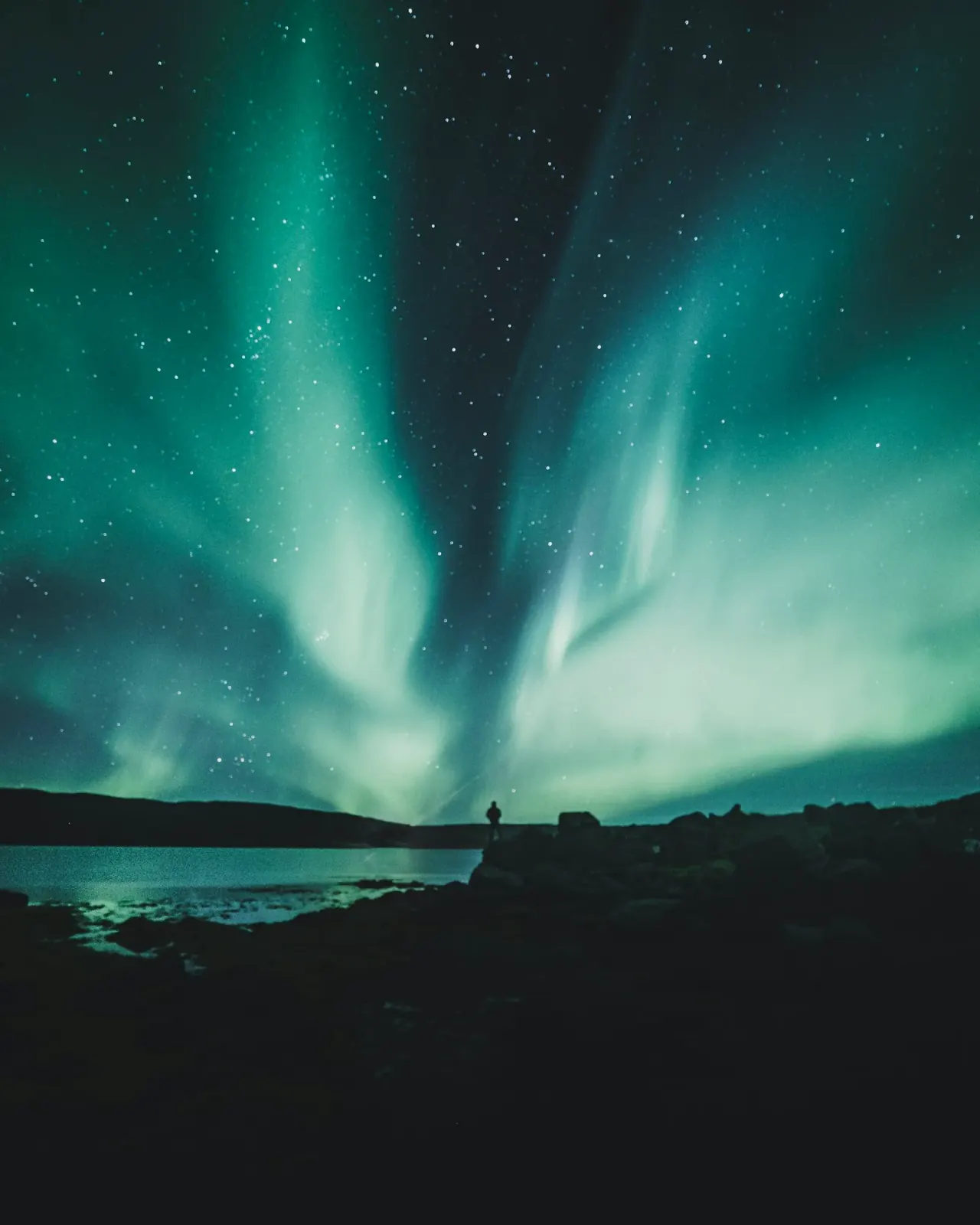
The Northern Lights appear on most nights of Iceland's winter season. That single fact is the one most travel guides fail to communicate clearly — because the next sentence, the one that changes everything, is: they appear when cloud cover is absent, when solar activity is sufficient, and when you are far enough from city lights to see them. All three conditions must align simultaneously. Three winter trips and twelve nights of aurora chasing later, here is how to stack the odds in your favour.
Planning this trip?
Find flights now
Compare prices across 700+ airlines and OTAs in one search — find the real lowest fare without the inflated middleman markup.
Search flightsNeed a place to stay?
Search hotels
When (the calendar)
The technical window is September 21 to March 21 — when nights are long and dark enough at Iceland's latitude (64°N) for aurora to be visible. October and February are the statistical sweet spots: nights are dark enough but the weather is less brutal than December–January, and the equinox months tend to have higher solar activity. December has the longest darkness (4 hours of weak daylight, 20 hours of darkness) but cloudiest skies. March is unjustly skipped — it has good darkness, often clearer skies than December, and the surrounding landscape is at its photogenic best.
When (the time of night)
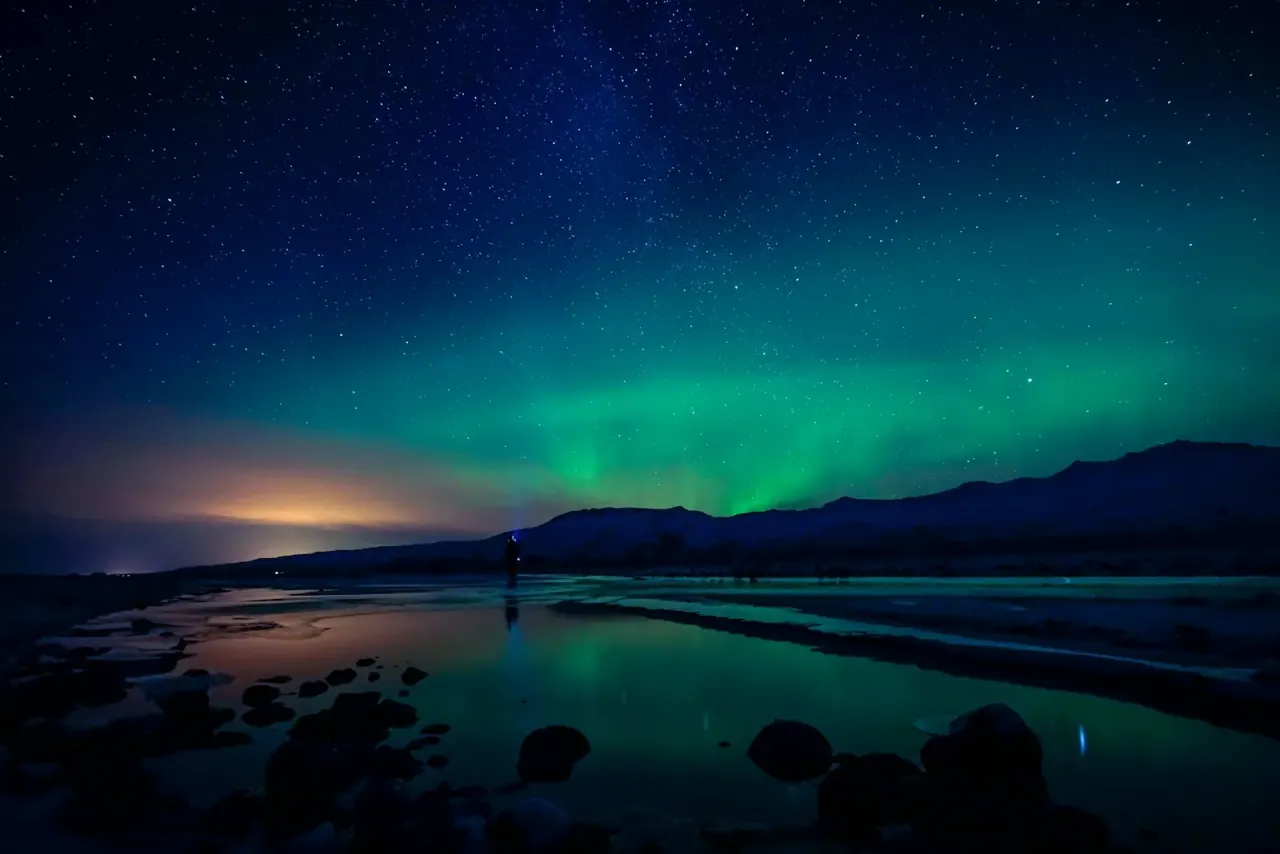
Aurora is most active between 10pm and 2am, with peak around 11pm–midnight. You can occasionally see aurora as early as 8:30pm in deep December, but the strongest displays cluster around solar midnight (which in Iceland is roughly 12:30am). Plan to be in your viewing position by 10pm, with food, hot drinks, and the willingness to wait 90 minutes. Aurora often takes 30–60 minutes to develop from a faint green smudge to the dancing-curtain version photographs show.
Where (location matters more than gear)
Reykjavik is light-polluted enough that you'll see aurora only on the strongest nights, and the photographs will be poor. To see real aurora, drive 20–60 minutes away from the city. Three best locations near Reykjavik. Þingvellir National Park (45 min north-east) — large, dark, easy access; the most popular spot. Grótta lighthouse (15 min west, technically still in Reykjavik but with low horizon and minimal lights) — convenient but small. Snæfellsnes peninsula (2 hours north) — dramatic foreground (mountains, glaciers, ocean) for photographs but a long drive. For the most reliable viewing, base in a hotel outside Reykjavik for 1–2 nights of your trip — Hotel Búðir on Snæfellsnes, or Ranga Hotel near Hella in the south — which have aurora-wakeup services and are positioned in dark-sky areas.
How (kp index, cloud cover, and the forecast)
Three pieces of data tell you whether tonight is worth driving for. First: cloud cover. Iceland gets cloudy fast and the aurora is invisible through any meaningful cloud layer. Use vedur.is (the official Icelandic Meteorological Office) — their cloud-cover map shows which parts of the country are clear. The trick is that Iceland is small enough that you can drive 90 minutes to clearer skies on the same night. Second: aurora activity, measured as the kp index (0–9 scale). For Iceland's latitude, kp 2 is enough to see something; kp 4 means the aurora will be obvious; kp 6+ is a major display. Aurora-service.eu and the Iceland-specific en.vedur.is/weather/forecasts/aurora both forecast this 30 minutes ahead. Third: moon phase. A full moon washes out faint auroras. New-moon weeks are statistically better — easy to plan for if you have flexibility.
Editor's tips
- Vedur.is cloud-cover forecast is the most accurate single resource — beats paid tour operators
- If your cloud forecast is bad, drive — Iceland's weather is patchy and changes within an hour
- Aurora-service.eu has a free email alert for kp ≥ 4 nights
Should you book a Northern Lights tour?
Tours have one genuine advantage: they have a driver who knows the local roads, and they'll commit to a specific viewing area based on tonight's forecast. They have two disadvantages: they cost $80–150 per person and they put 30–50 strangers around you in the dark with their phone flashlights on. Our recommendation: rent a car for at least 3 of your trip days, and use the free forecasts to chase aurora yourself. If you don't want to drive at night in Iceland (a fair preference — the roads are dark, sometimes icy), the small-group tours (8–12 people) from Reykjavik Excursions or Bus Travel Iceland are the better tour option. Avoid the 50-person bus tours.
Photographing aurora (the practical version)
Three things to know if photographs are part of your goal. First: most modern smartphones (iPhone 14+, Pixel 7+, Samsung S22+) have night modes that capture aurora well — better than entry-level DSLRs. Use the night mode, set exposure 3–10 seconds, brace the phone on a rock or tripod. Second: a small travel tripod ($30–60) changes any camera into an aurora camera. Third: composition matters more than camera. The best aurora photographs include foreground — a glacier, a church, a person silhouette — that gives the sky a sense of scale.
Realistic expectations
Two things planning guides routinely fail to say. First: most aurora displays are subtle. The 'dancing green curtain' photographs you see online are real but represent maybe one in three sightings — and even then the human eye sees less colour and movement than long-exposure photographs capture. The aurora is genuinely beautiful in a quieter form than the marketing suggests. Second: the chance of seeing aurora on any single Iceland winter night is roughly 50%, factoring all conditions. Plan a 6+ night trip and your chance of at least one good display rises above 95%. Plan 3 nights and you're at coin-flip territory; budget that 'no aurora' trips happen.
Getting There: Flight Options
Compare live prices across 500+ airlines and booking platforms. Flexible date search lets you find the cheapest nearby dates.
Activities & Local Experiences
Join small-group tours led by local experts — temple visits, cooking classes, trekking, and more. Instant confirmation, free cancellation on most.
Hotels & Accommodation
Filter by price, rating, location, and amenities. Read verified guest reviews and compare rates across all major booking platforms.
Frequently asked questions
October and February have the best statistical combination of darkness and clearer skies. December has the longest dark hours but cloudier weather. March is underrated — good darkness and often clearer than mid-winter.
Plan 6+ nights in October, February, or March. Rent a car. Use vedur.is, not a tour. Drive away from Reykjavik whenever the forecast clears. Bring layers, hot drinks, patience. The Northern Lights are not the dramatic apparition the marketing implies — they're a slow, subtle, occasionally explosive natural phenomenon that rewards travellers who treat them as one of several reasons to visit Iceland rather than the only one. Pair them with day trips to Vatnajökull glacier, the Golden Circle, or the south-coast black-sand beaches and the trip works whether the aurora cooperates or not.
Get there
Flights
One search across 700+ airlines — find the real lowest fare for your dates.
Search flightsWhere to stay
Hotels
Browse verified hotels and stays — instant confirmation, secure booking.
Book on KKdayThings to do
Activities
Tours, attractions, and day trips — free cancellation on most experiences.
Book on KlookTours & Experiences
Book the experiences, not just the trip
Skip-the-line tickets, guided tours, and day trips — free cancellation on most, confirmed instantly.
About the author
Camille Laurent
Senior Travel Editor · Based in Lisbon · Bali
Camille has spent the last 9 years living in or reporting from over 60 countries. Former contributor to Condé Nast Traveler and Monocle, she focuses on Southeast Asia, Mediterranean Europe, and the Middle East. Currently based between Lisbon and Bali.
Read next — destinations
More from The Edit
Honest Take
Why We Stopped Recommending the Blue Lagoon (And What To Visit Instead)
It is among the photographed spots on earth, and it shows up on every Iceland 'top 10' list ever published. We took it off ours in 2024. Here's what we'd send you to instead.
9 min read

When to Go
Best Time to Travel to Iceland — A Season-by-Season Honest Guide
Puffins, aurora, midnight sun, and the Laugavegur trek don't share a season. Iceland in summer and Iceland in winter are two different countries — here's which one you're actually booking.
11 min read
Money & Deals
Iceland Travel Packages: All-Inclusive vs DIY, What's Actually Worth It
Iceland's package market runs from exceptional to actively counterproductive — and the price gap between them can be €2,000. Here's how to tell the difference before you book.
10 min read