
Mongolia: The Last Great Empty — A First-Timer's Guide
A country three times the size of France with fewer paved roads than Luxembourg. Mongolia doesn't ease you in — it drops you on a treeless horizon and dares you to fall in love.
I landed in Ulaanbaatar at 2 a.m. on a Tuesday in July, walked out of the new airport into air that smelled like cold grass and diesel, and spent my first twenty minutes trying to explain to a taxi driver that my hotel was not the Chinggis Khaan Hotel. Mongolia does this from minute one: nothing works the way you planned, everything takes longer than it should, and by the third day, you stop minding.
Planning this trip?
Find flights now
Compare prices across 700+ airlines and OTAs in one search — find the real lowest fare without the inflated middleman markup.
Search flightsNeed a place to stay?
Search hotels
Why Mongolia, why now
The Chinggis Khaan International Airport opened in 2021, MIAT flies to Seoul, Tokyo, Istanbul, and Frankfurt. Visitor numbers crossed 700,000 in 2024. The country is so vast that crowding is physically impossible outside UB and Naadam.
Editor's tips
- Book MIAT flights early — prices triple within 60 days of departure
- The airport bus runs to central UB for $1.50 until 10pm
Ulaanbaatar: love it or endure it
Not a beautiful city. Traffic makes Bangkok look orderly. But the restaurant scene has exploded: Modern Nomads serves elevated Mongolian cuisine ($12 a plate). The State Department Store cashmere floor saves 60–70% over Western retail. Gandan Monastery survived Soviet destruction. One full day is enough before heading to the countryside.
Editor's tips
- Stay near Sükhbaatar Square — Blue Sky Hotel ($90–130/night) is reliable
- Change money at Khan Bank ATMs (3,450 tögrög to $1)
The steppe and ger camps: what to actually expect
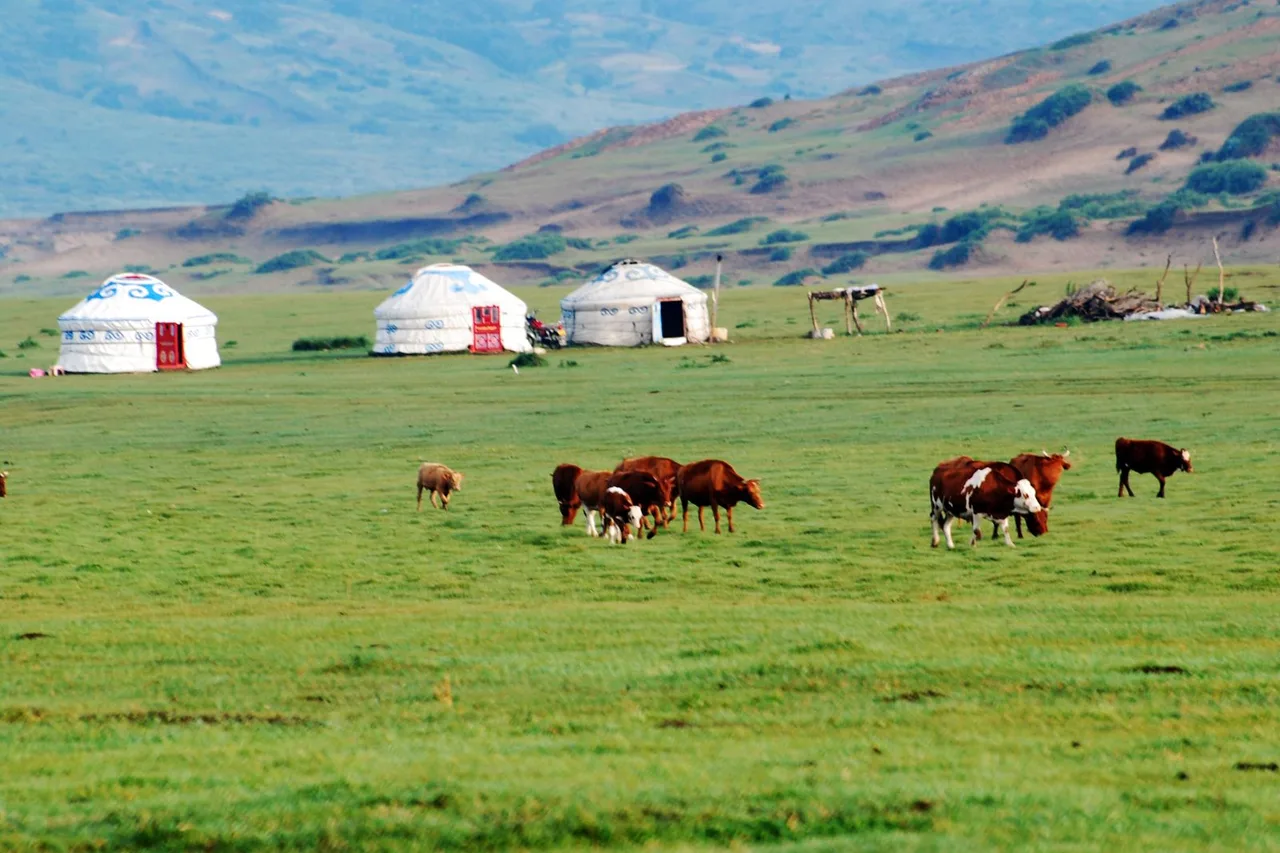
The road disintegrates into gravel after an hour, then into tyre tracks through grass. Ger camps near Terelj run $40–80/night with meals. Food is mutton in various forms, rice, milk tea. Pack hot sauce and dried fruit. Don't romanticise the toilets. But the steppe at night — the Milky Way casts shadows — is the only place that made me feel genuinely small.
Editor's tips
- Bring a headlamp, sleeping bag liner, and wet wipes
- Book through local operators like Nomadic Journeys — 20–30% cheaper than international platforms
The Gobi Desert: dunes, dinosaurs, and distances
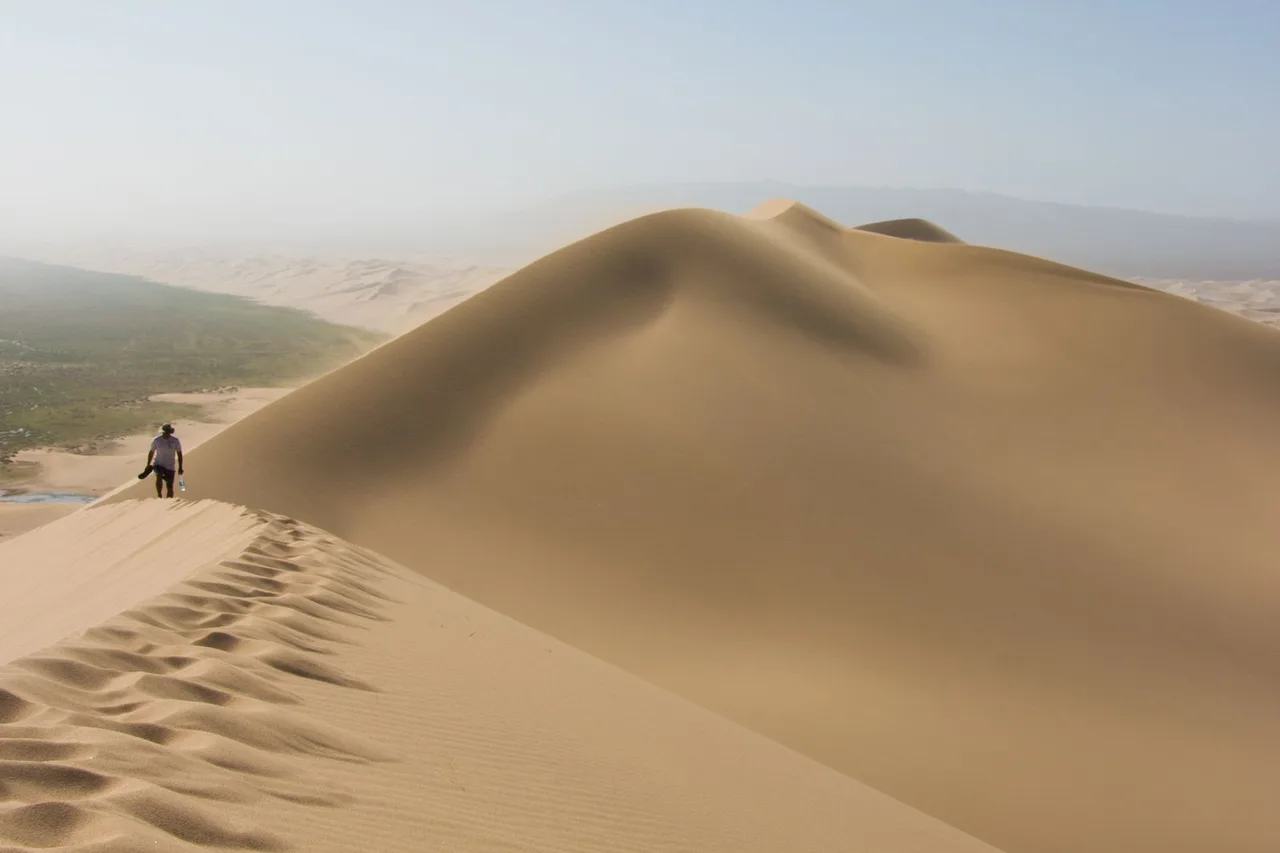
Not endless sand — a vast rocky basin. Khongoriin Els dunes rise 300 metres. Flaming Cliffs where the first dinosaur eggs were found. Yolyn Am gorge holds ice into July. A 4–5 day Gobi loop from UB runs $350–500 with driver, fuel, camps, meals. The roads are punishing — 5–8 hours/day on corrugated gravel.
Editor's tips
- Hire a driver-guide, not just a driver — $80–120/day for Land Cruiser with fuel
- Pack motion-sickness tablets — the off-road driving is relentless
Eagle hunters of western Mongolia
The Kazakh berkutchi tradition in Bayan-Ölgii — not a performance. About 250 active hunters. Golden Eagle Festival in Ölgii (first weekend of October) draws 60–70 hunters and ~1,000 visitors. Festival tours run $1,200–2,000 for 5–7 days. Day visits to hunter families cost $40–60. Getting there requires a 3.5-hour domestic flight ($150–250 return). Fly.
Editor's tips
- Book festival tours by July — best operators sell out months ahead
- Bring a 200mm+ telephoto lens — phone cameras won't cut it
Practical logistics: visas, transport, food, budget
Most Western passports get 30 days visa-free. Private Land Cruiser with driver: $100–150/day. Buuz dumplings cost $2–4. Mid-range trip: $60–120/day. Travel insurance with helicopter evacuation is non-negotiable.
Editor's tips
- Download Maps.me offline — Google Maps has poor coverage outside UB
- Carry US dollars as backup — ATMs outside UB are rare
Best time to visit Mongolia
Mid-June to early July is the landscape sweet spot. Naadam July 11–13 is the cultural peak. August is warmest. September is underrated — autumn colours, thinner crowds. Winter drops to –30°C.
Editor's tips
- Regional Naadams throughout July–August are smaller, cheaper, more intimate than UB
- September: pack for four seasons in one day
Find the Best Flight Deals
International flights route through Seoul, Tokyo, Beijing, Moscow, Istanbul, Frankfurt. Return fares: $800–1,400 from US, $600–1,000 from Europe.
Where to Stay
UB: Blue Sky Hotel $90–130, Shangri-La $180–280. Countryside: ger camps $40–100/night with meals. High-end: Three Camel Lodge $300–400/night.
Tours & Activities
Mongolia is not a DIY destination. Recommended operators: Nomadic Journeys (premium), Sunpath Mongolia (mid-range), Gertoger (community-based).
What nobody tells you before your first Mongolia trip
Mongolia breaks most travellers' expectations in two specific ways — and knowing about them in advance saves genuine frustration. The first is scale. Mongolia is the 18th largest country in the world and has fewer than 3.4 million people. Most visitors from Europe or North America have no frame of reference for that kind of emptiness. A drive between two points on the map that looks like two hours takes six — because there is no road, only a track through grass, dried riverbeds, and the occasional ovoo (stone cairn marking a sacred site). You are not going somewhere slowly. You are passing through one of the last genuinely wild landscapes on the planet. The second is ger camp quality variation. Not all ger camps are equal, and the price range is enormous — from $25 per night at a basic camp where you share a long-drop with twelve other travellers, to $250+ at luxury operations with hot showers, western-style beds inside the ger, and English-speaking guides who studied at the National University of Ulaanbaatar. The midrange ($60–120 per night) is where most independent travellers land, and the quality in that range is genuinely good: clean, warm, hearty food (mutton stew, tsuivan noodles, airag if you want it), and hosts who understand what foreigners find interesting. A third thing, less often mentioned: nomadic families move. If you are visiting a specific family a guide recommended three months ago, they may have relocated their ger forty kilometres east for the summer grazing. This is not a failure of planning — it is nomadism working as intended. The best guides maintain relationships and phone contact with several families and adjust routes accordingly. Ask your operator how recently they verified the location of any families you will visit. One practical tip that matters more than most guides acknowledge: bring dollar bills in small denominations. While Mongolian tögrög is the currency and works fine in Ulaanbaatar, once you are in the steppe, a $5 or $10 bill given to a family as a gesture of thanks for a meal or a horse ride is widely appreciated and universally understood. It is not expected. It is welcomed.
Mongolia on a budget vs Mongolia done properly
There is no cheap version of Mongolia that is also a good version of Mongolia. This needs to be said plainly, because the country attracts budget travellers who read about the low local cost of living and assume everything will be inexpensive. Transport is the real cost. Mongolia has almost no public transport outside Ulaanbaatar. Getting to the Gobi Desert from the capital — roughly 570 kilometres as the crow flies — requires either an internal flight (~$120–180 one-way, weather-dependent, often delayed), a shared 4WD hired through an agency (~$50–70 per day per vehicle), or a bone-shaking overnight train that gets you to Sainshand but not to the actual dunes or saxaul forest you came to see. Most travellers hire a 4WD and driver for their entire trip. A standard 10-day route covering Ulaanbaatar, Khustai National Park (wild Przewalski horses), Khövsgöl Lake, the Orkhon Valley, and back to UB costs around $700–900 per vehicle — divided between however many travellers share it. Four people sharing equals $175–225 each, not including accommodation or food. That is the realistic floor for a meaningful Mongolia trip. The ceiling is much higher. Ger camp luxury lodges targeting the upmarket traveller charge $250–400 per person per night all-inclusive, often with expert naturalist guides, private vehicles, and the kind of designed experience that genuinely delivers what the brochure promises. For travellers who can afford it, this is a remarkably good use of money — Mongolia rewards knowledge, and the best guides make the difference between a beautiful landscape and a landscape you actually understand. Budget travel is possible in Ulaanbaatar itself — hostels from $12, meals from $3, the excellent National Museum of Mongolia for $5. But once you leave the capital, budget travel mostly means compromise: less reliable vehicles, less experienced drivers, and occasionally the experience of being stranded on a steppe track while your guide negotiates with a passing nomad for a tow. Some travellers find this memorable. Others find it not.
Frequently asked questions
Most Western passports (US, EU, UK, Canada, Australia) get 30 days visa-free. Passport needs 6 months validity.
Mongolia is not convenient, not comfortable, and not for everyone. The roads will shake your fillings loose. But there is nowhere else where you can ride a horse across an unfenced horizon, sleep in a ger heated by a dung-burning stove, and wake to a silence so total it rings in your ears. Go while Mongolia is still Mongolia. ⚠️ Information last verified August 2026. Safety conditions, visa requirements, and health advisories change frequently — always confirm with the U.S. State Department and CDC Travel before booking.
Get there
Flights
One search across 700+ airlines — find the real lowest fare for your dates.
Search flightsWhere to stay
Hotels
Browse verified hotels and stays — instant confirmation, secure booking.
Book on KKdayThings to do
Activities
Tours, attractions, and day trips — free cancellation on most experiences.
Book on KlookTours & Experiences
Book the experiences, not just the trip
Skip-the-line tickets, guided tours, and day trips — free cancellation on most, confirmed instantly.
About the author
Marcus Chen
Hotels & Deals Editor · Based in New York City
Marcus reviews hotels for a living — and has slept in over 400 of them. Before TravelBuzzy, he ran the hotel desk at a major loyalty publication and consulted for two boutique hotel groups. He covers the Americas, Japan, and luxury travel.
More from The Edit
Travel Guides
Solo Travel Tips: The Complete Beginner's Guide
Everything you actually need to know before you go alone — from a traveller who's done it wrong first.
10 min read
Travel Guides
A Christmas Less Traveled — The Cast, the Story, and the Unconventional Christmas Trips It Inspires
The film's premise — Christmas less visited, somewhere unexpected, with the usual traditions traded for something more interesting — is a better travel philosophy than most people give it credit for. Here are the unconventional Christmas destinations that actually deliver.
9 min read