

Blues Traveler's Run-Around: The Song That Defined an Era
A song about being strung along that somehow became among the jubilant guitar-harmonica moments of the 1990s.
Blues Traveler's Run-Around is one of those rare songs that accomplished something genuinely difficult: it took a lyric about frustration and romantic ambivalence and made it feel like a celebration. The song, released in 1994 on the album Four, reached number eight on the Billboard Hot 100, stayed on the Mainstream Rock chart for an extraordinary 49 weeks, and won the Grammy Award for Best Rock Vocal Performance in 1996. John Popper's harmonica solo — melodically rich and technically jaw-dropping — became one of the defining instrumental moments of the decade. Here's the full story of how the song came to exist and why it's still worth talking about. We've covered Travelers Netflix Show Guide in more depth elsewhere.
Planning this trip?
Find flights now
Compare prices across 700+ airlines and OTAs in one search — find the real lowest fare without the inflated middleman markup.
Search flightsNeed a place to stay?
Search hotels
The Song and What It's Actually About
Run-Around is a song about being strung along by someone who keeps you interested without committing — the romantic pattern of 'once upon a midnight dearie I woke with something free-like calling to me, couldn't find the words to say it but I think you know me well enough.' The lyrics are deliberately elliptical — Popper wrote in a style that sounds specific and personal but resists literal interpretation, which is part of why the song connects with such a wide range of listeners who map their own situations onto the words. The chorus — 'But wait, you forgot the biggest heartache you have known / Oh, and when I think of it something good's gone wrong / Run around' — captures the particular frustration of someone who can see exactly what's happening to them but can't stop being drawn back in. The brilliance of the song is that this resigned, slightly wounded sentiment is delivered over music that's joyful, bouncy, and propulsive. The gap between the emotional content of the lyrics and the exuberance of the performance creates a tension that somehow resolves into catharsis. You feel the frustration and somehow feel better about it simultaneously. That emotional complexity is rare in pop music and explains a significant part of why the song has lasted.
John Popper's Harmonica: Why It Matters
John Popper is widely considered one of the finest harmonica players in rock music — a judgment that's easy to accept on the evidence of Run-Around alone. His approach to the harmonica is distinct from the blues harmonica tradition that most listeners associate with the instrument. Where traditional blues harp is raw, bent, and emotionally direct, Popper's playing is melodically sophisticated, technically precise, and deeply rhythmic in a way that interacts with the band's groove rather than riding over it. The harmonica solo in Run-Around — which takes centre stage in the bridge section — demonstrates several things simultaneously: melodic invention (the phrases are original and memorable, not scale runs), rhythmic complexity (Popper works against and with the beat in ways that most wind instrumentalists wouldn't attempt), and emotional appropriateness (the solo amplifies the song's bittersweet energy without tipping it into either pure joy or pure sadness). Popper has spoken in interviews about practising harmonica from childhood and developing his technique through extensive touring in Blues Traveler's early years, when the band played hundreds of shows annually. That road experience is audible in his playing — the confidence of someone who has performed under every possible condition and knows exactly what the instrument can do.
The Album 'Four' and Blues Traveler's Journey
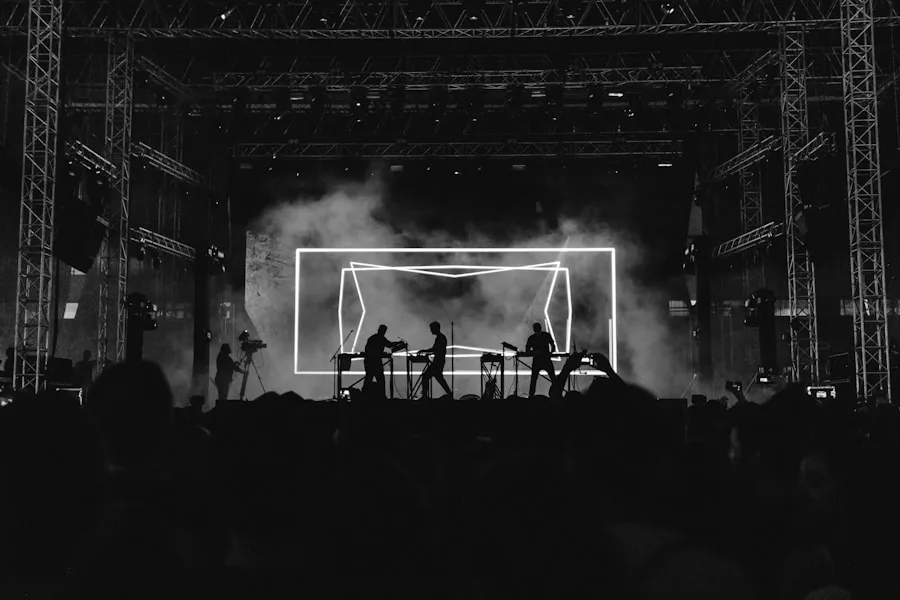
Run-Around appeared on Four, Blues Traveler's fourth studio album, released in 1994 on A&M Records. The album was a significant departure from the band's earlier, more improvisational live-recording-heavy work and represented a conscious effort to create a commercially accessible record without abandoning the band's musical identity. The gamble paid off extraordinarily: Four sold over six million copies in the United States alone, reaching double platinum in the first year and eventually achieving six-times platinum status. For a band that had been a significant live draw on the touring circuit for years — they were one of the founding acts at the H.O.R.D.E. festival alongside bands like Widespread Panic and Phish — commercial success of this scale was both gratifying and disorienting. Blues Traveler formed in Princeton, New Jersey in 1987, with Popper joined by guitarist Chan Kinchla, bassist Bobby Sheehan (who died in 1999), and drummer Brendan Hill. The band developed its reputation as an extraordinary live act before any significant studio success, building a following through relentless touring. Four was the commercial breakthrough that validated years of road work.
Why the Song Stayed on the Charts for 49 Weeks
Run-Around's extraordinary chart longevity — 49 weeks on the Mainstream Rock chart is genuinely exceptional — reflects several factors that combined to create sustained airplay momentum. Radio programmers in 1994–1995 recognised early that the song performed unusually well in request metrics: listeners kept calling in for it rather than the spike-and-fade pattern that most hits follow. Part of this was the harmonica hook's distinctiveness — the song was immediately identifiable from its first two seconds in a radio landscape where most songs sounded like each other. Part was the running time: the studio version runs approximately five minutes, which was unusual for mainstream rock radio at the time, but stations found that listeners stayed tuned through the extended song rather than changing stations. The music video, featuring the band performing in various locations in a direct, unpretentious style, received strong MTV rotation and introduced the band to audiences who hadn't encountered them on tour. Run-Around's chart performance also benefited from an evolving radio strategy: A&M worked with programmers to position the song carefully across rock, adult contemporary, and alternative formats, each of which had an audience receptive to the song's particular mix of energy and emotional nuance. That cross-format appeal is one of the markers of a genuinely great pop song.

The Grammy Win and Its Context
The Grammy Award for Best Rock Vocal Performance, Duo or Group at the 1996 ceremony was a meaningful recognition for Blues Traveler — both because it acknowledged Run-Around's extraordinary commercial run and because the Grammy, for all its complications as a measure of artistic quality, carries real-world significance for radio and retail positioning. The category in 1996 was genuinely competitive: Blues Traveler won over nominees including the Beatles (whose Anthology project had returned 'Free as a Bird' to chart competition), Hootie & the Blowfish (whose Cracked Rear View was one of the decade's bestselling albums), and Tom Petty & the Heartbreakers. The win was unexpected — Blues Traveler were beloved by their substantial fanbase but not necessarily the kind of band that the Recording Academy had historically recognised in competitive categories. Popper's acceptance speech, delivered with the band, was notably gracious and slightly stunned — the expression of people who had been grinding through clubs and festivals for years and suddenly found themselves holding a Grammy. The win didn't significantly change Blues Traveler's trajectory — the band continued on largely the same path of heavy touring and periodic studio releases — but it provided a lasting validation of Run-Around's exceptional quality.
Blues Traveler, Travel, and the Road as Identity
There's something appropriate about discussing Blues Traveler in the context of travel — both because the band's name explicitly references movement and wandering, and because the band's identity was formed almost entirely on the road. Blues Traveler spent the late 1980s and early 1990s building an audience through the kind of intensive touring that no longer exists in quite the same way: playing 200+ shows per year, building city-by-city fandom through word of mouth and sheer musical force. The road made them extraordinary musicians and gave them the emotional material for songs like Run-Around. Travel, in the Blues Traveler tradition, is less about destinations and more about motion itself — the particular state of mind that constant movement creates. The best music made by touring bands often captures this: an energy that comes from playing for different audiences every night, adapting and responding and finding what works in the room. Run-Around is a song that captures that energy even in its studio version — you can hear the band responding to each other, following musical impulses, playing like people who have spent thousands of hours on stage together. If the song makes you want to go somewhere and feel something, that's entirely appropriate.
Frequently asked questions
Run-Around is about the frustrating experience of being strung along in a relationship — someone who keeps you interested without fully committing. The lyrics are deliberately elliptical and emotionally ambiguous, which is partly why the song resonates with such a wide range of listeners who map their own situations onto the words.
Get there
Flights
One search across 700+ airlines — find the real lowest fare for your dates.
Search flightsWhere to stay
Hotels
Browse verified hotels and stays — instant confirmation, secure booking.
Book on KKdayThings to do
Activities
Tours, attractions, and day trips — free cancellation on most experiences.
Book on KlookTours & Experiences
Book the experiences, not just the trip
Skip-the-line tickets, guided tours, and day trips — free cancellation on most, confirmed instantly.
About the author
Camille Laurent
Senior Travel Editor · Based in Lisbon · Bali
Camille has spent the last 9 years living in or reporting from over 60 countries. Former contributor to Condé Nast Traveler and Monocle, she focuses on Southeast Asia, Mediterranean Europe, and the Middle East. Currently based between Lisbon and Bali.
More from The Edit
Travel Guides
60 Best Travel Quotes to Inspire Your Next Trip
Words that made us book flights. The best travel quotes, sorted by what you're actually feeling.
8 min read

Travel Guides
Travelers TV Series: Cast & Characters Deep Dive
The Travelers cast brought one of sci-fi TV's most original ensembles to life. Here's who they are.
9 min read

Travel Guides
Solo Travel Tips: The Complete Beginner's Guide
Everything you actually need to know before you go alone — from a traveller who's done it wrong first.
10 min read